
Light Requirements
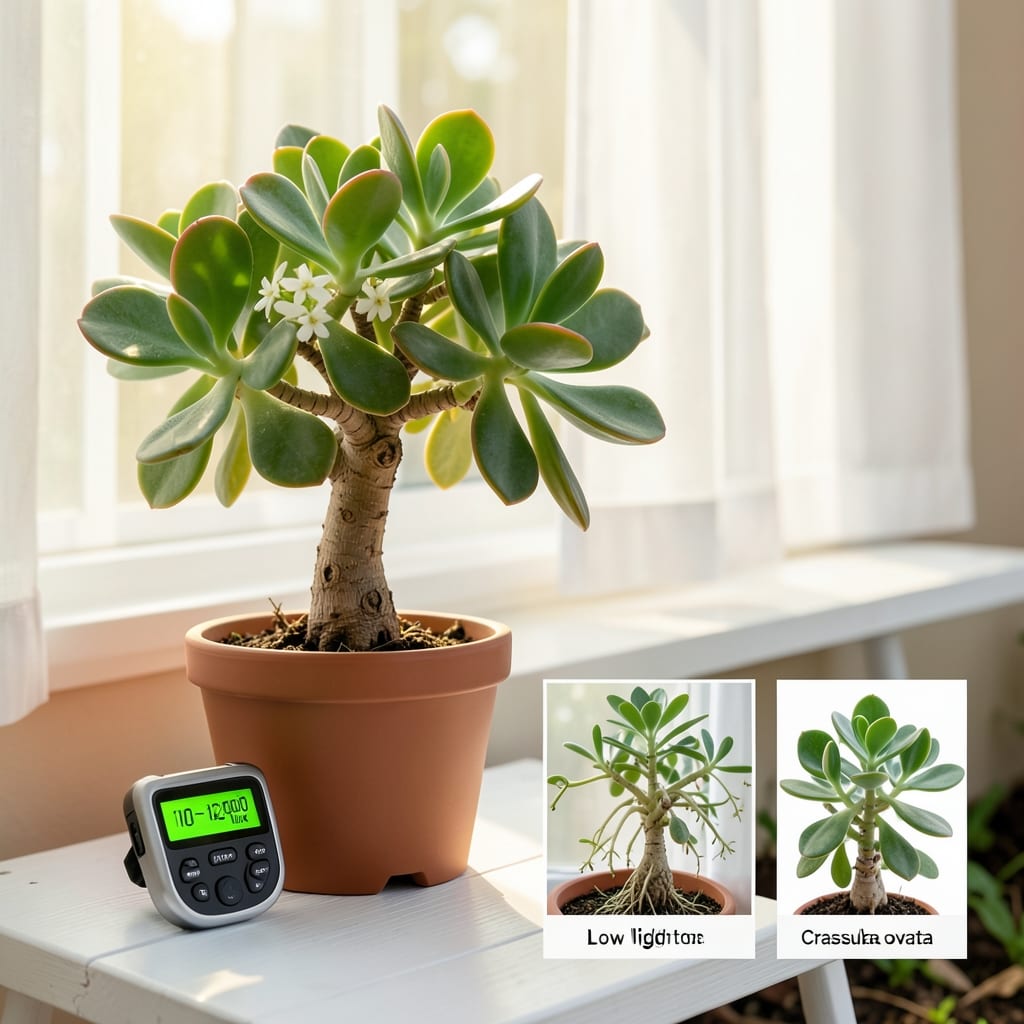
If your Jade Plant 🌿 is stretching toward the window like it’s reaching for a high-five, you’re probably asking yourself how much light does a jade plant need—and why it’s not happy with what you’re giving it.
Jade plants are sun-worshippers, but they’ve got a sensitive side. Too little light, and they’ll grow leggy and weak, while too much direct sun can turn their leaves into crispy snacks. The key is finding that sweet spot where they bask in enough brightness without getting sunburned.
I’ve seen firsthand how a little adjustment in placement can transform a struggling Jade Plant into a lush, vibrant centerpiece. Whether you’re dealing with a dim corner or a scorching windowsill, I’ll show you exactly how to give your plant the perfect light conditions for healthy growth—no guesswork required.
Let’s dive into the sunlight rules that’ll keep your Jade Plant thriving, from indoor positioning tricks to seasonal tweaks that make all the difference. Your plant’s future starts here.


Jade plant light requirements: the perfect balance for thriving leaves
Jade plants (Crassula ovata) are native to South Africa, where they bask in bright sunlight for most of the day. In your home, recreating this environment means finding the golden middle ground—enough light to fuel growth without causing leaf scorch or stretchy, weak stems. The ideal scenario is 4-6 hours of bright, indirect light daily, with a tolerance for 2-3 hours of morning sun if placed near a window.
Think of your jade plant like a sunbather: it loves the warmth but hates burning. South-facing windows provide the most intense light, while east-facing windows offer a gentler, more consistent glow. If you’re in a west-facing window, be cautious—afternoon sun can be too harsh and cause brown patches on leaves. For north-facing windows, you’ll likely need supplemental lighting to prevent etiolation (the leggy, stretched growth that signals light deprivation).
Outdoors, jade plants thrive in partial shade during summer months, especially in hot climates. A protected spot—like under a patio umbrella or near a tree canopy—keeps them safe from intense midday rays while still giving them the brightness they crave. In cooler months, you can move them to a sunnier location to boost their energy for spring growth.
Seasonal adjustments are key. During winter, when natural light is dimmer, your jade plant might need to relocate closer to a window or receive artificial grow light for 6-8 hours a day. Conversely, in summer, you may need to filter light with a sheer curtain or move the plant a few feet back from the window to prevent sunburn.
Pay attention to the angle of your windows. East-facing windows provide gentle morning light, which is perfect for jade plants because it mimics their natural habitat. South-facing windows offer the most intense light, so position your plant 3-4 feet away to avoid leaf scorch. If you notice yellowing or brown patches, it’s a sign the light is too harsh—move the plant further back or use a sheer curtain to diffuse the rays.
For indoor growers, grow lights are a game-changer. A full-spectrum LED grow light placed 6-12 inches above your jade plant for 12-14 hours a day can replicate natural sunlight perfectly. If you’re using fluorescent lights, opt for cool white or daylight bulbs and keep them closer (4-6 inches) since they emit less heat. Test your setup by monitoring the plant’s growth rate—if it’s stretching toward the light, it needs more intensity.
Outdoor jade plants need protection from harsh elements. In USDA Zone 9 and above, they can often stay outside year-round, but in cooler zones, bring them indoors before temperatures drop below 50°F. If you’re growing them in containers, ensure they’re in a well-draining soil mix to prevent root rot from overwatering, especially when they’re not getting as much evaporative cooling from outdoor conditions.
Pro tip: Rotate your jade plant every 2-4 weeks if it’s indoors near a window. This ensures even growth and prevents the plant from leaning toward the light source, which can make it look lopsided. A simple quarter-turn every month keeps it balanced and bushy. Your jade plant will thank you with thicker stems and brighter leaves!
Remember, every home’s light conditions are unique. Start with bright indirect light, observe your plant’s response for 2-3 weeks, and adjust as needed. With the right light, your jade plant will reward you with years of lush, healthy growth—and maybe even the occasional tiny pink flower if you’re lucky! 🌿
Signs your jade plant isn’t getting enough (or too much) light
Your jade plant speaks volumes through its leaves—pay attention to its visual cues to diagnose light issues. If the stems are elongated and weak with small, sparse leaves, it’s begging for more bright indirect light. This condition, called etiolation, happens when your plant stretches toward the light source like a sleepy cat reaching for the sun. The good news? Moving it to a sunnier spot or adding a grow light can reverse this within weeks.
On the flip side, if your jade plant’s leaves develop brown, crispy edges or yellow patches, it’s suffering from sunburn. This usually means it’s getting too much direct afternoon sun, especially from west or south-facing windows. The affected areas often start as dry, papery spots that eventually turn brown. To fix this, move your plant a few feet away from the window or use a light sheer curtain to diffuse the intensity.
Another red flag is leaf drop. While jade plants naturally shed a few leaves, a sudden increase—especially if the leaves are healthy-looking—often means a light shock. This can happen if you move your plant from a dim corner to a bright window too quickly. To prevent this, acclimate your plant gradually by moving it closer to the light source over 3-5 days.
For indoor plants, pale or washed-out leaves are a clear sign of light deprivation. If your jade plant’s foliage looks lighter than usual or lacks its signature glossy green hue, it’s not getting enough photosynthesis fuel. In this case, consider supplemental lighting like a LED grow bulb or relocating to a sunnier room. Even a south-facing window can work if the plant is placed 2-3 feet away.
Don’t ignore leaf curling either. While some curling is normal, excessive curling combined with discoloration often means your jade plant is struggling with extreme light conditions. Whether it’s too much heat from direct sun or cold drafts near a window, the stress manifests in the leaves. Try moving your plant to a more stable environment with consistent temperatures (ideally 65-75°F) and observe for improvements.
Pro tip: Take photos of your jade plant’s leaves weekly. Comparing them over time helps you spot subtle changes in color, texture, or growth patterns. If you notice new growth looking healthier after adjusting the light, you’re on the right track! With a little observation, you’ll master the art of balancing light for a jade plant that thrives year-round. 🌿