
How To
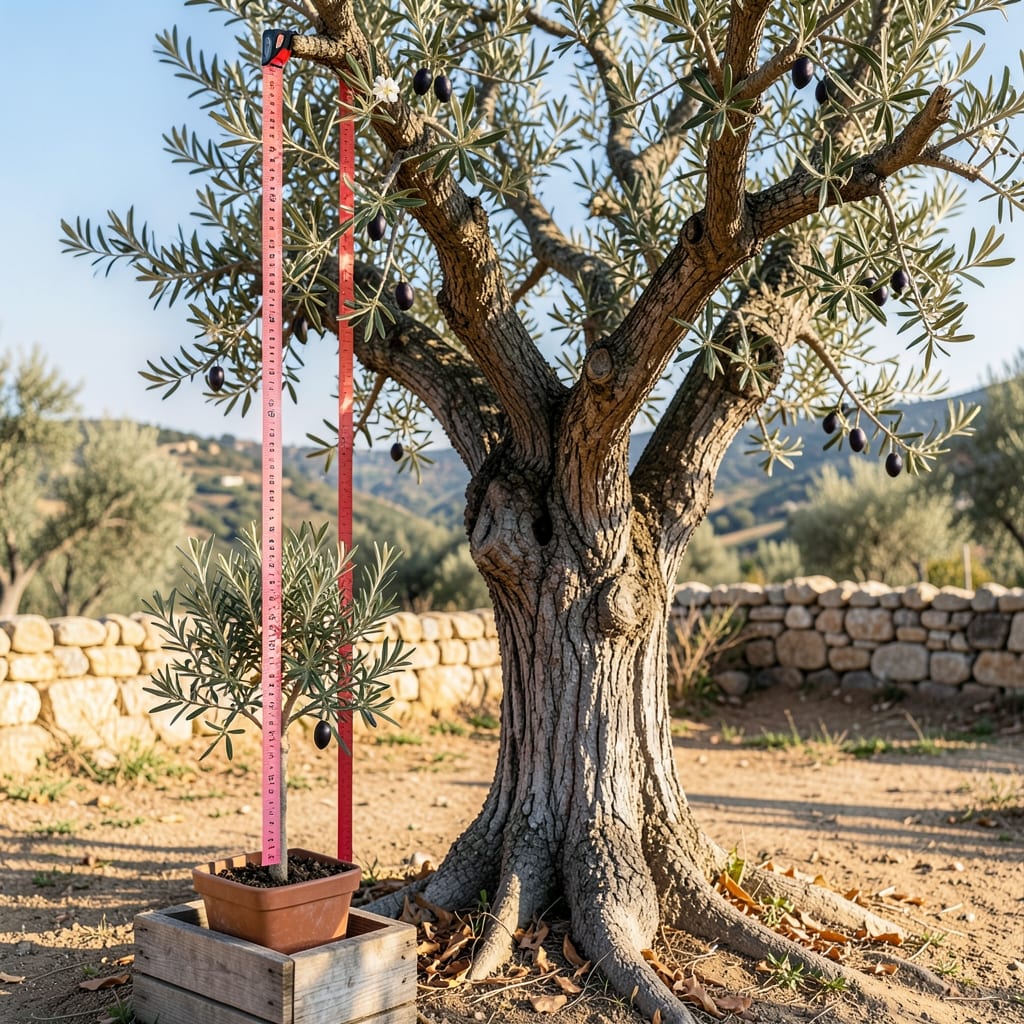
If you’ve ever wondered how tall that 🫒 olive tree in your backyard could grow—or why some seem to stretch toward the sky while others stay neatly trimmed—you’re about to find out the surprising truth.
The answer isn’t just about genetics. While some olive trees can soar to 50 feet or more when left unchecked, others stay compact with the right care. The secret lies in understanding pruning science, climate, and even soil conditions that shape their growth.
Whether you’re dreaming of a towering Mediterranean landscape or a manageable patio centerpiece, this guide breaks down exactly how to control your olive tree’s height—naturally and without stressing the tree.
Let’s explore the factors that determine olive tree height, from dwarf varieties to giant specimens, and how you can shape yours to fit your space perfectly.

Natural growth height of olive trees: from dwarf varieties to giant specimens
If you're dreaming of a stately olive tree in your backyard, you might be surprised to learn that without intervention, these trees can reach 50 feet or taller—towering over most suburban homes. But don't worry: nature and selective breeding offer solutions for every space, from tiny urban patios to sprawling rural estates.
The natural height range of olive trees spans dramatically, depending on their genetic variety and growing conditions. Dwarf varieties like 'Little Ollie' stay compact at 8-12 feet, while standard cultivars like 'Arbequina' or 'Manzanillo' can surge toward 30-50 feet when left unpruned. Even wild olive trees in Mediterranean climates often exceed 60 feet in ideal conditions.
Here’s how genetics and environment shape olive tree height: dwarf varieties are bred for controlled growth, while standard varieties follow their natural trajectory. Climate plays a role too—trees in hot, dry regions like California or Spain grow faster and taller than those in cooler climates.
| Variety | Mature Height | Growth Rate | Best For |
|---|---|---|---|
| Dwarf Varieties (e.g., 'Little Ollie', 'Little Gem') | 8–12 ft | Slow (1–2 ft/year) | Containers, small yards |
| Semi-Dwarf (e.g., 'Arbequina', 'Frantoio') | 15–25 ft | Moderate (2–3 ft/year) | Medium-sized gardens |
| Standard (e.g., 'Manzanillo', 'Mission') | 30–50 ft | Fast (3–5 ft/year) | Large properties, rural areas |
| Wild Olive Trees | 50–80 ft | Variable (3–8 ft/year) | Natural landscapes |
Soil quality also influences height—well-draining, slightly alkaline soil (pH 6.0–8.0) promotes faster growth, while compacted or waterlogged soil can stunt a tree’s vertical expansion. In my own garden, I’ve seen 'Arbequina' trees double in height within 5 years when planted in loose, sandy soil compared to slower growth in clay-heavy areas.
Another critical factor is sunlight exposure. Olive trees thrive with 6+ hours of direct sun daily, which fuels rapid growth. In shadier conditions, their height increases more slowly, and branches may become sparse. For example, a standard 'Manzanillo' in full sun might hit 40 feet in 15 years, while the same tree in partial shade could max out at 25 feet.
If you're planning for a compact olive tree, consider dwarf varieties or container growing. These trees are perfect for patios or balconies and can be kept under 10 feet with regular pruning. Even standard varieties can be managed to stay under 20 feet with consistent care, making them ideal for suburban yards.
For those with large properties, embracing the tree’s natural height can create a stunning focal point. A 50-foot olive tree provides year-round interest, shade, and even wildlife habitat. Just be prepared for the commitment—these giants require regular pruning to maintain health and safety.
One common misconception is that older olive trees grow taller automatically. In reality, their growth rate slows significantly after 10–15 years, shifting focus to fruit production and structural stability. This is why many gardeners opt for semi-dwarf varieties—they offer a balance between manageable size and productivity.
To maximize height control, pair the right variety with proactive pruning. Even standard trees can be shaped to stay within 15–20 feet if pruned annually. I’ll cover these techniques in detail in the next section, but for now, remember: pruning isn’t just about height—it’s about health, shape, and fruit yield. 🌳
Pruning science to control olive tree height: Step-by-Step techniques for beginners
Controlling your olive tree’s height starts with understanding the pruning science behind shaping trees. Unlike many plants, olive trees respond well to strategic pruning, allowing you to reduce their height by 2-3 feet annually without causing stress. The key is timing, technique, and knowing which cuts to make for optimal growth.
Most gardeners make the mistake of pruning at the wrong time or using the wrong tools, which can stunt growth or even harm the tree. Instead, focus on heading cuts (shortening branches) and thinning cuts (removing entire branches) to encourage bushier, more controlled growth. Let’s break down the exact steps to prune your olive tree for the perfect height.
🪴 Step-by-Step Olive Tree Pruning Guide
- Step 1: Prune in Late Winter – Choose a dormant season (February-March) to avoid disturbing new growth. This timing ensures minimal stress on the tree.
- Step 2: Use Sharp, Clean Tools – A pruning saw for thick branches and bypass pruners for thinner ones. Sterilize tools with rubbing alcohol to prevent disease.
- Step 3: Remove Dead or Weak Branches – Cut back any dead wood or branches growing inward to improve airflow and tree health.
- Step 4: Apply Heading Cuts – Shorten the tips of branches by 1/3 of their length to encourage bushier growth. Aim for a 45-degree angle just above a leaf or bud.
- Step 5: Thin Out Crowded Branches – Remove 10-20% of the canopy to reduce height and improve light penetration to lower branches.
- Step 6: Shape for Balance – Step back frequently to ensure the tree maintains a balanced silhouette. Avoid over-pruning, which can stress the tree.
For dwarf varieties, like ‘Little Ollie’ or ‘Arbequina,’ you’ll only need light pruning to maintain their natural compact size (typically 8-15 feet). However, standard varieties can reach 30-50 feet if left unpruned, so regular pruning is essential for height control.
Pro tip: If you’re aiming for a tree-shaped olive (rather than a bush), focus on pruning the lower branches to create a clear trunk and encourage upward growth. This method works well for patio olive trees where height is a concern.
Remember, olive trees are resilient, but over-pruning can weaken them. Aim to remove no more than 25% of the canopy in a single session to avoid stress. With consistent care, you can keep your olive tree at your desired height for years to come.
🌿