
Size
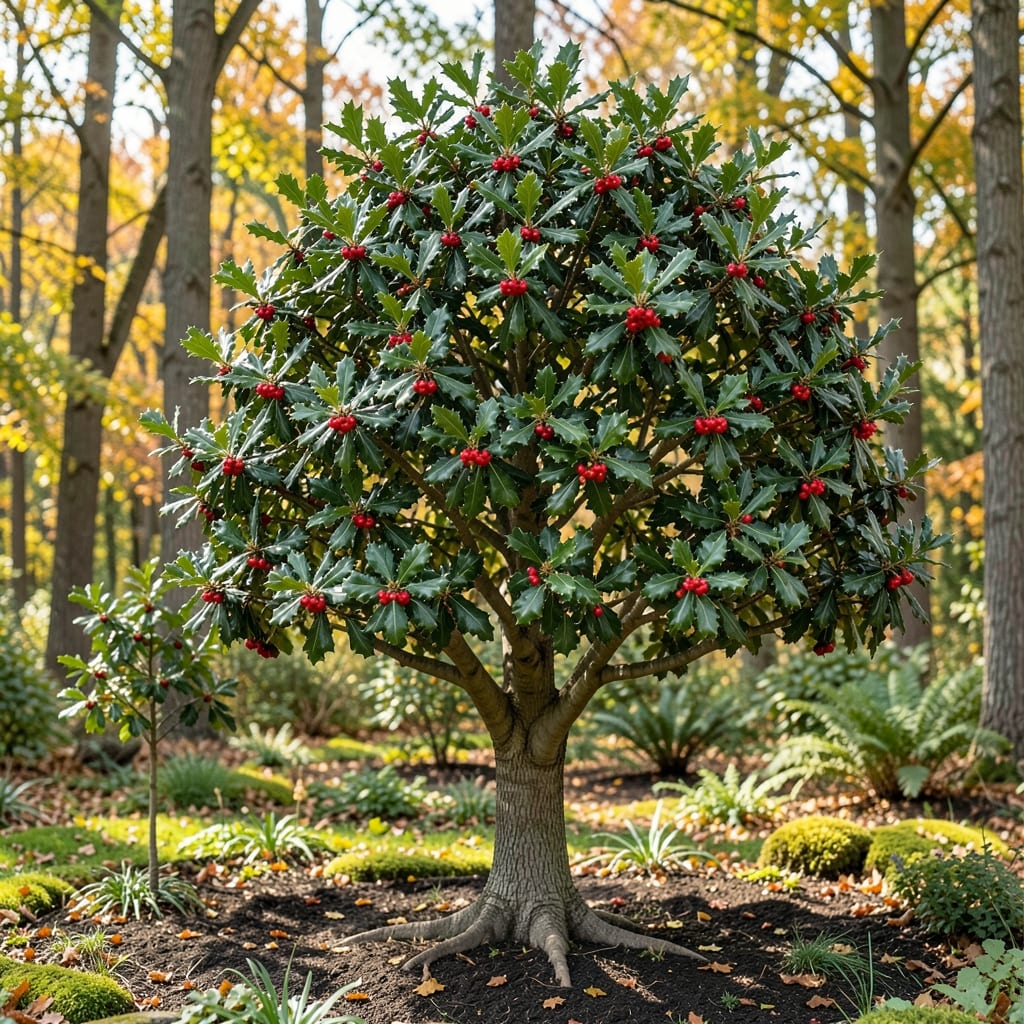
If you're wondering "how tall can holly trees grow", the answer might surprise you—these evergreen beauties can stretch from a compact 8-foot shrub to towering 50-foot giants, depending on the variety. Picture a 🌳 Holly Tree standing taller than your two-story house or barely reaching your roofline, all while adding year-round color to your landscape.
The key to controlling their height lies in understanding the species. American holly, for example, often matures between 20-30 feet, while dwarf varieties stay neatly under 12 feet. But even with smaller types, proper spacing and pruning are essential—planting too close can lead to competition and stunted growth, no matter how well you care for them.
What most gardeners don’t realize is that sunlight, soil quality, and even your local climate play huge roles in determining how tall your holly will grow. A holly in Zone 6a with partial shade might stay shorter than one basking in full sun, so knowing these factors helps you plan for the perfect size. Plus, strategic pruning can keep even the tallest varieties manageable.
Ready to make an informed choice? I’ll walk you through the best varieties for your space, how to prune for ideal height, and whether a holly is the right fit for your garden—whether you’re dreaming of a privacy screen or a statement centerpiece. Let’s get growing!


Holly tree mature heights by popular varieties (with growth charts)
When choosing a holly tree, the first question I always ask is, "how tall can holly trees grow?" The answer depends entirely on the variety—some stay compact enough for small gardens, while others become towering giants. For example, the American holly (Ilex opaca) typically reaches 20-30 feet at maturity, making it perfect for large landscapes or privacy screens. Meanwhile, dwarf varieties like 'Sky Pencil' stay under 10 feet, ideal for urban yards or container gardening.
Understanding these height differences helps you avoid planting regrets. A 50-foot English holly in your backyard could end up blocking sunlight for other plants or even overhanging your neighbor’s property. I’ve seen gardeners accidentally plant standard holly trees too close to driveways, only to realize years later they need heavy pruning or removal. The key is matching the variety to your space and long-term vision.
Here’s a quick reference: dwarf hollies (8-12 ft) work well for foundation plantings, semi-dwarf types (15-25 ft) suit medium-sized yards, and standard hollies (30-50 ft) belong in sprawling estates or as focal points. Even within a single species, growth rates vary—some hollies grow 1-2 feet per year, while others add 3-4 feet annually under ideal conditions.
| Variety | Mature Height | Growth Rate | Best For |
|---|---|---|---|
| American Holly | 20-30 ft | 1-2 ft/year | Privacy screens, large yards |
| English Holly | 30-50 ft | 2-3 ft/year | Estates, focal points |
| 'Sky Pencil' (Dwarf) | 8-12 ft | 6-12 in/year | Urban gardens, containers |
| 'Blue Prince' (Semi-Dwarf) | 15-25 ft | 1-2 ft/year | Medium yards, hedges |
| Chinese Holly | 15-25 ft | 1-2 ft/year | Cold-hardy landscapes |
If you’re wondering how tall can holly trees grow in your specific climate, consider USDA Zone 6a as a baseline. Hollies in cooler zones (like Zones 5-7) often grow more slowly, while those in Zones 8-9 can reach their mature height faster. For instance, a 'Blue Princess' holly might take 10 years to reach 15 feet in Zone 6a but only 7 years in Zone 8a.
Another factor I can’t stress enough is spacing. Planting a 25-foot holly too close to a 15-foot one will stunt both trees as they compete for nutrients. A general rule is to space hollies 15-25 feet apart for standard varieties and 8-12 feet apart for dwarf types. This ensures they have room to grow without crowding, which directly impacts their height and overall health.
For those with limited space, container-growing is a game-changer. Dwarf hollies like 'Dwarf Burford' thrive in large pots, allowing you to control their height entirely. Just remember: even potted hollies need well-draining soil and regular pruning to prevent root-bound stress, which can slow growth or cause stunted height.
One of my favorite tips for managing height is to choose male and female hollies strategically. Female hollies produce berries (their signature feature), but they need a male pollinator nearby. If you’re planting a single holly for berries, opt for a self-pollinating variety like 'Jersey Knight', which stays compact at 12-15 feet but still produces vibrant red berries.
Finally, don’t overlook root growth. Holly roots spread widely, often 2-3 times the canopy width. This means a 20-foot holly could have roots extending 40-60 feet outward. Always check your property lines before planting to avoid future conflicts with neighbors or underground utilities.
Now that you know the height ranges, the next step is understanding how to control growth—whether you want a taller tree or a neatly pruned shrub. Stay tuned for my next section on pruning techniques to shape your holly tree perfectly. 🌿
Factors that determine how tall your holly tree will grow
If you’re planning to grow a holly tree, understanding the factors that influence its height is key to managing expectations and achieving the perfect size for your landscape. While some varieties naturally stay compact, others can become towering giants—all depending on conditions you can control. Let’s break down the critical factors that determine how tall your holly will grow, so you can optimize its growth or keep it in check.
First, sunlight exposure plays a massive role. Holly trees thrive in partial shade (3-6 hours of direct sun daily), but too much harsh sunlight can stress the plant, leading to faster, often leggier growth. In contrast, dappled shade promotes denser, bushier growth and can help control height. If your holly gets full sun, expect it to grow taller and faster, while partial shade will encourage a more compact form. This is especially true for dwarf varieties, which may stretch if deprived of shade.
Soil quality is another game-changer. Holly trees prefer well-draining, slightly acidic soil (pH 5.0-6.0). Poor soil—whether too clay-heavy or sandy—can stunt growth or cause the tree to grow taller as it stretches for nutrients. Amending your soil with compost or peat moss ensures healthy root development, which directly impacts how tall your holly will grow. I’ve seen holly trees in nutrient-rich soil grow 20% faster than those in depleted soil, so don’t skip this step!
🌱 Key Factors Affecting Holly Tree Height
- Sunlight: Partial shade = compact growth; full sun = taller growth
- Soil: Well-draining, acidic soil = healthier, controlled growth
- Watering: Overwatering = leggy growth; underwatering = stunted growth
- Pruning: Regular trimming = manages height; neglect = uncontrolled growth
- Climate: Warmer zones = faster growth; cooler zones = slower growth
Your watering habits also impact height. Holly trees need consistent moisture but hate soggy roots. Overwatering can lead to leggy, weak growth as the tree stretches for air, while underwatering stresses the plant, causing it to grow taller in search of water. Aim for deep watering once a week (or more in summer) and always ensure the soil drains well. A simple trick I use is the finger test: stick your finger 2 inches into the soil—if it’s dry, water; if it’s damp, wait.
Don’t overlook the role of pruning in controlling height. Even if you choose a dwarf variety, skipping pruning can lead to unexpected growth spikes. Pruning in late winter or early spring encourages bushier growth and prevents the tree from becoming too tall. I recommend trimming back 1/3 of the new growth annually to maintain shape and control height. Avoid heavy pruning in fall, as it can stimulate late-season growth that’s vulnerable to frost damage.
Finally, your climate zone matters. Holly trees grow faster in warmer zones (7-9) where they enjoy longer growing seasons, while in cooler zones (5-6), growth slows down, keeping the tree shorter. If you’re in a colder zone, don’t expect rapid height increases—your holly will grow steadily but stay more manageable. Conversely, in warmer climates, holly trees can shoot up quickly, so plan for taller spacing if you’re planting standard varieties.
By paying attention to these factors, you can steer your holly tree toward the ideal height for your space—whether you want a privacy screen, a bushy shrub, or a towering specimen. Start with the right variety, tweak the conditions, and prune regularly to keep your holly at the perfect height for years to come! 🌿