
Trees
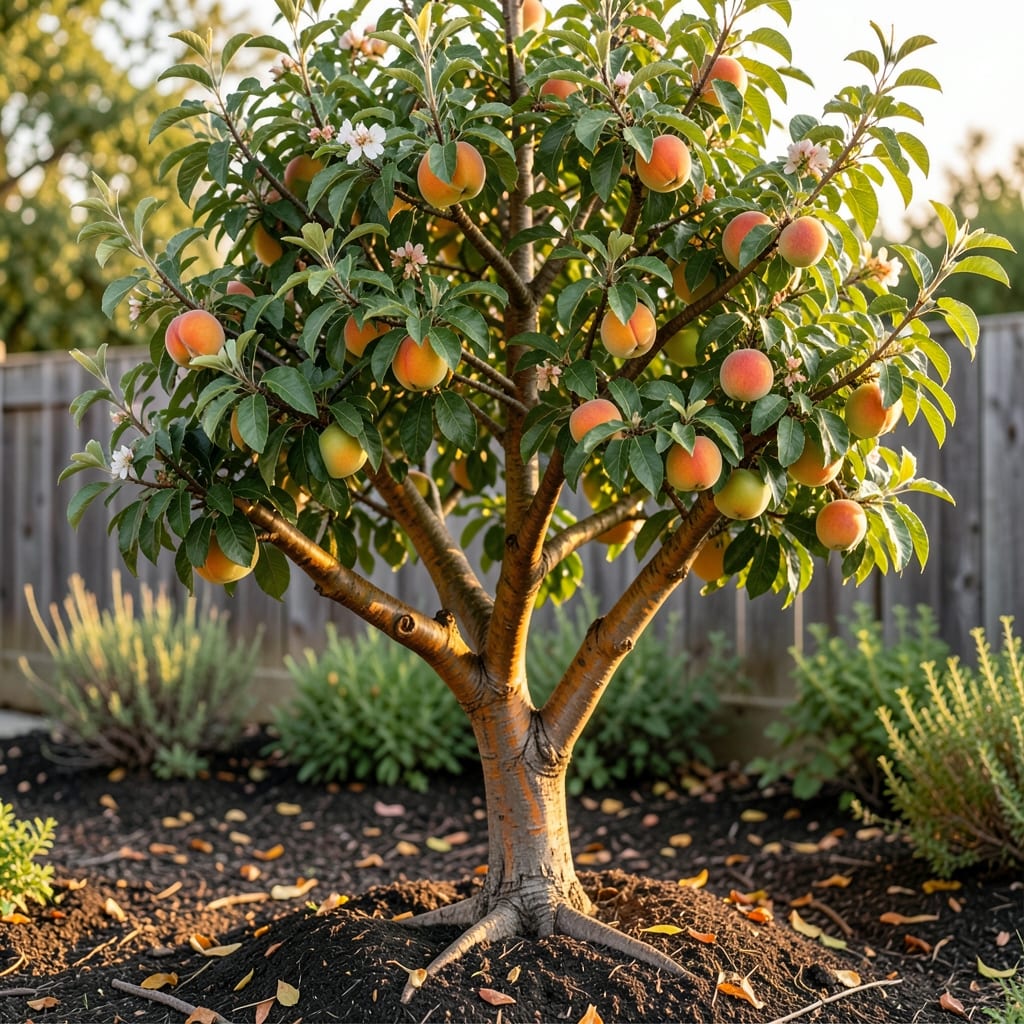
If you’ve ever dreamed of plucking ripe peaches from your backyard but worried 🍑 your peach tree might grow into an unmanageable giant, here’s the good news: how tall can peach trees grow is entirely in your hands. The answer depends on two key factors—its variety and how (or if) you prune it—with some varieties topping out at 25 feet while others stay neatly under 10 feet.
Most standard peach trees reach 15–25 feet at maturity, making them perfect for spacious orchards or rural properties. But if you’re working with limited space, dwarf or semi-dwarf varieties can be just as productive while staying under 12 feet. The difference? It’s all in the rootstock—something most gardeners overlook when choosing their tree.
Pruning plays an even bigger role than you might think. With the right techniques, you can reduce a tree’s height by 30–50%, keeping it at a comfortable picking height while maximizing fruit production. Whether you’re a first-time grower or a seasoned orchard keeper, understanding these growth patterns will help you plan your space—and your harvest—like a pro.
Ready to turn your backyard into a peach paradise? Let’s break down the exact heights by variety, how to control growth through pruning, and which compact options are perfect for small spaces. Your 6a-zone garden (or container!) is about to get a lot more fruitful.


Peach tree height by variety: dwarf to standard sizes explained
Peach trees are like the chameleons of your orchard—their mature height can vary dramatically based on their variety and rootstock. While some towering giants reach 25+ feet, others stay compact enough for even the smallest backyards. The key lies in understanding how dwarf, semi-dwarf, and standard rootstocks influence growth, as well as which popular varieties fit your space.
For example, the classic 'Redhaven' peach tree, grown on standard rootstock, can easily stretch to 20 feet tall, while the same variety grafted onto dwarfing rootstock like 'Lovell' or 'Halford' will top out at just 8-12 feet. This difference isn’t just about aesthetics—it directly impacts harvesting ease, pruning effort, and even fruit production per square foot.
Here’s the breakdown of what to expect from popular peach varieties, depending on their rootstock. The table below highlights mature heights, growth habits, and ideal uses for each type.
| Variety | Rootstock | Mature Height | Growth Habit | Best For |
|---|---|---|---|---|
| Redhaven | Standard (Lovell) | 20-25 ft | Vigorous, upright | Large orchards |
| Bonanza | Dwarf (Halford) | 8-12 ft | Compact, rounded | Containers, patios |
| Elberta | Semi-Dwarf (Lovell) | 12-18 ft | Moderate, spreading | Backyards, small orchards |
| Reliance | Dwarf (Lovell) | 6-10 ft | Ultra-compact, bushy | Urban gardens, balconies |
| Suncrest | Semi-Dwarf (Halford) | 10-15 ft | Balanced, open canopy | Easy harvest, small farms |
If you’re working with limited space, dwarf rootstocks are your best friend. Varieties like 'Bonanza' or 'Reliance' thrive in containers or along fences, producing high-quality fruit without the towering stature. Meanwhile, standard rootstocks are ideal for commercial orchards or if you’re dreaming of a shade-providing giant in your yard.
One common misconception is that dwarf trees produce fewer peaches. In reality, they often yield just as much—or even more—per square foot of space because you can fit multiple trees in a small area. For example, a 10-foot-tall 'Bonanza' can produce 50-100 lbs of peaches annually, while a standard 'Redhaven' might yield the same amount but requires 10x the space.
Another factor to consider is the growth rate. Dwarf varieties typically reach mature height within 3-5 years, while standard trees can take 7-10 years to fully develop. This makes dwarfing rootstocks a great choice if you’re impatient to enjoy homegrown peaches!
For urban gardeners or those with small backyards, semi-dwarf varieties like 'Elberta' or 'Suncrest' strike a balance. They offer manageable heights (12-18 feet) while still providing ample shade and fruit. Plus, their spreading canopies make them easier to prune and harvest than their taller counterparts.
Before planting, check your local nursery for rootstock recommendations based on your climate. Some regions benefit from cold-hardy rootstocks like 'Lovell', while others thrive with disease-resistant options like 'Halford'. Matching the right rootstock to your soil type and microclimate can make the difference between a struggling sapling and a fruit-bearing powerhouse.
Pro tip: If you’re unsure about heights, ask for a grafted tree with a labeled rootstock. This ensures you’ll get the exact size and growth habit you’re looking for. And remember, even standard trees can be pruned to stay smaller—
How pruning affects peach tree height: techniques for controlling growth
Pruning isn’t just about shaping your peach tree—it’s the secret weapon for controlling its height. With the right cuts, you can reduce a 20-foot standard tree to a manageable 10-foot height while boosting fruit production. The key is understanding when and how to prune, as well as which techniques work best for your tree’s natural growth habit.
Most peach trees grow using one of two primary structures: the central leader (a single upright trunk) or the open-center (multiple branches forming a vase shape). Central leader trees, like 'Redhaven', naturally grow taller, while open-center varieties, such as 'Bonanza', stay bushier and more compact. Your pruning strategy should match your tree’s natural form to avoid stunting growth or encouraging weak branches.
Here’s a step-by-step guide to pruning for height control, including the best times to prune and which cuts to make for optimal results.
-
1
Winter Dormancy Pruning (Late February)
Remove dead, diseased, or crossing branches to improve airflow. Cut back suckers (shoots growing from the base) to redirect energy upward. Aim to reduce height by 10-20% during this first prune. -
2
Summer Thinning (June-July)
Thin out overcrowded branches to reduce height and improve fruit size. Focus on water sprouts (fast-growing vertical shoots) and branches growing inward. Use clean cuts just above a bud or lateral branch. -
3
Fall Light Pruning (October)
Remove weak or damaged branches to prepare for winter. Avoid heavy pruning in fall, as it can stimulate late-season growth vulnerable to frost. Limit cuts to 5-10% of the canopy. -
4
Annual Height Reduction (Spring)
To keep a tree under 10 feet, prune the central leader back by 12-18 inches each spring. For open-center varieties, cut back the tallest branches to maintain balance. Always prune just above an outward-facing bud.
One of the most effective (but often overlooked) techniques for controlling height is heading back—cutting the tips of branches to encourage bushier growth. When you prune just above a lateral bud, the tree will grow outward instead of upward, naturally reducing its height over time. For example, if your 'Redhaven' is growing too tall, heading back the central leader by 1-2 feet in early spring can prevent it from reaching 20 feet.
Timing is everything when it comes to pruning peach trees. Avoid pruning in late summer or fall, as new growth won’t harden off before winter and can die back in cold temperatures. Instead, focus on dormant-season pruning (late winter) and summer thinning to keep your tree healthy and manageable. Pro tip: Use sharp, sterilized pruners to make clean cuts and reduce the risk of disease.
If you’re dealing with a standard-sized tree that’s already too tall, don’t despair—you can still bring it under control with aggressive but strategic pruning. Start by removing the tallest branches first, then gradually reduce the height over 2-3 years. Pair this with annual maintenance pruning to keep it at your desired height. Just remember: never remove more than 25% of the canopy in a single year, as this can stress the tree and reduce fruit production.
For dwarf varieties, pruning is less about height control and more about shaping and fruit production. Focus on opening up the center of the tree to improve airflow and sunlight penetration. This not only keeps the tree healthy but also makes harvesting peaches a breeze. With the right pruning routine, even a 6-foot dwarf tree can produce plenty of fruit while staying easy to maintain.
Finally, always prune with a clear goal in mind. Whether you’re aiming for a shade tree, a fruit-bearing bush, or a compact container tree, your cuts should align with that vision. And don’t forget to sterilize your tools between cuts to prevent the spread of bacterial spot or other peach tree diseases.