
Flowers
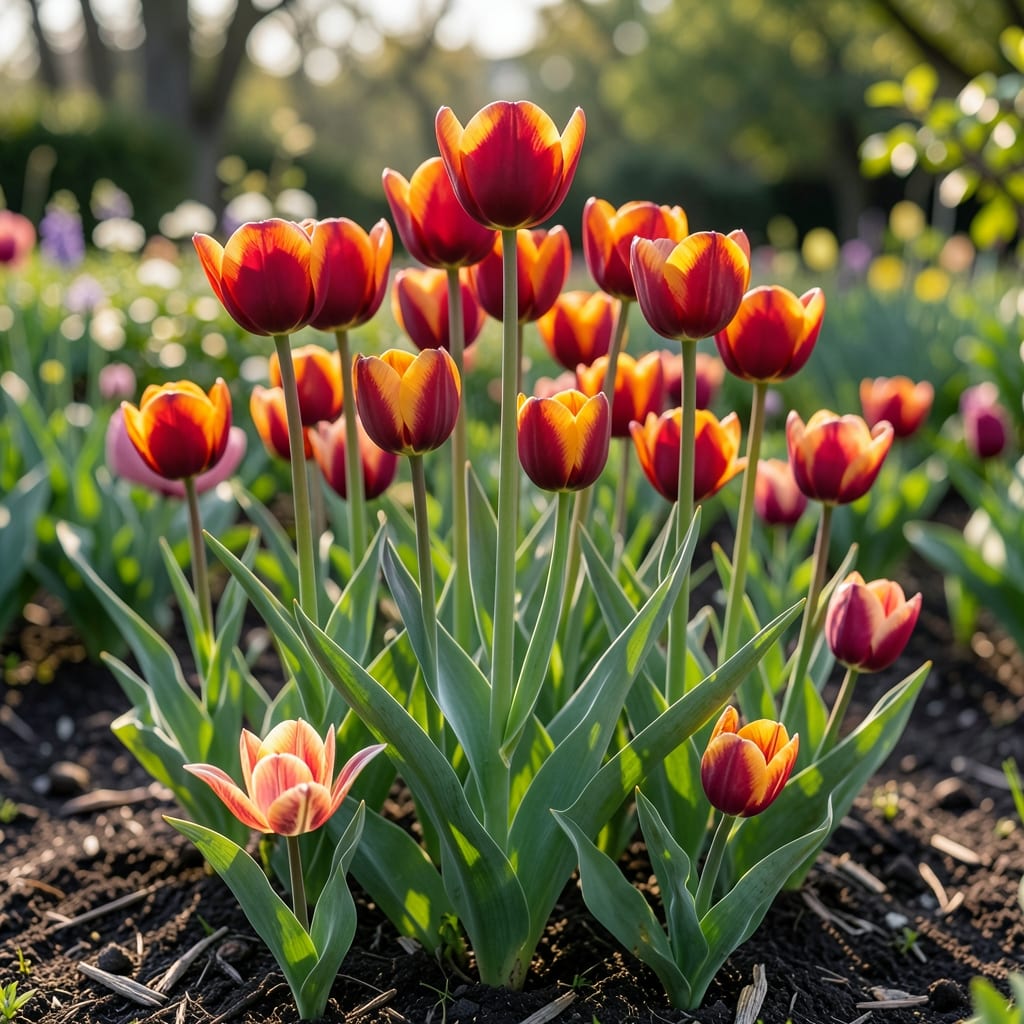
Tulip height by variety: dwarf to giant blooms explained
Tulips come in a stunning array of heights, from tiny dwarf varieties that barely peek above a flowerpot to giant blooms that tower like small trees. Understanding these height ranges helps you choose the perfect tulips for your garden design—whether you're creating a border garden, a cutting garden, or a dramatic spring focal point.
Most tulips fall into four distinct height categories: dwarf (4-12 inches), semi-dwarf (12-18 inches), standard (18-24 inches), and giant (24+ inches). The variety you select will determine not only how tall your tulips grow but also their bloom size, stem strength, and even their garden placement needs.
Dwarf tulips like 'Tiny Star' or 'Snow Bunny' are perfect for rock gardens, container plantings, or edging walkways. Their compact size makes them ideal for small spaces or when you want to create a textured contrast with taller plants. Meanwhile, giant varieties such as 'Queen of Night' or 'Purple Prince' can reach 28-30 inches, making them standout stars in backyard borders or cut-flower arrangements.
Here’s how the most popular tulip varieties stack up in height—so you can plan your garden with precision:
| Category | Varieties | Height Range | Best For |
|---|---|---|---|
| Dwarf | 'Tiny Star', 'Snow Bunny', 'Peppermint Stick' | 4–12 inches | Containers, rock gardens, edging |
| Semi-Dwarf | 'Apeldoorn', 'Queen of Sheba', 'Darwin Hybrid' | 12–18 inches | Borders, cottage gardens, mixed beds |
| Standard | 'Parrot tulips', 'Fosteriana', 'Greigii' | 18–24 inches | Cut flowers, mid-border planting, focal points |
| Giant | 'Queen of Night', 'Purple Prince', 'Red Emperor' | 24–30+ inches | Backyard borders, dramatic displays, cutting gardens |
The Darwin Hybrid tulips, for example, are a favorite among gardeners for their sturdy stems and bold blooms, typically reaching 20-26 inches. These varieties thrive in full sun and are perfect for cutting because their stems stay fresh longer in vases. On the other hand, species tulips like Tulipa greigii or Tulipa fosteriana often stay shorter (12-18 inches) but offer unique fuzzy or frilled petals that add texture to gardens.
If you're designing a layered garden, pairing dwarf tulips in the front with tall varieties in the back creates a natural progression that draws the eye. For instance, plant 'Tiny Star' (6 inches) in the front row, followed by 'Darwin Hybrid' (24 inches) in the middle, and 'Queen of Night' (30 inches) at the back. This creates a stunning height gradient that blooms in waves throughout spring.
Pro tip: Check the bloom time of your tulips too—some early bloomers like 'White Dream' (18 inches) may need support stakes earlier in the season, while late bloomers like 'Purple Prince' (28 inches) can wait until stems are fully elongated before adding support.
For container gardens, opt for dwarf or semi-dwarf varieties to avoid overcrowding. A mix of 'Snow Bunny' (8 inches) and 'Apeldoorn' (16 inches) in a 12-inch pot creates a balanced, cascading effect that’s perfect for patios or balconies.
Remember, height isn’t the only factor—stem strength and bloom weight also play a role in whether your tulips need support. Giant varieties with large, heavy blooms (like 'Red Emperor') often flop over without staking, while dwarf varieties rarely need extra support.
Factors that affect tulip height: soil, sunlight, and care tips
Did you know that the height of your tulips isn’t just about the variety you choose? Environmental factors like soil quality, sunlight exposure, and even watering habits play a huge role in how tall your tulips grow. For example, a Queen of Night tulip planted in poor soil might only reach 20 inches instead of its full 30-inch potential. Understanding these factors helps you maximize growth or control height for your garden design.
One of the most critical factors is soil nutrition. Tulips thrive in well-draining, nutrient-rich soil with a pH between 6.0 and 7.0. If your soil is compacted or nutrient-poor, your tulips may stay shorter and weaker. Amending your soil with compost or bulb fertilizer before planting can give your tulips the boost they need to reach their full height. For instance, adding a balanced fertilizer (5-10-10) in early spring can encourage taller, stronger stems in giant varieties like 'Red Emperor'.
Sunlight is another game-changer for tulip height. Most tulips need at least 6 hours of full sun daily to grow to their maximum potential. If your tulips are planted in partial shade, they may grow 10-15% shorter and produce smaller blooms. For example, a Darwin Hybrid tulip in full sun might reach 24 inches, but the same variety in partial shade could only grow to 18-20 inches. South-facing garden beds are ideal for maximizing tulip height, while north-facing areas may require taller varieties to compensate for reduced sunlight.
Here are the key factors that influence tulip height and how to optimize them for your garden:
🌱 Key Factors for Tulip Height
Use well-draining soil with compost or bulb fertilizer for taller growth.
6+ hours of sun maximizes height; partial shade reduces growth.
Deep watering weekly encourages stronger stems; avoid overwatering.
Remove spent blooms to redirect energy to stem growth.
Watering also plays a surprising role in tulip height. While tulips don’t need excessive water, they do require consistent moisture—especially during stem elongation in early spring. Overwatering can lead to weak, floppy stems, while underwatering may stunt growth. Aim for deep watering once a week (about 1 inch of water) and reduce frequency in late spring to prevent bulb rot. Mulching around your tulips with straw or shredded leaves helps retain moisture and keeps roots cool, which supports healthier, taller growth.
Another often-overlooked factor is pruning and deadheading. Removing spent blooms (but leaving the foliage) encourages the bulb to store more energy for next year’s growth. If you’re growing tulips for cut flowers, cutting stems when half the blooms are open can actually stimulate taller growth in subsequent years. However, avoid cutting stems too early—this can reduce bulb strength and lead to shorter tulips the following season.
Finally, climate and microclimates in your garden can affect tulip height. Tulips planted in cooler climates (like USDA Zone 4) may grow taller and slower due to shorter growing seasons, while those in warmer zones (like Zone 7) might bloom earlier but stay slightly shorter if summer heat arrives too soon. To counteract this, plant taller varieties in cooler microclimates (like near a north-facing wall) and shorter varieties in hotter spots to ensure even growth across your garden.
By paying attention to these care factors, you can encourage your tulips to reach their full height potential—or even control their growth for a more balanced garden design. Whether you're aiming for dramatic height or a compact display, the right conditions make all the difference!