
Trees
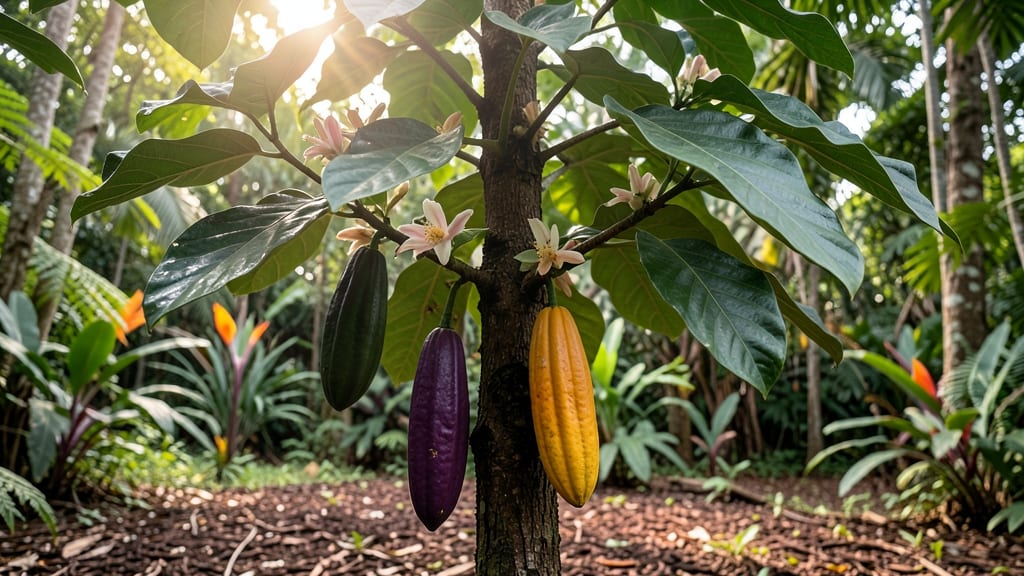
If you’ve ever wondered how tall do cacao trees grow, you’re not alone—these tropical giants can surprise even the most seasoned gardeners.
In their natural rainforest habitat, cacao trees 🌱 (Theobroma cacao) often reach heights of 20-25 feet, casting sprawling canopies that create the perfect microclimate for their delicate pods.
But here’s the twist: most of the cacao you enjoy in chocolate comes from shorter, cultivated varieties. Farmers prune and manage these trees to keep them between 10-15 feet tall, making them easier to harvest and more productive.
This careful pruning isn’t just about size—it’s about maximizing yield while protecting the tree’s health.
For home gardeners, the good news is that dwarf varieties (like Criollo) can stay under 8 feet, perfect for small spaces or containers.
Whether you’re growing for the thrill of watching a chocolate tree flourish or planning a tropical garden, understanding these height differences is your first step to success.
Let’s break down the wild vs. cultivated height differences and how you can grow a thriving cacao tree—no matter your space. Ready to dive in?


Cacao tree height by growth stage: from seedling to mature wild trees
Wild cacao trees (Theobroma cacao) in their natural tropical habitats can reach impressive heights, but their growth isn’t linear—it’s heavily influenced by climate, soil, and competition.
In the dense rainforests of Central and South America, these trees often grow taller than you might expect, especially when left unpruned and undisturbed.
The journey from a tiny seedling to a towering wild cacao tree takes patience. In their first year, young cacao trees typically grow just 1-2 feet tall, developing a delicate trunk and broad leaves. This slow start is crucial for establishing strong roots in their humid, shaded environments.
By year two, these trees can double in height, reaching 3-5 feet under ideal conditions.
Their growth rate accelerates during this phase, with new branches forming to support future fruit production. Wild cacao trees in undisturbed forests often grow faster than cultivated varieties due to abundant nutrients and lack of pruning.
Here’s a detailed breakdown of how wild cacao trees grow at each stage, including their mature height and key characteristics:
| Growth Stage | Height Range | Key Characteristics | Time to Reach Stage |
|---|---|---|---|
| Seedling | 1-2 ft | Thin trunk, broad leaves, shallow roots | 0-1 year |
| Juvenile | 3-5 ft | Faster growth, branching begins | 1-2 years |
| Mature Wild Tree | 10-25 ft | Thick trunk, dense canopy, heavy fruit load | 5-10 years |
Note: Height varies by Forastero, Criollo, and Trinitario varieties.
Wild cacao trees can grow up to 25 feet tall in their native habitats, especially the Forastero variety, which dominates commercial plantations. These towering trees develop thick trunks and sprawling canopies, providing shade for the forest floor and supporting a thriving ecosystem.
Their height is a testament to their resilience and adaptability in the wild.
Climate plays a critical role in their growth. In regions with high humidity and consistent rainfall, like the Amazon basin, cacao trees grow faster and taller.
Conversely, in drier or cooler areas, their growth may be stunted, resulting in shorter, bushier trees. Soil quality also matters—rich, well-draining soil with a slightly acidic pH (5.0-6.5) promotes healthier, taller growth.
One fascinating aspect of wild cacao trees is their canopy structure. Mature trees can spread their branches up to 15 feet wide, creating a dense umbrella of leaves that filters sunlight and maintains a stable microclimate.
This structure is ideal for their natural pollinators, like midges, which thrive in the shaded understory. For home gardeners, understanding this natural growth pattern can help replicate these conditions in a smaller scale.
If you’re considering growing cacao trees in your own garden, remember that their height and growth rate will differ significantly from their wild counterparts. Cultivated varieties are often pruned to stay between 10-15 feet tall, making them more manageable for small farms or even large containers.
However, with the right care—including pruning techniques and optimal growing conditions—you can encourage healthier, more productive trees, even if they don’t reach the same heights as their wild relatives.
For those in USDA zones 10-12, growing cacao trees outdoors is feasible, but they’ll never reach the same heights as wild trees due to controlled environments and regular maintenance.
In cooler zones, container growing with winter protection is the best approach to keep your cacao tree alive and thriving year-round. 🌱
Cultivated cacao trees: why farmed varieties stay shorter (and how to maximize yield)
When you picture a cacao tree, images of towering rainforest giants might come to mind—but commercial cacao farms tell a different story. Farmers intentionally keep cultivated cacao trees between 10-15 feet tall to simplify harvesting and boost productivity.
This height control isn’t just about convenience; it’s a strategic balance between yield and manageability that home growers can learn from too.
The secret lies in pruning techniques and grafting practices developed over centuries. Unlike their wild counterparts that stretch toward the canopy, farmed cacao trees are pruned to create a compact, multi-stemmed structure that produces more pods per square foot.
This method also makes it easier to protect pods from pests and maximize sunlight exposure for the lower branches where most fruit forms.
🌱 Cultivated vs. Wild Cacao Growth Comparison
| Factor | Wild Trees | Cultivated Trees |
|---|---|---|
| Mature Height | 15-25 ft | 10-15 ft |
| Growth Rate | Slow (2-3 ft/year) | Moderate (3-5 ft/year) |
| Pruning Needs | Minimal (natural form) | Regular (structured shape) |
| Harvest Access | Difficult (ladders needed) | Easy (ground-level pods) |
For home growers, maintaining this controlled height doesn’t require industrial equipment—just a few simple pruning strategies. Start by removing suckers (shoots from the base) to direct energy upward.
Then, prune vertical growth in early spring to encourage horizontal branching where pods form. This creates a bushier, more productive tree that’s easier to care for and harvest.
Another key technique is grafting, where farmers attach high-yielding scions onto rootstocks. This ensures consistent pod production while keeping the tree at an ideal height. While grafting requires some skill, home growers can achieve similar results by selectively propagating the most productive branches as new plants.
The goal? A shorter, bushier tree with more accessible pods.
If you’re growing cacao in a container or small space, height control becomes even more critical. Use dwarfing rootstocks (like those used for citrus trees) or prune aggressively to keep your tree under 8 feet tall.
Just remember: less height doesn’t mean less yield—it means better pod distribution and easier maintenance.
For maximum yield, focus on pod placement rather than tree height. A well-pruned, 12-foot cacao tree can produce 20-30 pods per year, while an unpruned wild tree might yield just 10 pods despite its height.
The difference? Strategic pruning turns height into harvestable productivity—a lesson every cacao grower should know. 🌿