
Trees
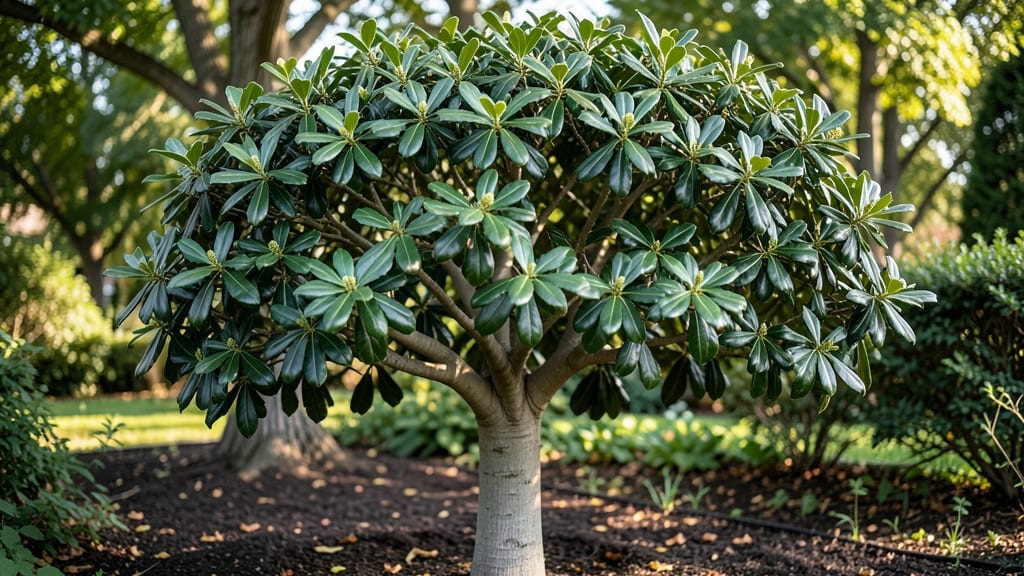
Curious about how tall do laurel trees grow before you commit to planting one? You might be surprised to learn these evergreen beauties can range from a modest 10 feet to towering 60-foot giants, depending on the variety.
Whether you're dreaming of a privacy screen or a statement centerpiece, understanding their growth potential is key to planning your garden layout.
Laurel trees like the cherry laurel 🌿 often stay between 20-30 feet tall, making them perfect for medium-sized yards, while the English laurel can stretch up to 40 feet with proper care. The real game-changer? Pruning habits and soil conditions can dramatically influence their height over time.
If you're working with limited space, don't worry - there are compact options that maintain a 10-15 foot height with regular maintenance. I'll show you exactly how to control their growth and keep them within your desired boundaries while still enjoying their lush foliage.
Ready to transform your outdoor space? Let's explore the different varieties, their growth rates, and the simple care tips that will help you achieve the perfect-sized laurel tree for your landscape. Your backyard's future starts with the right information.


Laurel tree height by variety: from dwarf to towering giants
Laurel trees come in stunning varieties, each with its own height potential and growth habits. If you're planning your landscape, knowing these differences is key to avoiding overcrowding or unexpected towering giants.
The three most popular types—English laurel, cherry laurel, and Portuguese laurel—offer dramatic contrasts in size, from compact shrubs to towering specimens.
For example, the English laurel (Prunus laurocerasus) typically reaches 20 to 30 feet at maturity, making it a mid-sized option perfect for privacy screens. Meanwhile, the cherry laurel (Prunus laurocerasus 'Rotundifolia') stays much smaller, often maxing out at 10 to 15 feet, ideal for smaller yards or container growing.
The Portuguese laurel (Prunus lusitanica) can grow even taller, sometimes exceeding 40 feet in ideal conditions.
Here’s a quick comparison to help you visualize their mature sizes and plan your garden layout accordingly:
When choosing a laurel tree, consider not just its maximum height but also its spread. For instance, the English laurel can spread 15 to 20 feet wide, while the Portuguese laurel may reach 25 feet or more.
This means spacing plants 10 to 20 feet apart to prevent root competition and ensure both trees thrive.
If you're working with limited space, the 'Rotundifolia' variety is a game-changer. Its compact size and rounded shape make it perfect for urban gardens or as a topiary specimen.
Just be aware that even dwarf varieties will grow taller over time if not pruned regularly. I’ve seen many gardeners underestimate how much these trees expand when given proper care!
Another factor to consider is your climate zone. Laurel trees thrive in USDA zones 6–9, but their growth rates can vary.
In warmer climates like zone 9, Portuguese laurel may grow 3 feet per year, while in cooler zone 7, growth might slow to 1–2 feet annually. Always check local frost dates to avoid planting too early in spring.
For those who love the look of laurel but want to keep things manageable, I recommend starting with container-grown plants. This gives you control over root growth and makes it easier to monitor height.
Just ensure your container is at least 18 inches deep and has drainage holes to prevent root rot.
Finally, remember that laurel trees are evergreens, meaning they retain their leaves year-round. This makes them excellent for winter interest, but also means they’ll cast shade consistently.
Plan your garden layout with this in mind—place them where their dense foliage can enhance your outdoor space without blocking sunlight from other plants.
Now that you know the height ranges, let’s explore how quickly these trees grow and when you can expect them to reach their full potential. Spoiler: Pruning plays a huge role in controlling their size!
How fast do laurel trees grow and when do they reach maximum height?
Laurel trees grow at different rates depending on the variety and growing conditions. Most varieties grow slow to moderate, adding just 12–24 inches per year in ideal conditions.
However, younger trees can spurt growth in their first few years, reaching 6–10 feet by age 3, while mature heights take 10–20 years to fully develop.
For example, Cherry Laurel grows faster than English Laurel, often reaching 20–30 feet in 10 years, while English Laurel may take 15–20 years to hit its 30–40-foot mature height. Portuguese Laurel is the slowest, typically growing 6–12 inches per year and taking 20+ years to reach 40–60 feet.
🌿
📌 Laurel Growth Timeline by Age
- Year 1: 2–4 feet (fastest growth phase)
- Year 3: 6–10 feet (juvenile growth spurt)
- Year 5: 10–15 feet (slower, steady growth)
- Year 10: 20–30 feet (varies by variety)
- Year 15+: 30–60 feet (mature height reached)
🌱 Note: Pruning can delay maturity by 3–5 years.
Several factors influence how quickly a laurel tree grows. Sunlight exposure is critical—trees in full sun grow 30% faster than those in partial shade. Well-draining, fertile soil with regular watering (but no soggy roots) also speeds up growth.
Conversely, poor soil, drought, or shade can stunt a tree’s height by 50% or more.
Pruning plays a surprising role too. If you prune annually in late winter, you can reduce height growth by 20–30% while encouraging bushier foliage. For Cherry Laurel, I recommend pruning every 2–3 years to maintain a 15–20-foot height—ideal for privacy screens without overwhelming your yard.
For English Laurel, prune once every 3–4 years to keep it under 25 feet.
Most laurel trees reach 75–90% of their mature height by age 15–20, with minimal additional growth afterward. If you’re planting near power lines or structures, monitor growth closely—Cherry Laurel can add 1–2 feet per year until maturity, while English Laurel grows more steadily but predictably.
Always check local regulations before planting near utilities!
🪴