
Trees
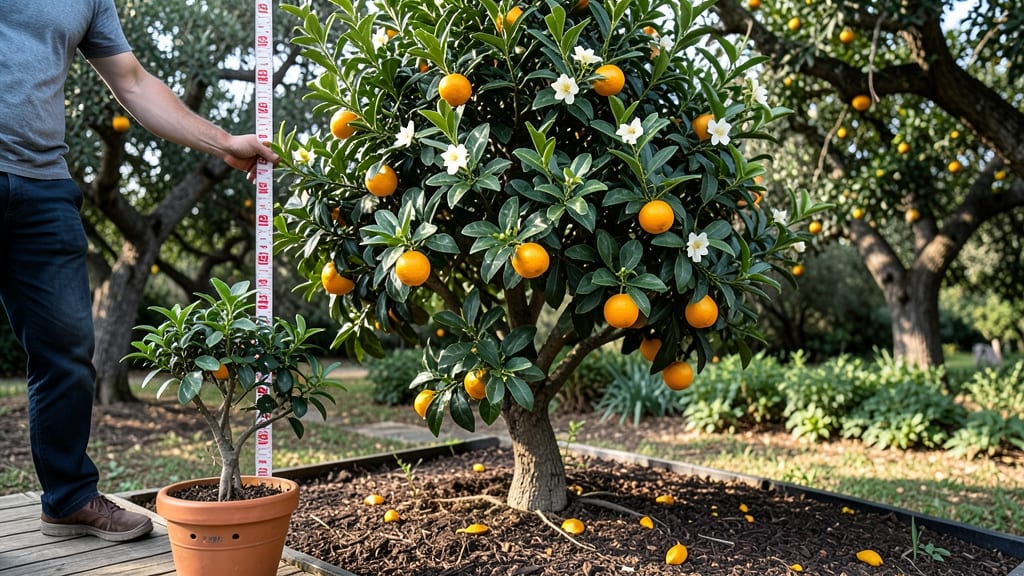
Mandarin tree height by variety: dwarf to full-size options
When planning your citrus grove, knowing mandarin tree height is key to choosing the right variety for your space. Standard mandarin trees (Citrus reticulata) typically reach 15–25 feet tall at maturity, making them perfect for large properties with open skies.
However, if you're working with limited space, dwarf and semi-dwarf varieties offer excellent alternatives without sacrificing fruit production.
For container gardening or small patios, dwarf mandarin trees stay under 6 feet tall, while semi-dwarf varieties grow between 6–12 feet. These compact options are ideal for urban gardens, balconies, or even large pots.
The trade-off? Some dwarf varieties may produce slightly smaller fruit, but the convenience of managing a smaller tree often outweighs this.
| Variety | Mature Height | Growth Habit | Best For |
|---|---|---|---|
| Dwarf Mandarin (e.g., 'Calamondin') | 3–6 ft | Compact, bushy | Containers, small spaces |
| Semi-Dwarf Mandarin (e.g., 'Clementine') | 8–12 ft | Upright, moderate spread | Small yards, large pots |
| Standard Mandarin (e.g., 'Satsuma') | 15–25 ft | Tall, spreading canopy | Large gardens, orchards |
| Improved Meyer Lemon-Mandarin Hybrid | 6–10 ft | Bushy, cold-hardy | Small yards, cooler climates |
If you're growing mandarins in containers, even standard varieties can be pruned to stay under 8 feet tall. This makes them surprisingly adaptable for patios or rooftop gardens.
Just ensure your pot is at least 18–24 inches wide to accommodate root growth and provide stability as the tree matures.
For gardeners in USDA zones 9–11, where mandarins thrive, standard varieties like 'Satsuma' or 'Kinnow' are excellent choices for larger properties. These trees develop a spreading canopy that can reach 15–25 feet wide, creating a stunning focal point in your landscape.
Their height also makes them less vulnerable to frost damage, as the canopy provides insulation for the trunk.
One often-overlooked factor in height management is rootstock selection. Many commercial mandarin trees are grafted onto dwarfing rootstock, such as Carrizo citrange or Swingle citrumelo, which can reduce mature height by 30–50%.
This technique is commonly used in commercial orchards but is also available for home gardeners through specialty nurseries.
For those with small urban gardens, consider the 'Improved Meyer Lemon-Mandarin' hybrid, which matures at 6–10 feet and is more cold-hardy than traditional mandarins. Its compact size and ability to thrive in USDA zone 8 with winter protection make it a favorite among city gardeners.
Plus, its fruit is a delicious blend of lemon and mandarin flavors!
When choosing a mandarin variety, also consider its growth rate. Dwarf varieties may take 3–5 years to bear fruit, while standard trees can produce mandarins in 5–7 years.
If you're impatient for a harvest, a semi-dwarf variety like 'Clementine' offers a good balance—reaching 8–12 feet while fruiting reliably within 4–5 years.
Pro tip: If you're unsure about your space, start with a dwarf mandarin in a container and observe its growth habits for a season. You can always transplant it to the ground later if it outgrows your pot.
This low-risk approach lets you test the waters before committing to a larger tree.
Finally, remember that pruning and training play a huge role in managing height. Regular pruning not only controls size but also encourages better air circulation and fruit production.
I’ll cover pruning techniques in detail in the next section, but for now, know that even a standard mandarin tree can be kept at a manageable height with consistent care.
Factors that influence mandarin tree height growth
Your mandarin tree’s final height isn’t set in stone—it’s shaped by a mix of environmental factors, care choices, and even container limitations. Understanding these variables lets you steer growth toward your space’s needs, whether that means keeping a tree compact or letting it reach its full potential.
Let’s break down the key players that can modify a mandarin’s height by 30–50%.
First, climate zone plays a huge role. Mandarin trees thrive in USDA zones 9–11, where warm winters prevent dormancy stress. Outside this range, growth slows dramatically—even stunted trees in zone 8 may only reach half their expected height.
Cold snaps can also trigger dieback, forcing regrowth that alters the tree’s structure and height trajectory.
Next, pruning techniques are your most direct tool for height control. Structural pruning—removing scaffold branches during dormancy—can keep a standard tree at 50% of its natural height.
Maintenance pruning (trimming new growth) keeps it bushier but won’t drastically reduce height. Just remember: Prune in late winter to avoid stressing the tree before spring growth.