
Flowers
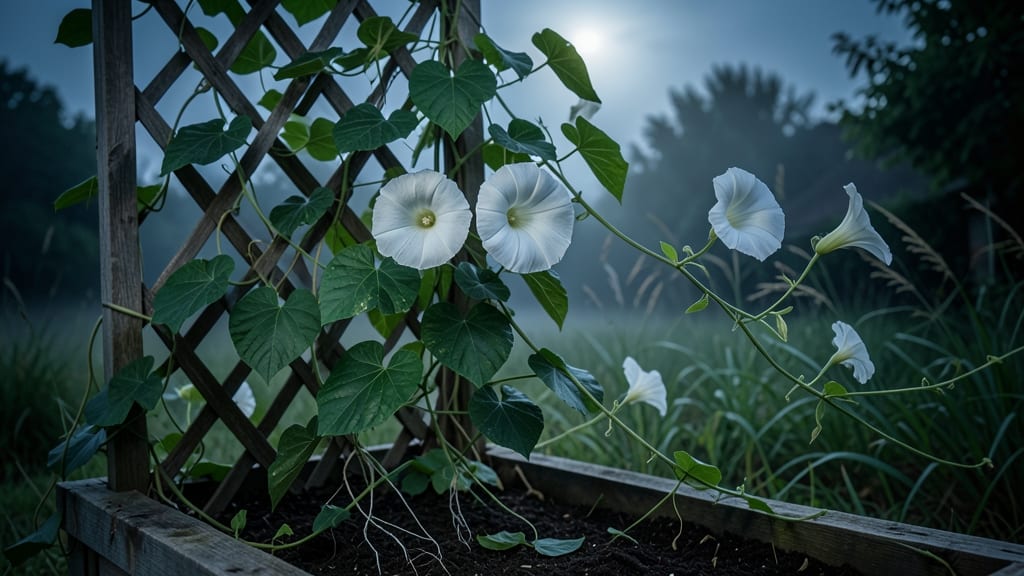
If you’ve ever dreamed of a garden that comes alive under the moonlight, you’re probably curious about how tall moonflowers grow—because these vining giants don’t just add height, they transform your space into a fragrant nighttime oasis. 🌙 With their delicate white blooms unfurling after sunset, moonflowers (Ipomoea alba) can climb 10 to 15 feet when given a sturdy trellis, but their sprawling nature means they’ll happily stretch even wider if left unchecked.
What makes moonflowers so fascinating isn’t just their dramatic height—it’s how quickly they grow. In just 60 to 90 days, these fast-climbing vines can blanket a trellis or fence, creating a stunning vertical display.
But here’s the catch: without support, they’ll sprawl across your garden bed, potentially overwhelming smaller plants or competing for space.
Whether you’re working with a cozy balcony or a sprawling backyard, understanding their growth habits is the key to maximizing their beauty without losing control. From choosing compact varieties to training them on trellises, we’ll cover everything you need to know to grow moonflowers that shine—literally—without taking over your garden.
Ready to turn your evening garden into a magical retreat? Let’s dive into how these nocturnal stars reach for the sky—and how you can guide their growth to create the perfect backdrop for your summer nights.


Moonflower growth height: vining giants vs compact varieties compared
Moonflowers (Ipomoea alba) are fast-growing vines that can reach dramatic heights—but their size depends entirely on growing conditions and support. Without guidance, they’ll sprawl 10–15 feet wide, while trained vines climb vertical structures to heights of 10–15 feet or more.
Their nocturnal blooms and fragrant flowers make them a standout, but their aggressive growth habit demands planning.
Standard moonflower varieties are not compact—they’re vining giants by nature. However, hybrid selections and training techniques can influence their spread. If you’re working with limited space, understanding these height variations is key to avoiding a garden takeover.
Let’s break down the average growth ranges and how to choose the right type for your space.
| Variety | Height Range | Spread Potential | Best For |
|---|---|---|---|
| Standard Moonflower (Ipomoea alba) | 10–15 ft (with support) | 10–15 ft (sprawling) | Large gardens, trellises, fences |
| Hybrid 'Moonlight' Series | 6–10 ft (with support) | 8–12 ft (sprawling) | Medium gardens, containers (with training) |
| Dwarf Varieties (Rare) | 3–6 ft (with support) | 4–6 ft (sprawling) | Small gardens, balconies, pots |
| Moonflower in Containers | 3–8 ft (with trellis) | 3–5 ft (sprawling) | Patios, decks, small spaces |
Standard moonflowers are not naturally dwarf plants—their height depends on support. Without a trellis, fence, or sturdy structure, they’ll sprawl horizontally, creating a ground cover that can reach 15 feet in a single season.
This rapid growth is one reason they’re considered invasive in some regions. However, with proper training, you can guide their vertical growth to 10–15 feet or even higher.
If you’re growing moonflowers in containers, their height will still reach 3–8 feet with a trellis, but their spread will be more controlled. This makes them ideal for balconies, patios, or small gardens where space is limited.
The key is to prune regularly and train vines to climb upward rather than sprawl outward.
For small gardens, consider hybrid varieties like the 'Moonlight' series, which tend to stay shorter (6–10 feet) when trained. These varieties are less aggressive but still produce stunning nocturnal blooms.
If you’re lucky, you might find dwarf selections in specialty nurseries, though they’re rare and may not offer the same fragrance or flower size as standard types.
One common misconception is that moonflowers are perennials—they’re actually annuals in most climates (USDA Zones 6–10). This means they’ll grow aggressively in one season and then die back, but you can plant new seeds each spring.
Their fast growth rate (up to 6 inches per week under ideal conditions) means they’ll quickly dominate a garden bed if left unchecked.
To maximize height without sacrificing blooms, plant moonflowers near strong support structures like arbors, pergolas, or tall trellises. Their heavy vines need sturdy anchors—weak supports will snap under the weight of 10-foot vines laden with large, fragrant flowers.
For smaller spaces, opt for container-growing with a vertical trellis to keep vines compact and manageable.
Remember, height isn’t the only factor—their spread is equally important. A single moonflower plant can cover 100+ square feet in a season if not controlled. Pruning, training, and regular maintenance are essential to keep these vining giants from taking over your garden.
With the right approach, you can enjoy their magical nighttime blooms without the chaos of unchecked growth.
🌱
Moonflower growth height: vining giants vs compact varieties compared
Moonflowers (Ipomoea alba) are fast-growing vines that can reach impressive heights when given the right conditions. Without support, they sprawl 10–15 feet across the ground, but with a sturdy trellis, they’ll climb vertically to the same height.
This dramatic growth habit makes them perfect for vertical gardens or privacy screens, but their size can overwhelm small spaces if unchecked.
Standard moonflower varieties are not compact—they’re vining giants that thrive when allowed to climb. However, some hybrid or less common types may stay shorter, especially in cooler climates or when grown in containers. Understanding these differences helps you choose the right variety for your garden layout and sunlight exposure.
| Variety | Height Range | Spread Potential | Best For |
|---|---|---|---|
| Standard Moonflower | 10–15 ft | 10–15 ft (ground cover) | Trellises, fences, large gardens |
| Hybrid Compact Types | 6–10 ft | 5–8 ft (ground cover) | Containers, small gardens, balconies |
| Moonflower in Containers | 3–6 ft (with pruning) | 2–4 ft (spread) | Patios, decks, small spaces |
Moonflowers are annuals in most U.S. climates (USDA Zones 6–10), meaning they complete their life cycle in one season. This fast growth—6–10 feet in just 3–4 months—makes them ideal for quick garden transformations.
However, their height isn’t the only factor; their spread can double the space they occupy if left unchecked.
For small gardens, prioritize hybrid varieties or prune aggressively to keep vines under 6 feet. In larger spaces, embrace their full height by training them on arbors or pergolas to create a romantic, fragrant canopy.
The key is balancing their vertical growth with your garden’s layout to avoid overwhelming nearby plants.
If you’re growing moonflowers in containers, expect 3–6 feet of height with regular pruning. Use large pots (at least 15–20 gallons) and provide a small trellis inside the container to guide their growth upward. This not only saves space but also makes harvesting their nocturnal blooms much easier.
Remember, moonflowers thrive in full sun (6–8 hours daily) and well-draining soil. Their height and spread are directly tied to these conditions—poor soil or shade will stunt growth, while ideal conditions will encourage their full 10–15-foot potential. Plan accordingly to avoid surprises in your garden’s layout!