
How To
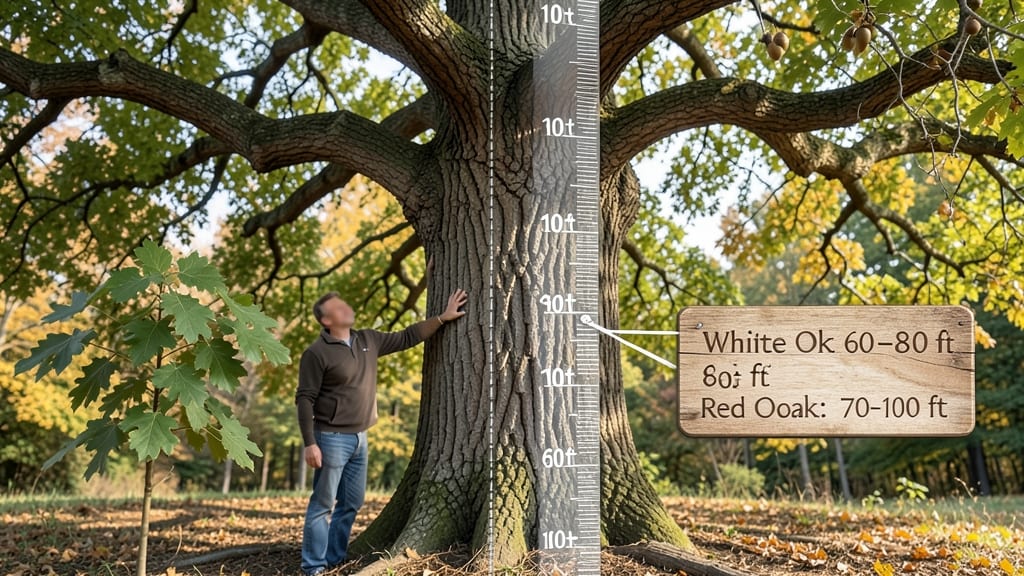
Wondering how tall do oaks grow before you commit to planting one? The answer might surprise you—some varieties stretch taller than a 6-story building, while others stay manageable for smaller yards.
Whether you're dreaming of a majestic shade provider or need a low-maintenance landscape staple, oak trees offer options that fit every space.
Oak trees like the towering white oak can reach 100 feet or more, while dwarf varieties like the Prairie Horizon bur oak top out around 25 feet. The right choice depends on your climate, soil, and even local regulations.
I’ll break down the key species, their growth habits, and what you can do to shape their future height—because even giants need a little guidance.
From the rapid growth of red oaks to the slow-and-steady climb of live oaks, each type has its own timeline. Understanding these differences helps you plan for years ahead, whether you're dealing with USDA Zone 6a winters or urban planting restrictions.
Let’s explore how to pick the perfect oak for your landscape—and how to keep it from outgrowing your dreams.
Ready to make an informed decision? You’ll discover which oaks thrive in your area, how fast they’ll grow, and even how to prune them safely. Planting an oak isn’t just about today—it’s about centuries of shade, wildlife support, and legacy. Let’s get started.


Oak tree height by species: from dwarf varieties to towering giants
Oak trees are nature’s skyscrapers, with some species reaching heights that rival city buildings. The white oak and red oak are classic giants, often soaring between 60 to 100 feet at maturity, while others like the bur oak or live oak offer more manageable sizes.
But how do you know which oak will fit your space? Let’s break it down by species, including rare exceptions that defy expectations.
First, understand that oak heights vary wildly—even within the same species. A white oak in ideal conditions might hit 90 feet, while one in poor soil could max out at 50 feet.
The bur oak, known for its rugged resilience, grows 24 inches per year under perfect conditions, outpacing slower-growing white oaks. Meanwhile, the dwarf varieties like ‘Prairie Horizon’ bur oak stay under 25 feet, making them ideal for smaller yards.
Here’s a quick comparison: the coast live oak, native to California, can stretch 80 to 100 feet wide and tall, while the pin oak typically reaches 50 to 75 feet.
Even the swamp white oak, despite its name, tops out around 60 feet—proving that wet soil doesn’t always mean giant growth. Each species has its own growth quirks, so let’s dive into the details.
| Species | Mature Height (ft) | Growth Rate (in/year) | Notes |
|---|---|---|---|
| White Oak | 60–100 | 12–24 | Slow-growing; long-lived (300+ years) |
| Red Oak | 60–90 | 15–20 | Faster growth than white oak; prone to oak wilt |
| Bur Oak | 50–80 | 24 (young), 12 (mature) | Tough bark; drought-resistant |
| Live Oak | 40–80 | 12–18 | Evergreen in warm climates; wide-spreading |
| Pin Oak | 50–75 | 12–18 | Pyramidal shape; susceptible to leaf spot |
| Dwarf Varieties (e.g., 'Prairie Horizon') | 15–25 | 6–12 | Genetically compact; ideal for small yards |
| Swamp White Oak | 60–80 | 10–15 | Thrives in wet soils; slower growth |
The coast live oak is a standout for its sheer size and longevity, often becoming a landscape centerpiece. In California, these trees can live over 500 years while maintaining their massive canopies. Meanwhile, the bur oak is a powerhouse in colder climates, thanks to its cold-hardy genetics.
Its 24-inch annual growth in youth makes it one of the faster-growing oaks, though it slows as it matures.
For those with limited space, dwarf oak varieties like ‘Prairie Horizon’ bur oak are game-changers. These trees stay under 25 feet tall but still produce acorns and offer all the benefits of their larger cousins—just in a smaller package.
They’re perfect for urban gardens or properties with HOA height restrictions. Even the pin oak, while not a dwarf, has a narrower form (30–50 feet wide) compared to its height, making it a better fit for tight spaces.
One of the most fascinating exceptions is the giant sequoia oak hybrid, a rare crossbreed that can exceed 120 feet in ideal conditions. While not commercially available, this natural phenomenon highlights how oak genetics can push boundaries.
Most gardeners will stick to proven species, but it’s worth noting that even "standard" oaks can surprise you with their growth potential.
Soil type plays a huge role in oak height. Well-draining, loamy soil with 6.0–7.5 pH
How fast do oaks grow? Height projections by age and species
Oak trees are patient giants, and their growth pace varies dramatically by species. While some oaks like the bur oak can add 24 inches per year in ideal conditions, others like the white oak grow just 12 inches annually.
Understanding these growth rates helps you plan for your landscape’s future—whether you’re planting a shade tree for your kids or a future giant that will outlive your home.
Age plays a critical role in oak height. In their first decade, oaks grow slowly—expect only 1-2 feet per year. By age 20, a pin oak might reach 30 feet, while a red oak could hit 40 feet.
By age 30, white oaks often surpass 50 feet, and by age 50, they can tower over 70 feet. These projections assume optimal conditions: well-draining soil, full sun exposure, and minimal competition.
Climate zones also influence growth speed. In USDA zones 5-7, oaks like the bur oak thrive, gaining height faster due to cooler summers and rich soils. Meanwhile, in zones 8-9, species like the live oak grow more slowly but develop thicker canopies for shade.
Always check your local USDA zone—it’s a game-changer for oak growth expectations.
🌱
Soil quality is the secret weapon for faster oak growth. Well-draining, sandy loam soils with a slightly acidic pH (6.0-7.0) accelerate height gains. Amend clay-heavy soils with compost or sand to improve drainage, and avoid waterlogged areas—root rot can stall growth entirely.
If your soil is poor, consider planting a dwarf oak variety like ‘Prairie Horizon’ bur oak, which grows half as fast but stays manageable.
Sunlight exposure directly impacts oak height. Full sun (6+ hours daily) is non-negotiable—oaks need it to fuel rapid growth. In partial shade, expect 30-50% slower height increases.
If you’re planting near other trees, space your oak at least 30 feet away from competitors to ensure it gets the light it craves. Even a single mature shade tree nearby can reduce your oak’s growth by half.
With the right conditions, some oaks can accelerate growth in their prime years. For example, a bur oak in USDA zone 6 might hit 50 feet by age 25 if planted in full sun with regular deep watering.
Track your oak’s progress annually—measure its trunk circumference and height in early spring to monitor growth trends. Patience is key, but with the right care, your oak could become a century-old landmark in your lifetime.