
How To
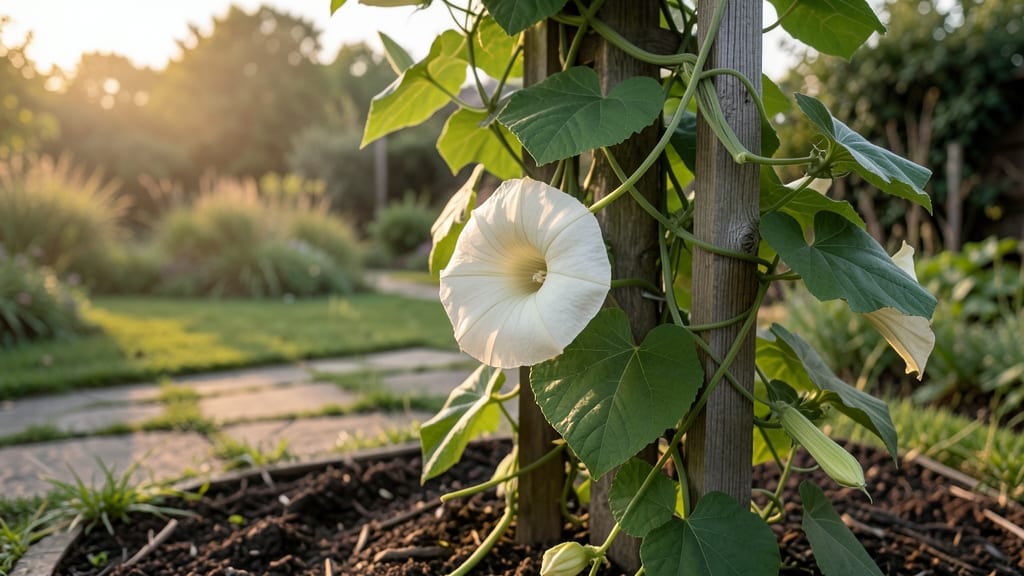
Moonflower vining growth: expected height and spreading length
Moonflowers (Ipomoea alba) are fast-growing vines that can reach stunning heights when given proper support. In ideal conditions, they typically grow 10 to 25 feet tall, though most gardeners see 15 to 20 feet in a single season.
Without support, they’ll sprawl horizontally up to 15 feet, creating a dramatic ground cover.
This nocturnal beauty thrives in warm climates (USDA Zones 9-11) but can also grow in cooler regions if planted after the last frost. The key to maximizing height lies in support structures—trellises, fences, or even sturdy pergolas—since moonflowers are twining vines that climb counterclockwise.
Here’s what influences their growth: sunlight exposure, soil moisture, and pruning habits. A moonflower in full sun with consistent watering can grow 1 to 2 feet per week during peak season (June–August). In shadier conditions, expect slower, bushier growth with fewer blooms.
| Growth Factor | Details |
|---|---|
| Mature Height (Vertical) | 10–25 ft (with support) |
| Spreading Length (Horizontal) | 10–15 ft (without support) |
| Growth Rate (Peak Season) | 1–2 ft per week |
| Sunlight Needs | 6+ hours of direct sun |
| Best Support Structures | Trellis, fence, or pergola |
If you’re wondering how tall your moonflower will grow in containers, expect shorter vines (5–10 feet) due to root restrictions. However, they’ll still produce fragrant blooms if given enough space to climb. For vertical gardens, use strong trellises—moonflowers can overwhelm weak supports with their rapid growth.
In cooler climates (Zones 6–8), moonflowers may grow slower and reach 10–15 feet unless given extended summer heat. They’re annuals in these regions but can self-seed for next year’s display. For perennial growth, plant in Zones 9–11 where they’ll return year after year.
One common mistake is assuming moonflowers will climb anything. They need rough-textured surfaces (like bamboo or wire trellises) to grip—smooth poles won’t work! For maximizing height, train vines upward early in the season to encourage vertical growth rather than sprawling.
For flower production, focus on healthy vines with glossy leaves. Over-fertilizing with nitrogen can lead to leafy growth at the expense of blooms, so use a balanced 5-10-10 fertilizer sparingly. Prune sparingly—just remove dead or crowded stems to maintain airflow and reduce disease risk.
Moonflowers also spread aggressively if left unchecked. In wild settings, they can outcompete nearby plants, so contain them with deep mulch or physical barriers.
If you’re growing them near other vines (like morning glories), expect a competitive showdown—moonflowers often win due to their rapid growth rate.
Pro tip: Plant moonflowers near patios or decks where their vertical growth creates a romantic, fragrant canopy. Pair them with clematis or passionflowers for a multi-level vine display.
Just remember—patience is key! It takes 60–90 days from seed to first bloom, but the nocturnal fragrance is worth the wait. 🌙
Moonflower vining growth: expected height and spreading length
Moonflowers (Ipomoea alba) are fast-growing vines that can reach 10–25 feet in a single season with proper support. Their sprawling habit means they’ll climb vertically on trellises or fences but can also spread horizontally if left unchecked.
In ideal conditions—full sun, rich soil, and consistent moisture—they grow 1–2 feet per week during peak season, turning your garden into a fragrant nighttime canopy.
The average mature height for moonflowers is 15–20 feet, but some varieties or well-fed plants can exceed 25 feet when given strong trellis support. Without support, they’ll sprawl 10–15 feet wide, creating a lush ground cover that’s perfect for pergolas or arbors.
Their rapid growth rate makes them a favorite for quick privacy screens or dramatic vertical accents.
🌱 Moonflower Growth Summary
| Growth Stage | Height Range | Spreading Width | Key Notes |
|---|---|---|---|
| First Year | 10–15 ft | 5–10 ft | Fastest growth in warm climates |
| Mature Plant | 20–25 ft | 10–15 ft | Requires strong trellis or fence |
| Dwarf Varieties | 5–10 ft | 3–5 ft | Ideal for containers or small gardens |
One of the most misunderstood aspects of moonflower growth is their directional flexibility. While they naturally climb, they don’t have tendrils like passionflowers—they twine around supports using their stems.
This means you can guide their growth by positioning trellises or fences at 45-degree angles to encourage a more compact, bushier habit rather than a single towering vine. For example, a 6-foot tall trellis will limit height to 10–12 feet if pruned regularly.
Regional variations also play a role in height. In USDA Zones 9–11, where winters are mild, moonflowers often reach their full 20–25 foot potential as perennial vines. In cooler zones (6–8), they’re typically grown as annuals, but with extended seasons, they can still hit 15–20 feet before frost. To maximize growth in cooler climates, start seeds indoors 8–10 weeks before last frost and transplant after soil warms to 70°F+.
If you’re planning a moonflower garden, consider companion plants that thrive under their sprawling shade. Morning glories, nasturtiums, or dwarf sunflowers work well at the base, while climbing roses or clematis can share trellis space.
Just avoid planting them near delicate perennials like hostas, as their aggressive growth can smother smaller plants. A 3-foot buffer zone around the base helps maintain balance in your garden layout.
For container growing, expect shorter heights (5–10 feet) due to limited root space, but you can still train them to climb small trellises or obelisks. Use large pots (15+ gallons) with well-draining soil and fertilize every 3–4 weeks to encourage vertical growth.
In containers, moonflowers are perfect for balconies, patios, or small courtyards, adding dramatic vertical interest without overwhelming the space.