
Watering
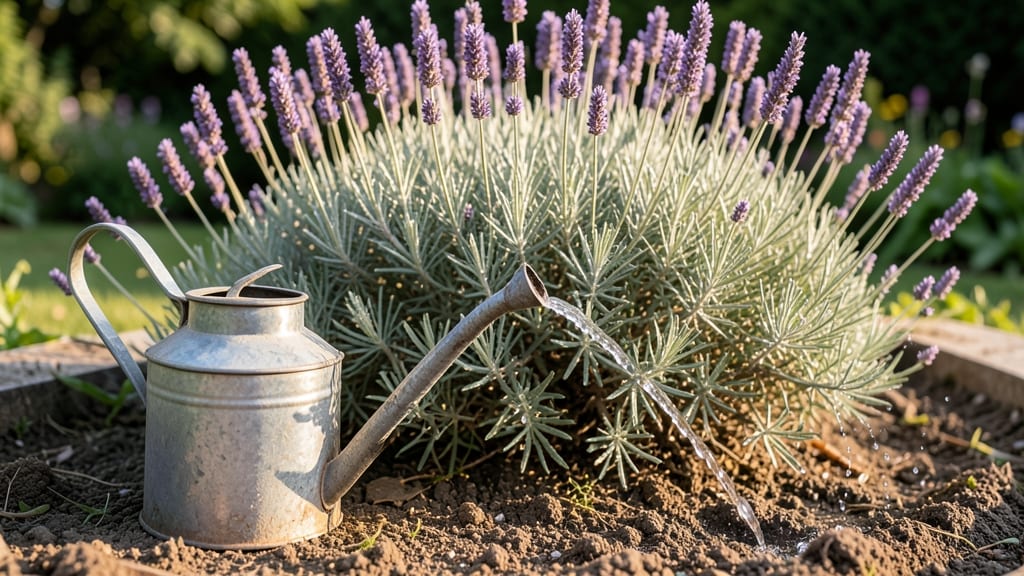
If your lavender plant 🌿 looks thirsty but you're not sure how much water to give it, you're not alone—this drought-loving herb hates soggy roots more than it craves hydration. The key isn't frequent light watering but deep, infrequent soaks that mimic its natural Mediterranean climate.
Think of lavender as a sunbather who prefers dry spells between drinks. In Zone 6a, where frost lingers until mid-April, spring planting calls for gentle watering, while summer heat demands patience—wait until the soil is bone-dry before giving it a thorough drink.
Even in fall, when you're tempted to water more, remember: lavender's secret to survival is its ability to store moisture.
But here's the catch: too little water wilts its leaves, while too much drowns its roots. I'll show you exactly how to test soil moisture, adjust for containers vs. garden beds, and spot the warning signs before your lavender throws in the towel. No guesswork—just thriving, fragrant blooms that last.
Let's cut through the confusion and get your lavender the perfect watering routine, whether you're a first-time gardener or a seasoned pro looking to refine your technique. Your purple paradise starts with understanding its thirst—and trust me, it's not what you think.

How much water lavender plants need by season (with exact guidelines)
Lavender plants thrive on consistency—they despise soggy roots but also struggle when their soil dries out completely. The key is deep, infrequent watering that mimics their natural Mediterranean habitat.
As a rule, lavender needs 1 inch of water every 7-10 days during active growth, but this changes dramatically with the seasons. Let’s break down the exact watering schedule for each season to keep your lavender lush and fragrant.
In spring, when new growth emerges, lavender benefits from weekly light watering—about ½ inch per session. This encourages root development without overwhelming the plant. I always test soil moisture by sticking my finger 2 inches deep; if it feels dry, it’s time to water.
Overwatering now can lead to root rot, which is irreversible. For container-grown lavender, this means watering every 5-7 days since pots dry out faster.
| Season | Watering Frequency | Depth | Soil Moisture Test | Key Tip |
|---|---|---|---|---|
| Spring | Weekly (light) | ½ inch | 2" deep dry | Encourage root growth |
| Summer | Every 10-14 days | 1-2 inches | 3" deep dry | Deep soak at base |
| Fall | Bi-weekly (light) | ½ inch | 2" deep dry | Reduce stress before dormancy |
| Winter | Monthly (if no rain) | ¼ inch | Top 1" dry | Avoid wetting foliage |
Summer is when lavender’s drought tolerance truly shines. With intense heat and longer daylight, your lavender will only need watering every 10-14 days. The trick is to water deeply—aim for 1-2 inches of moisture per session, delivered directly at the base.
I use a soaker hose or drip irrigation to prevent water from touching the leaves, which can cause fungal issues. If you’re in a hot, dry climate, like Zone 7 or higher, you might stretch this to every 3 weeks once established.
As temperatures drop in fall, lavender enters a transitional phase. Reduce watering to bi-weekly light soaks—just enough to keep the soil slightly moist at the surface. This prepares the plant for winter dormancy without shocking it.
I’ve learned the hard way that overwatering in fall can lead to weak stems that struggle to survive frost. Always check the soil before watering; cool weather slows evaporation, so the soil stays moist longer.
Winter care is minimal but critical. Lavender is drought-deciduous, meaning it sheds leaves in cold months to conserve water. In most climates, you’ll only need to water monthly if there’s no rain. The goal is to keep the top inch of soil barely moist.
I’ve seen lavender survive months without water in winter, but if you’re in a mild-winter zone (Zone 8+), a light drink every 4-6 weeks keeps it healthy. Never water in the evening—wet foliage in cold temps invites disease.
Container-grown lavender needs more frequent watering than in-ground plants because pots dry out faster. In summer, I water my potted lavender every 5-7 days, always until water runs out the drainage holes. The key difference is monitoring soil moisture daily—stick your finger in the soil.
If it’s dry past 1 inch deep, water immediately. For containers, I also avoid saucers; excess water sitting at the bottom can rot roots. Use a cache pot with pebbles to improve drainage.
One of my biggest mistakes was watering lavender on a schedule without checking soil conditions. Now, I always test moisture first. Here’s how: Stick your index finger 2-3 inches deep into the soil. If it feels dry, water; if it’s damp, wait.
This simple test saves lavender from both drought stress and root rot. For extra peace of mind, I use a moisture meter for containers, especially in hot summers. Remember, lavender’s roots are shallow—surface watering won’t reach them, so always water at the base.
If you’re in a rainy climate, like the
Signs your lavender is overwatered or Underwatered (and how to fix it)
Lavender plants are famously drought-resistant, but even they can show distress when watered incorrectly. The key is learning to read their subtle signals—wilting, yellowing, or mushy stems all mean your watering routine needs adjustment. Let’s decode these 5 common symptoms and how to correct them before it’s too late.
First, check your soil moisture by sticking your finger 2-3 inches deep. If it feels damp, you’re likely overwatering. Lavender roots need air to thrive, and soggy soil suffocates them. Conversely, if the soil is bone-dry, your plant is thirsty—but not in the way you might think.
Yellowing leaves are the most obvious red flag. Unlike nutrient deficiencies, overwatered lavender turns yellow from the bottom up, often with a mushy stem. Underwatered lavender, however, shows crispy, brown edges on leaves. Both issues require immediate action to save your plant.
🌱 Overwatered lavender:
- Yellow leaves (bottom-up)
- Mushy stems (root rot)
- Fungal growth (white mold)
- Slow growth or wilting despite moist soil
- Pale, limp foliage with a sour smell
💧 Underwatered lavender:
- Crispy leaf edges (brown and dry)
- Wilted stems that don’t bounce back
- Dry, brittle soil pulling away from pot edges
- Stunted growth or no new buds
- Leaves curling inward to conserve moisture
⚠️ Emergency Fixes for Lavender
Overwatered? Stop watering immediately and repot in dry, gritty soil (mix sand or perlite). Trim any mushy roots with sterile scissors. Place in bright, indirect light for 1-2 weeks to recover.
Underwatered? Water deeply until it drains from the bottom, then let soil dry completely before watering again. Move to a shadier spot for 3-5 days to reduce stress.
For container-grown lavender, the fix is simpler: use a pot with drainage holes and a soil mix designed for succulents or herbs. I swear by a blend of 60% potting soil, 30% perlite, and 10% coarse sand—it mimics their Mediterranean homeland perfectly.
Pro tip: If your lavender’s leaves feel sticky or slimy, it’s a sign of bacterial rot from overwatering. Remove infected stems immediately and treat the soil with a copper fungicide to prevent spread. With the right care, your lavender will bounce back stronger than ever!