
Plants
Rhode Island dahlia planting timeline by USDA hardiness zones (5b, 6a, 7a)
Rhode Island’s USDA Zones 5b–7a create unique challenges for dahlia growers. Coastal areas like Narragansett Bay experience earlier last frosts (around April 20), while inland zones near Providence can linger near freezing until May 5. These differences mean your planting window shifts by 2–3 weeks depending on location.
Dahlias thrive in warm soil (60°F+) and frost-free conditions. In Rhode Island, this typically means waiting until mid-to-late May for most areas.
However, Zone 5b gardeners (e.g., Block Island) should delay until May 20 to avoid late frosts, while Zone 7a (e.g., South Kingstown) can plant as early as May 1 if using row covers.
For maximum blooms, start tubers indoors in late March (Zone 5b) or early April (Zone 6a–7a). This 4–6 week head start ensures robust plants ready for transplanting after last frost. Use a heat mat to maintain 65–70°F soil temps for faster sprouting.
Soil temperature is your best guide—plant only when soil reaches 60°F at 4 inches deep. Test with a soil thermometer or wait until average nighttime temps stay above 50°F. Coastal areas may need to wait 1–2 weeks longer due to moderating ocean breezes that delay warming.
Here’s your zone-specific planting timeline, including key deadlines for indoor starts and outdoor planting:
| Zone | Indoor Start (Tubers) | Outdoor Planting Window | Last Frost Date (Avg.) | Soil Temp Threshold |
| 5b (Block Island, Coastal) | Late March | May 20–June 1 | April 20 | 60°F+ |
| 6a (Providence, Central RI) | Early April | May 10–May 25 | May 5 | 60°F+ |
| 7a (South Kingstown, Westerly) | Early April | April 25–May 10 | April 15 | 60°F+ |
Pro tip: Use black plastic mulch to warm soil 2–3 weeks faster in cooler zones. Lay it down 2 weeks before planting to create a microclimate that speeds up tuber growth.
If you’re in a coastal microclimate (e.g., Newport or Watch Hill), err on the side of planting later. Ocean winds can delay soil warming by 10–14 days compared to inland areas. Monitor local almanac frost dates and adjust your timeline accordingly.
For container gardening, plant tubers in pots 2 weeks earlier than your zone’s outdoor window. Containers warm up faster and let you move plants indoors if late frosts threaten. Use 1-gallon pots per tuber with well-draining mix.
Remember: Dahlias need 60–90 days to bloom after planting. If you miss the May window, opt for fast-blooming varieties like ‘Thomas Edison’ (60-day bloom time) or ‘Café au Lait’ (75 days). These thrive even with late starts.
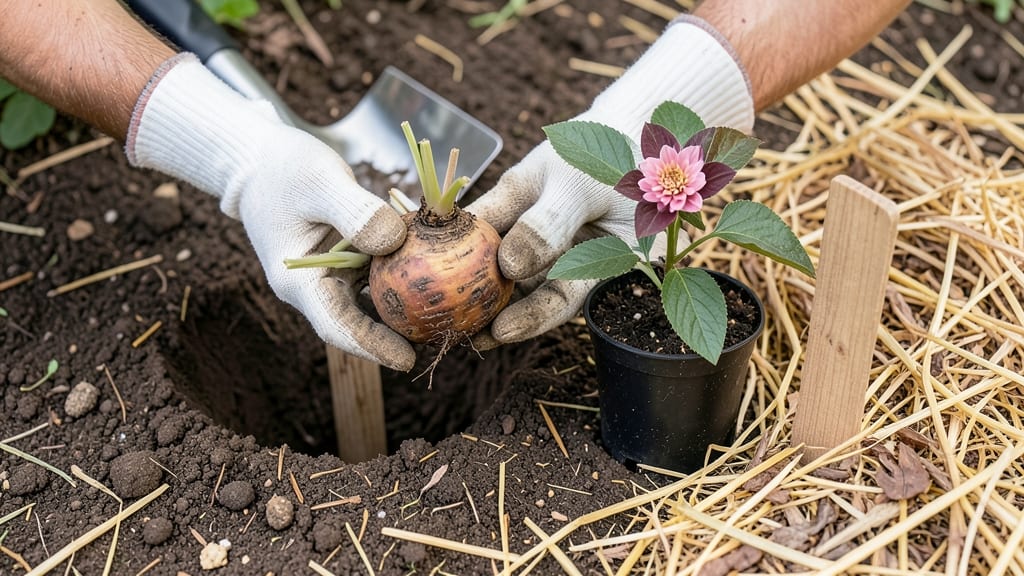
After planting, mulch heavily with straw or shredded leaves to maintain consistent soil temps and suppress weeds. This is especially critical in Rhode Island’s humid summers, where mulch reduces soil-borne diseases like powdery mildew.
Rhode Island dahlia planting timeline by USDA hardiness zones (5b, 6a, 7a)
Rhode Island spans USDA Zones 5b, 6a, and 7a, with coastal areas (like Narragansett Bay) often 1-2 weeks cooler than inland spots. This means your last frost date could vary from April 15 in Zone 7a to May 1 in Zone 5b.
Waiting until after these dates is critical—dahlias cannot tolerate frost at any stage. For Zone 6a (most of RI), aim for mid-to-late May when soil hits 60°F consistently.
Start tubers indoors 8-10 weeks before your last frost date if you want a head start. In Zone 7a, this means early March planting indoors, while Zone 5b gardeners should begin in late March. Use well-draining pots and keep them in bright light—tubers need 65°F+ soil to sprout.
Transplant outdoors only after all danger of frost has passed, usually by June 1 in Zone 7a and June 15 in Zone 5b.
🌱 Rhode Island Dahlia Planting Timeline by Zone
| Zone | Last Frost Date | Indoor Start (Tubers) | Outdoor Planting Window | Soil Temp Threshold |
|---|---|---|---|---|
| 5b (Western RI) | May 1 | Late March | June 15–July 1 | 60°F+ |
| 6a (Most of RI) | April 25 | Early March | May 20–June 10 | 60°F+ |
| 7a (Coastal RI) | April 15 | Early March | May 10–May 25 | 55°F+ (earlier) |
⚠️ Note: Coastal areas (Zone 7a) may experience delayed warming due to ocean breezes. Monitor soil temps with a thermometer!
For direct-sown tubers (skipping indoor starts), wait until soil is 60°F+ and all frost risk is gone. In Zone 6a, this is typically late May to early June.
Use black plastic mulch to warm soil faster if you’re eager to plant earlier—this can shave 1-2 weeks off your timeline. Just remove the mulch once plants emerge to prevent overheating.
If you’re in a microclimate (e.g., near Narragansett Bay), err on the side of caution. Coastal winds can delay soil warming by up to 10 days. Test soil temp with a thermometer—dahlias won’t thrive below 60°F.
Inland areas (like Providence) can plant 1-2 weeks earlier than coastal spots like Newport.
Once planted, mulch heavily with straw or shredded leaves to retain moisture and regulate soil temp. This is especially important in Zone 5b, where summer heat can cause soil temp spikes that stress dahlias.
Aim for 2-3 inches of mulch around (not touching) the stems to keep roots cool and hydrated.
For maximum bloom time, prioritize early varieties like ‘Café au Lait’ in Zone 5b or ‘Thomas Edison’ in Zone 7a. These bloom in 60-70 days, ensuring you see flowers before first frost (typically October 15). In Zone 6a), you’ll have until mid-October for blooms—plan accordingly!