
Plants
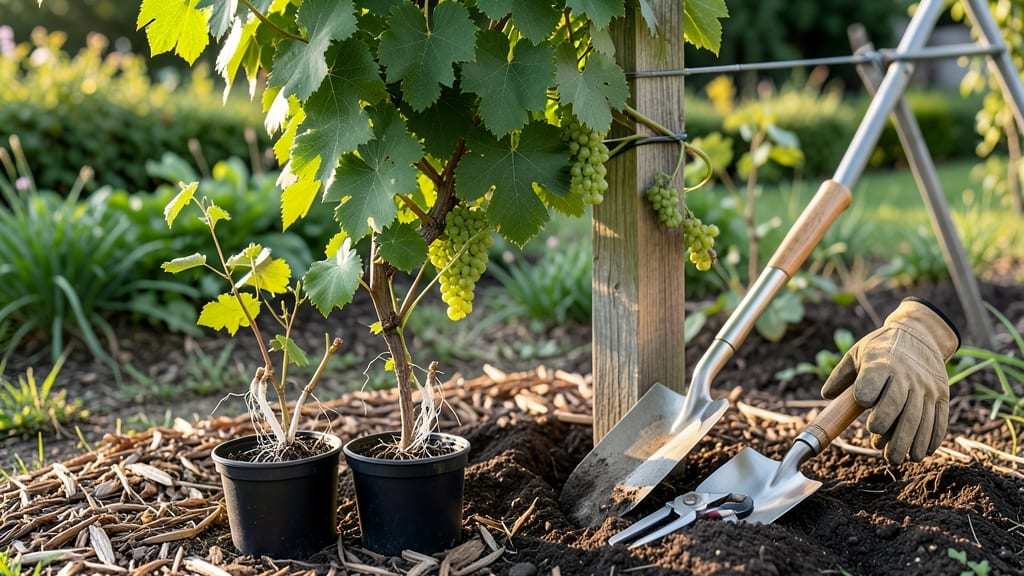
Timing your 🍇 grapes planting in Oklahoma isn’t just about the calendar—it’s about matching your vines to the state’s 6b-7a chill hours and soil temperatures. Plant too early, and frost will nip your young shoots before they take root.
Too late, and your vines might struggle to establish before summer’s brutal heat kicks in.
Most Oklahoma gardeners swear by late winter to early spring (February–March) as the perfect window, but the real secret lies in soil temps—aim for 50–65°F and you’ll set your vines up for success.
Whether you’re planting bare-root varieties or container-grown vines, getting this right means fewer diseases, stronger roots, and sweeter harvests by August.
I’ve seen firsthand how a few weeks can make or break a grapevine’s first season. In this guide, I’ll break down the exact chill hour requirements for popular varieties, how to prep your soil for Oklahoma’s clay-heavy earth, and why mulching matters more than you think.
Let’s make sure your 🍇 grapes thrive—not just survive.
Ready to avoid the common mistakes that leave vines wilting by June? I’ll walk you through the step-by-step timing, from frost dates to trellis prep, so you can confidently plant and watch your vines grow into a productive, shade-providing powerhouse. Your future harvest starts with the right move now.
Oklahoma’s chill hour requirements for grapes: matching varieties to your Zone
Oklahoma’s climate ranges from USDA Zone 6b in the north to Zone 8a in the south, creating a challenge for grape growers. Most grape varieties need 500–1,200 chill hours (temperatures between 32–45°F) to break dormancy and produce fruit.
If you plant a variety with too few chill hours, your grapes may bloom but fail to set fruit. Conversely, too many chill hours can stress heat-loving varieties like Muscadine or Scuppernong.
Northern Oklahoma (e.g., Oklahoma City, Tulsa) typically sees 800–1,000 chill hours, while southern regions (e.g., Lawton, Altus) average 600–800 hours. This means cold-hardy varieties like Concord or Niagara thrive in the north, while heat-tolerant types like Cynthiana or Scuppernong suit the south.
Always check the chill hour range of your chosen variety before planting.
Here’s how to match grape varieties to Oklahoma’s chill hour zones for the best results:
| Zone | Chill Hours | Best Varieties | Notes |
|---|---|---|---|
| 6b (North) | 800–1,000 | Concord, Niagara, Catawba | Cold-hardy; needs winter protection |
| 7a (Central) | 600–800 | Cynthiana, Scuppernong, Muscadine | Heat-tolerant; drought-resistant |
| 8a (South) | 500–600 | Bluebunch, Summer Royal, Red Malaga | Low-chill; thrives in heat |
For example, if you live in Tulsa (Zone 7a), Cynthiana is a fantastic choice—it meets the 600–800 chill hour requirement and handles Oklahoma’s summer heat. But if you’re in Oklahoma City (Zone 6b), Concord or Niagara will perform better with their higher chill hour needs.
Always verify the variety’s chill hour range on the nursery label or USDA Plant Hardiness Zone Map.
Pro tip: If you’re unsure about your local chill hours, use a chill hour calculator (like the one from Purdue University) or check with your local Cooperative Extension Service.
They can provide precise data for your county. For instance, Lawton (Zone 7b) averages 700 chill hours, making Scuppernong a great fit.
Another key factor is heat tolerance. Southern Oklahoma’s summers can exceed 100°F, so varieties like Muscadine (native to the Southeast) handle the heat better than traditional Vitis vinifera grapes, which may struggle in Zone 8a.
If you’re growing wine grapes, consider hybrids like Chambourcin or Valvin Muscat, which balance chill hours and heat tolerance.
Finally, remember that microclimates matter. A north-facing slope in Oklahoma City might stay cooler than the surrounding area, extending the growing season. Conversely, a south-facing yard in Tulsa could experience earlier spring warmth, allowing you to plant slightly earlier.
Always observe your yard’s unique conditions before finalizing your planting plan.
Once you’ve matched your variety to your zone, the next step is timing—soil temperature and frost dates play a critical role in ensuring your grapes establish strong roots before Oklahoma’s summer heat sets in. 🍇
Soil temperature and planting windows: when to start grapes in Oklahoma’s climate
Timing your grape planting in Oklahoma hinges on soil temperature and last frost dates, which vary by county. Aim for 50–65°F soil temps—too cold delays root growth, while warm soil kickstarts vigorous sprouting.
Most Oklahoma counties see their average last frost between March 1–15, but microclimates near mountains or valleys can shift this by weeks.
For bare-root vines (the most common type), plant 4–6 weeks before your last frost date. This window—typically late February to early April—gives roots time to establish before spring warmth triggers leaf-out.
In southern Oklahoma (Zones 7b–8a), you can push planting into March or even early April, while northern regions (Zone 6b) should plant by mid-March to avoid frost damage.
Container-grown grapes offer flexibility—you can plant them 2–3 weeks later than bare-root vines since their roots are already established. However, avoid planting after May 1, as late-season vines may not mature enough to withstand Oklahoma’s early fall frosts (mid-October).
| Region | Last Frost Date | Ideal Planting Window | Soil Temp Goal |
|---|---|---|---|
| Northern OK (Zone 6b) | March 1–15 | Late Feb–Mid-Mar | 50–55°F |
| Central OK (Zone 7a) | March 15–30 | Mid-Mar–Early Apr | 55–60°F |
| Southern OK (Zone 7b–8a) | April 1–15 | Early Mar–Mid-Apr | 60–65°F |
To check soil temperature, use a soil thermometer or dig down 4–6 inches—this is where roots will establish. If temps are too cold, mulch heavily with straw (4–6 inches) to insulate the soil. For container planting, move pots to a sheltered location if nighttime temps dip below 40°F.
Pro tip: Plant on a cloudy day to reduce transplant shock. Water deeply before and after planting, then maintain 1–2 inches of moisture in the root zone for the first 4–6 weeks.
Overwatering now can suffocate roots in Oklahoma’s heavy clay soils—amend with compost or sand if drainage is poor.
Monitor local National Weather Service alerts for unexpected late frosts. If a 28°F freeze is forecast within 2 weeks of planting, delay until after the threat passes—young vines won’t survive even light frost damage.
With the right timing, your grapes will burst into growth just as Oklahoma’s long, hot summers begin, setting you up for a bountiful harvest.