
Light Requirements
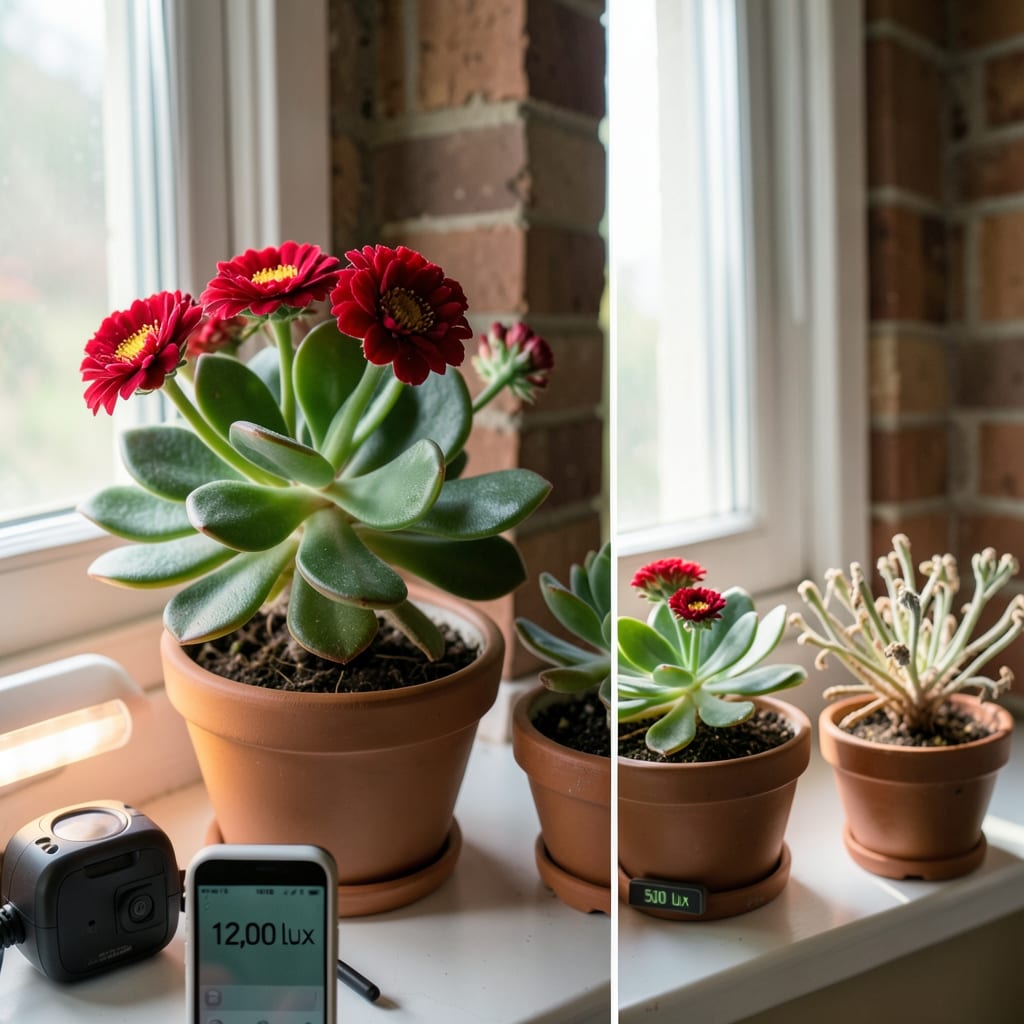
If you’re wondering how much light does a Kalanchoe plant need, you're not alone—this is a classic sign of light mismanagement when your plant loses its vibrant blooms and stretches toward the light. The right balance of brightness is the key to keeping your Kalanchoe thriving, and too little or too much can spell disaster for those stunning flowers.
Most Kalanchoe varieties need 4–6 hours of bright, indirect sunlight daily, but they can handle some direct morning light too. The trick is finding that sweet spot where your plant gets enough light to stay healthy without risking leaf burn. Whether you're growing yours indoors or outdoors, understanding these light needs will make all the difference in keeping your Kalanchoe blooming year-round.
Let’s break down exactly how much light your Kalanchoe needs, how to spot when it’s getting too much or too little, and the best ways to adjust your care. With the right light conditions, you’ll have a lush, flowering Kalanchoe that’s the star of your space.
From south-facing windows to grow lights, I’ll show you practical solutions to ensure your Kalanchoe gets the perfect amount of light—no guesswork required. Ready to bring out the best in your plant?

Ideal light requirements for Kalanchoe blooms: bright indirect sun explained
Your Kalanchoe plant thrives on bright indirect sunlight, which is why it’s often called a "sun-loving succulent." The ideal light conditions mimic its natural habitat in sunny, arid regions. For most varieties, aim for 4–6 hours of sunlight daily, but protect it from harsh afternoon rays that can scorch its leaves.
In nature, Kalanchoe grows under dappled sunlight—think of it as the perfect balance between full sun and shade. This means placing your plant near a window where it gets morning sun and filtered light in the afternoon. If you’re growing yours outdoors, a spot with partial shade during peak sun hours works best.
Understanding your Kalanchoe’s light needs starts with recognizing its light tolerance spectrum. While it can handle some direct sun, too much can cause leaf burn, while too little leads to etiolation—those sad, stretched stems with sparse blooms. The key is finding that sweet spot where your plant stays compact, green, and blooms profusely.
Here’s a quick breakdown of what your Kalanchoe needs to thrive:
| Light Requirement | Specification |
|---|---|
| Minimum Daily Sunlight | 4–6 hours of bright indirect light |
| Best Window Placement | South-facing window, 2–3 feet away |
| Direct Sun Tolerance | Morning sun only; avoid afternoon rays |
| Indoor Lighting Alternative | Grow lights (6–8 inches away), 12–14 hours/day |
| Seasonal Adjustments | Winter: Supplement with grow lights; Summer: Provide afternoon shade |
If you’re growing your Kalanchoe indoors, a south-facing window is your best bet. Place it about 2–3 feet away from the glass to filter out the harshest rays while still letting in plenty of light. East-facing windows work too, but you might need to rotate your plant occasionally to ensure even growth.
Outdoors, Kalanchoe loves morning sun and afternoon shade. This mimics its natural environment, where it avoids the intense midday heat. If you’re in a hot climate, consider providing light shade cloth during the hottest part of the day to prevent leaf burn. Even a sheer curtain can make a difference!
For those long winter days with limited sunlight, supplement with a LED grow light. Position it 6–8 inches above your plant and keep it on for 12–14 hours daily. This mimics the longer daylight hours of summer and encourages blooming. Just avoid keeping it on 24/7, as Kalanchoe needs a dark period to trigger flowering.
One common mistake is assuming that more light is always better. While Kalanchoe loves brightness, it’s sensitive to heat stress. If your home gets very hot near sunny windows, your plant might start to wilting or dropping buds. In this case, move it slightly farther back or use a reflective surface, like a white wall or mirror, to bounce more light onto its leaves without overheating.
Pay attention to your plant’s growth patterns—this is your best indicator of whether it’s getting the right amount of light. Healthy Kalanchoe leaves should stay deep green and slightly fleshy, while stems should remain compact and sturdy. If you notice leaves turning pale or stems stretching toward the light, it’s time to adjust its position.
Signs of too much or too little light: how to fix common Kalanchoe light problems
Your Kalanchoe plant speaks volumes through its leaves and stems—if you know what to look for. Too little light causes etiolation, where stems stretch unnaturally toward the nearest light source, and leaves become pale and sparse. This is your plant’s way of begging for more brightness, often accompanied by fewer or no blooms. On the flip side, excessive light shows up as crispy, brown edges on leaves or a sunburnt appearance, especially on the sides facing the sun.
One of the trickiest light-related issues is leaf color changes. If your Kalanchoe’s leaves turn yellow or reddish-purple, it’s often a sign of stress from either too much direct sun or inconsistent light. Yellowing can also mimic overwatering, so always check the soil moisture before assuming it’s a watering problem. Red or purple hues, however, are usually a cry for more light—your plant is trying to protect itself by producing pigments that shield leaves from weak light conditions.
Here’s how to diagnose and fix the most common light-related problems:
⚠️ Warning: Don’t confuse light stress with overwatering!
Kalanchoe leaves can look wilted or droopy from both too much sun and overwatering. The key difference? Sunburned leaves will have crispy, brown edges, while overwatered leaves feel soft and mushy when pressed. Stick your finger in the soil—if it’s soggy, it’s water; if it’s dry, it’s light!
If your Kalanchoe is stretching toward the light, it’s time to move it closer to a brighter spot. A south-facing window is ideal, but if that’s not an option, consider a grow light. Place it 6–8 inches above your plant and keep it on for 12–14 hours daily to mimic natural daylight. Rotate your plant quarter-turns weekly to ensure even growth and prevent it from leaning.
For leaf burn, the fix is simple: move your plant to a shadier spot or provide afternoon shade with a sheer curtain. If the damage is minor, your Kalanchoe will recover, but severe burns can lead to permanent leaf loss. In extreme cases, trim the affected leaves with sterilized scissors to encourage new growth. Always avoid placing your plant in direct afternoon sun, as this is when UV rays are strongest.
Another red flag is bud drop—when your Kalanchoe starts forming buds but then drops them before they open. This usually happens when the plant is stressed by sudden light changes, like moving it from a dim room to a bright window too quickly. To prevent this, acclimate your plant gradually over 1–2 weeks by placing it in a slightly brighter spot each day. Consistency is key when it comes to light exposure.
Pro tip: Use a light meter or your phone’s light sensor app to measure the light levels near your Kalanchoe. Aim for 3,000–5,000 lux of light during the day. If you’re below this range, supplement with a full-spectrum LED grow light. Remember, your goal is to keep your Kalanchoe happy, compact, and blooming—not stressed or struggling. 🌸