
Light Requirements
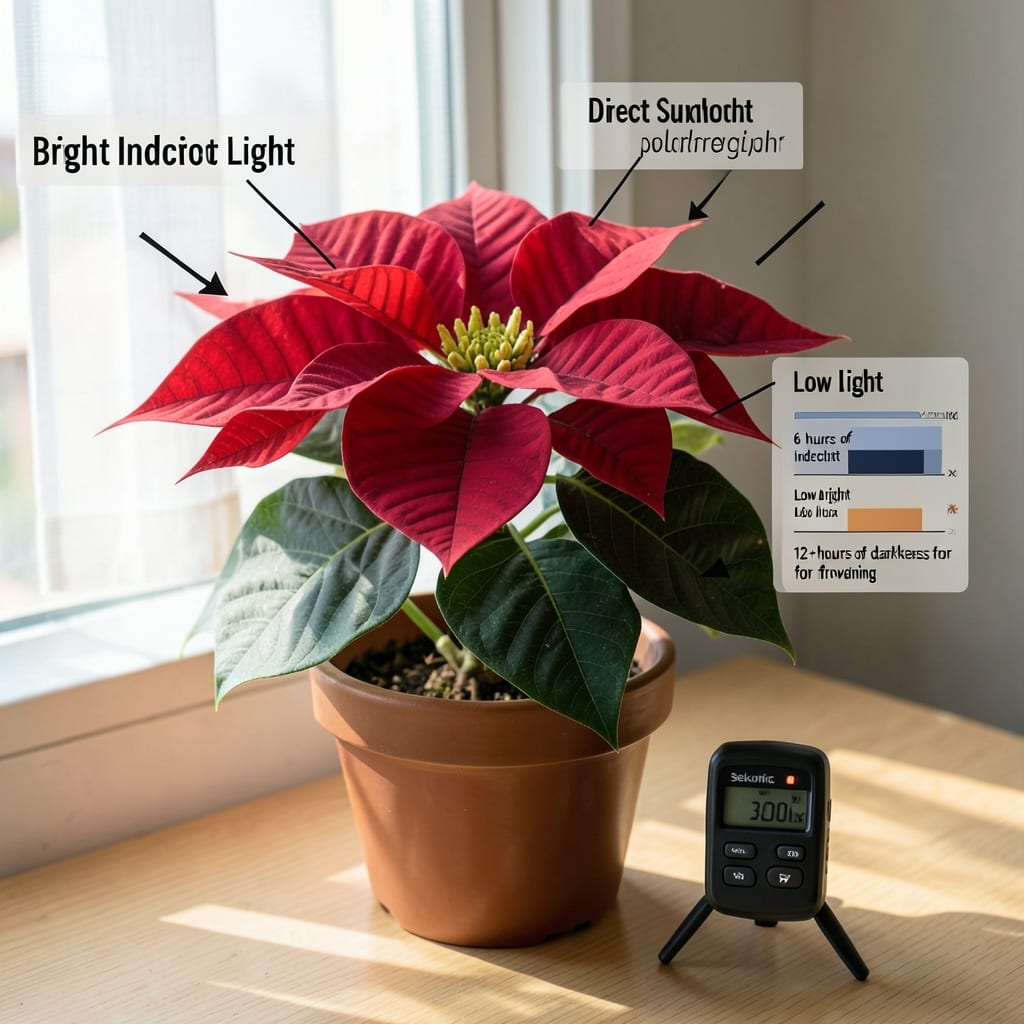
The poinsettia plant needs just the right amount of light to burst into its signature festive colors—too little, and it stretches awkwardly; too much, and its leaves scorch. If you’ve ever watched your 🎄 poinsettia struggle through winter, you’re not alone: most people get the light balance wrong without even realizing it.
Here’s the truth: these vibrant holiday plants thrive in bright indirect sunlight, mimicking their natural understory habitat. That means placing them near an east or west-facing window where they get 6-10 hours of gentle light daily—no harsh midday sun. But winter’s shorter days can throw off even the best-laid plans, which is why I’ll show you exactly how to supplement natural light without overcomplicating things.
You’ll discover the 3 key signs your poinsettia is begging for more (or less) light—like leggy stems or faded bracts—and how to fix them fast. Whether you’re dealing with a 6a-zone winter or just a dim apartment, these tips will keep your poinsettia lush and ready for its December-January prime time.
Let’s cut through the guesswork so you can enjoy a showstopping poinsettia that stays vibrant from September planting through the holidays—and beyond. Your plant’s future color depends on what you do next.
 Best Window Placement
Ideal light requirements for poinsettia growth and blooming
Poinsettias thrive in bright indirect sunlight, which mimics their natural tropical understory habitat. Too little light causes leggy growth and weak stems, while too much direct sun scorches those stunning red bracts. The sweet spot? 6-10 hours of filtered light daily—think dappled shade from a sheer curtain.
These plants rely on photoperiodism, a natural response to daylight changes. During fall, they need 12-14 hours of darkness daily to trigger color development. Without proper light exposure, your poinsettia may produce sparse or pale blooms, or worse—skip flowering entirely.
In winter, when natural light dwindles, supplement with grow lights if your plant looks stretched or pale. Fluorescent bulbs (6,500K) work well, but LED grow lights are more energy-efficient. Position lights 6-12 inches above the plant for 12-14 hours daily to maintain vibrancy.
Direct sunlight through windows—especially south-facing—can cause leaf burn (brown crispy edges) or bleaching. East or west windows are ideal because they offer gentle morning or afternoon sun without harsh midday rays.
Seasonal adjustments are key. In summer months, reduce direct exposure afternoons by moving your poinsettia 2-3 feet back from the window. During winter, rotate the pot weekly so all sides get even light, preventing lopsided growth.
| Light Requirement | Specification | Seasonal Adjustment |
|---|---|---|
| Daily Light Hours | 6-10 hours | Increase to 12+ in winter with grow lights |
| Light Type | Bright indirect | Avoid direct sun; use sheer curtains |
| Best Window | East or west-facing | Rotate pot weekly for even growth |
| Grow Light Needs | 12-14 hours/day in winter | Use LED or fluorescent bulbs (6,500K) |
| Dark Period | 12-14 hours darkness | Critical for fall blooming; cover with black cloth |
Poinsettias also need consistent light exposure—avoid moving them frequently between dark closets and sunny spots. Sudden light changes shock the plant, causing bud drop or leaf yellowing. If you notice pale green leaves or stems stretching toward the light, it’s time to adjust their placement.
Pro tip: Use a light meter (or phone app) to measure light intensity. Aim for 1,000-2,000 foot-candles of light. If readings drop below 500, supplement immediately with artificial light to prevent etiolation (weak, elongated growth).
For houseplant enthusiasts, poinsettias are surprisingly low-maintenance once you nail the light. Pair their bright indirect needs with moderate watering (let topsoil dry slightly between waterings), and you’ll enjoy vibrant bracts for weeks. The secret? Treat them like a sun-worshipping tropical—but with a gentle touch.
🌱
Signs your poinsettia isn’t getting enough (or too much) light
Your poinsettia’s leaves tell a story—yellowing edges or pale green bracts scream for more light, while brown crispy patches mean it’s getting too much direct sun. Watch for stretched stems (etiolation) when light is insufficient, or bleached white spots from harsh afternoon rays.
Leggy growth with bare stems between leaves is a classic sign of light deprivation. This happens when your poinsettia stretches toward the nearest light source, weakening its structure. Conversely, dropping buds or premature wilting often signals stress from too much heat combined with intense light.
🌱
⚠️ Light Stress Symptoms & Fixes
Symptom: Leggy stems, sparse leaves
Cause: Insufficient light (<6 hours/day)
Fix: Move to east/west window or add grow lights (12-14 hours/day)
Symptom: Brown crispy leaf edges
Cause: Direct midday sun exposure
Fix: Use sheer curtains or move 2-3 feet back from window
Symptom: Pale green/yellow bracts
Cause: Low light intensity (<1,000 foot-candles)
Fix: Supplement with LED grow lights (6,500K)
Symptom: Dropping buds
Cause: Sudden light changes or heat stress
Fix: Maintain consistent light and moderate temps (65-75°F)
For a quick light diagnostic, hold your hand near the plant. If you can’t see your shadow clearly, the light is too dim. Conversely, if leaves feel hot to touch near a south-facing window, they’re getting scorched. Rotate your poinsettia quarter-turn weekly to ensure even growth and prevent lopsided light exposure.
Pro tip: Use a white sheet as a DIY light filter. Drape it loosely over the plant during peak sun hours (11 AM–3 PM) to diffuse harsh rays while maintaining brightness. This mimics the dappled shade poinsettias love in their native Mexican forests.
Remember, bud drop is often a light + temperature combo issue. If your poinsettia loses buds in winter, check both its light source (too weak?) and heat source (near a heater?). Ideal conditions pair bright indirect light with stable temps—no drafts or radiators nearby!
🌿