
Light Requirements
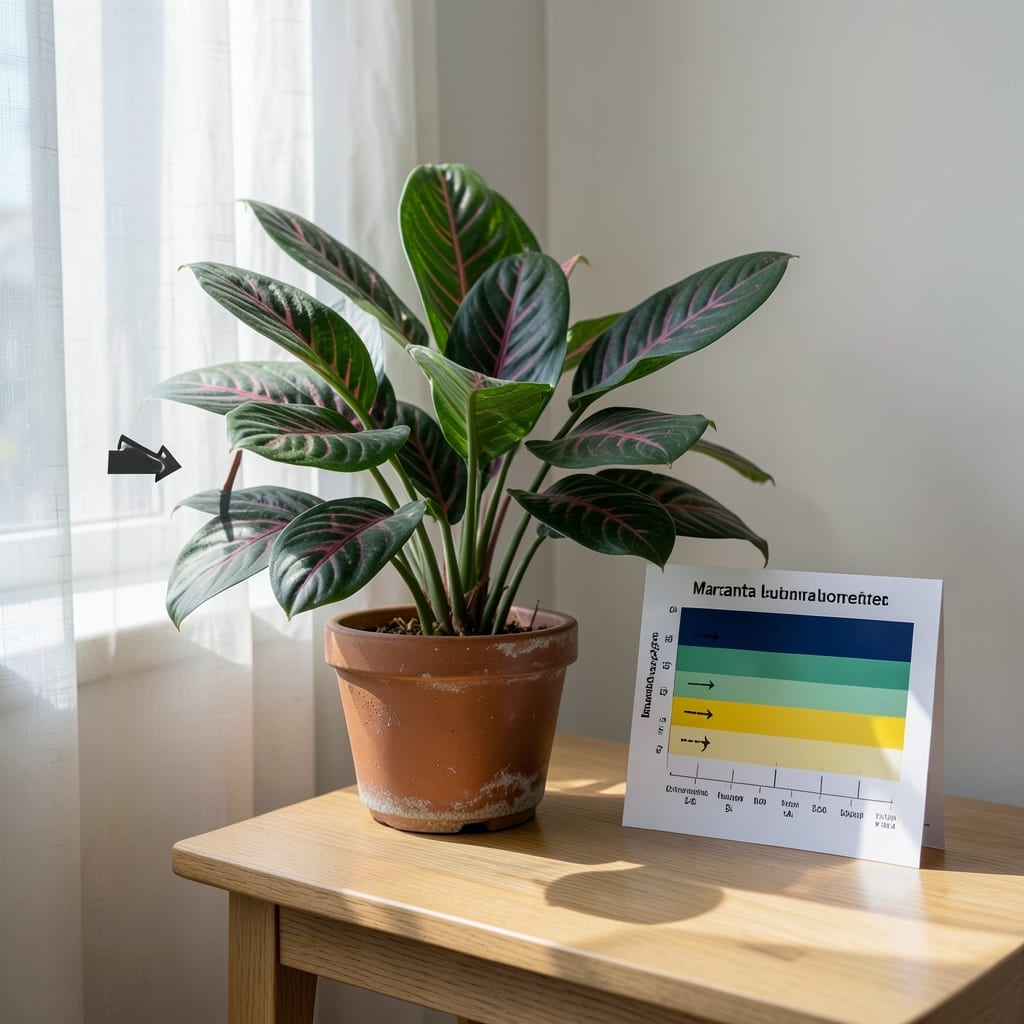
If you’re wondering how much light does a prayer plant need to thrive, the answer lies in mimicking its natural understory habitat—bright, indirect rays that keep those velvety leaves lush and vibrant. The key to keeping this stunning houseplant thriving isn’t just any light—it’s the right balance of bright, indirect rays that prevent it from stretching or fading like a sleepy cat. I’ve seen both extremes firsthand: too much direct sun crisping leaves like toast, or too little leaving it a dull, leggy shadow of itself. The difference is night-and-day when you nail the lighting just right.
Don’t worry—you don’t need a sunroom to make this work. Whether you’re dealing with a north-facing apartment or a south-facing living room, I’ll show you exactly where to place your plant (and what to do if your home’s lighting leaves something to be desired).
By the end, you’ll spot the perfect lighting spots in your space, recognize the warning signs of over- or under-lighting, and even troubleshoot with artificial grow lights if needed. Let’s bring back that lush, prayerful glow!
 Best Window Placement
Ideal light requirements for prayer plant growth: bright indirect sunlight explained
Your prayer plant (Maranta leuconeura) thrives in bright, indirect light—think of it as the perfect spot under a canopy tree in its native Brazilian rainforest. This means avoiding harsh midday sun, which can bleach or scorch those stunning velvety leaves. The goal is to provide 4-6 hours of filtered light daily, similar to what you’d find on a brightly lit bathroom or near an east-facing window.
Direct sunlight—especially from south- or west-facing windows—is the biggest enemy. Even just a few hours of unfiltered rays can cause leaf burn, turning those gorgeous patterns into crispy brown patches. I’ve made this mistake myself, and trust me, your plant will thank you for avoiding it!
North-facing windows are another great option, though they may require a reflective surface like a white wall or mirror to bounce extra light onto the leaves. If your home lacks natural light, don’t panic—artificial grow lights can step in to mimic those ideal conditions. We’ll dive deeper into lighting solutions later, but first, let’s break down the perfect setup.
| Light Condition | Description | Best For |
|---|---|---|
| Bright Indirect Light | East-facing windows, 2-3 feet from a north window with reflective surfaces | Optimal growth, vibrant foliage |
| Low Light | Dim corners, far from windows, artificial grow lights (6-8 hrs/day) | Survival, but slower growth and dull leaves |
| Direct Sunlight | South/west windows, unfiltered midday rays | Avoid—causes leaf burn and browning |
| Filtered Light | Sheer curtains, lace curtains, or a sheer screen | Best compromise for south/west exposure |
Seasonal adjustments are key, too. During summer months, when sunlight is more intense, you may need to move your plant farther back from the window or add a light sheer curtain to diffuse the rays. In winter, when natural light is scarce, supplement with a grow light for 6-8 hours daily to prevent leggy growth.
Pro tip: Rotate your plant quarter-turn weekly to ensure even light exposure. This prevents one side from becoming stretched or pale while the other stays dark. I rotate mine every Sunday morning—it’s a small habit that makes a big difference in leaf symmetry!
If you’re unsure about your home’s lighting, try the "shadow test": Place your hand near the plant’s usual spot. If the shadow is sharp and dark, it’s too direct. If it’s soft and faint, you’ve likely found the sweet spot for your prayer plant’s needs.
Remember, prayer plants are forgiving but not indifferent. They’ll show you when they’re happy—with deep green leaves, vibrant patterns, and compact growth. When in doubt, err on the side of less light; you can always add more later if needed.
Now that you know the ideal conditions, let’s talk about what happens when your plant isn’t getting quite right—because even the best-intentioned gardeners sometimes miss the mark. 🌿
Ideal light requirements for prayer plant growth: bright indirect sunlight explained
Your prayer plant thrives in bright indirect light, mimicking its natural understory habitat where dappled sunlight filters through the canopy. Think of it as needing morning sun exposure (like a gentle wake-up call) but protection from harsh afternoon rays that could crisp its delicate leaves. The ideal light intensity is about 40-60% of full sunlight, which translates to placing it near an east-facing window where morning rays are softest.
For those with west or south-facing windows, you’ll need to create distance—place your plant 3-5 feet away to avoid leaf burn. Even north-facing windows can work if they offer consistent, bright light (though growth may be slower). The key is avoiding direct midday sun, which acts like a tanning bed for your plant’s leaves.
| Light Condition | Daily Duration | Best Window Placement | Leaf Response |
|---|---|---|---|
| Bright Indirect | 4-6 hours | East-facing, 2-3 ft away | Vibrant, velvety leaves |
| Low Light | <2 hours | North-facing, deep room | Leggy, pale growth |
| Direct Sun | >6 hours | South/west-facing, no filter | Brown patches, crispy edges |
Seasonal adjustments are crucial—your prayer plant can handle slightly more light in spring/summer (when growth is active) but needs reduced intensity in winter when natural light dims. If you notice leaves folding upward (a stress signal), move it to a shadier spot immediately. Rotate your plant quarter-turns every 2 weeks to ensure even growth and prevent lopsided exposure.
Pro tip: Use a sheer curtain to diffuse harsh light if needed—this creates that perfect dappled effect your prayer plant craves. I’ve seen dramatic turnarounds in just 2 weeks after adjusting light conditions, with leaves regaining their signature deep burgundy or green hues. The difference between a thriving plant and a struggling one often comes down to this single factor.
For those in low-light homes, don’t despair—artificial grow lights can bridge the gap. A 12-hour daily cycle with a cool-white LED bulb (6,500K color temperature) placed 6-12 inches above mimics natural light beautifully. Just avoid placing lights too close, or you’ll risk leaf burn from heat buildup.
Remember: your prayer plant’s leaves will tell you everything about its light needs. Pay attention to their color, texture, and growth pattern—they’re the best indicators of whether you’ve nailed the lighting just right. 🌿