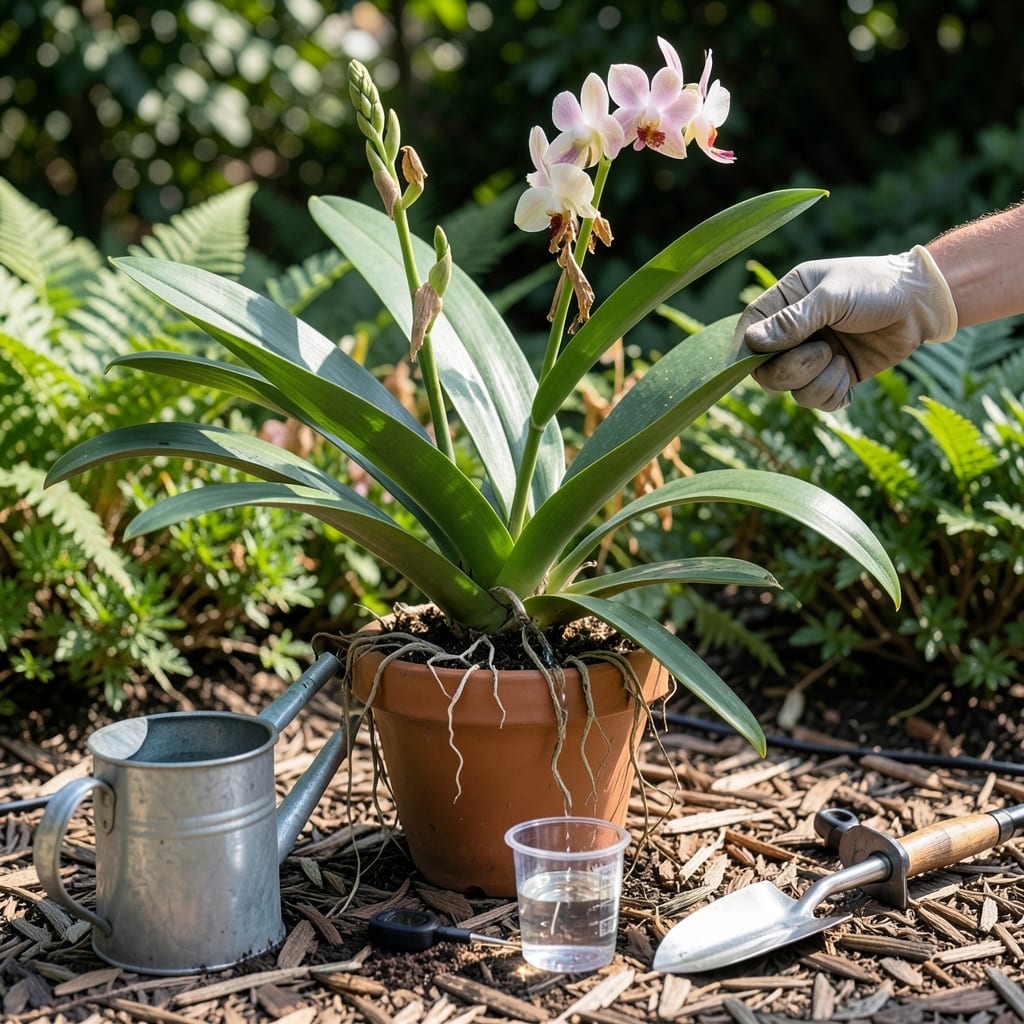
Figuring out how much water do I need to give outdoor orchids a day can feel like solving a puzzle—too little, and they wilt; too much, and their roots rot. The truth? There’s no one-size-fits-all answer, but with the right approach, you can master it. Your orchids’ hydration needs shift based on species, climate, and even the time of year, making precision the key to keeping those 🌸 blooms thriving.
Most gardeners assume orchids crave constant moisture, but the reality is far more nuanced. For example, a Phalaenopsis in humid Zone 10 might only need 30–50 ml per day, while a Cattleya in drier Zone 7 could require double that. Without tailoring your watering routine, you risk stunting growth or triggering stress—neither of which your orchids will thank you for.
What if I told you the secret isn’t just how much you water, but when and how? Morning soaks, well-draining pots, and reading your orchid’s leaves for clues can transform guesswork into confidence. Let’s break down the exact milliliters your outdoor orchids need, so you can water like a pro—no more second-guessing, just stunning results.
Whether you’re battling Zone 6a’s unpredictable springs or tropical humidity, this guide cuts through the confusion. You’ll learn to adjust for heatwaves, droughts, and even seasonal dormancy—so your orchids stay lush, vibrant, and ready to bloom year after year. Ready to get it right?
🌻
🚿
💧
Frequency
Every 1-2 days (adjust for humidity)
🥛
Amount
1/2 - 1/2 - 1 Cup (120-120-250ml)
🌅
Best Time
Morning
Daily water requirements for outdoor orchids by species (milliliters breakdown)
Outdoor orchids don’t follow a universal watering rule—their needs vary wildly by species, root structure, and growing conditions. A Phalaenopsis might thrive on just 30–50 ml daily in humid climates, while a Cattleya could demand 50–80 ml in drier zones. The key lies in understanding your orchid’s root type and climate zone to avoid both drought stress and root rot.
Monopodial orchids like Phalaenopsis have a single stem with roots that cling to surfaces, making them more sensitive to overwatering. Sympodial types, such as Cattleya or Dendrobium, produce multiple growth points and can handle slightly more moisture—but only if their bark-based mix drains efficiently. Ignoring these differences is how even well-meaning gardeners turn their orchids into sad, wilted souvenirs.
Here’s the game-changer: water by the milliliter, not by guesswork. A 250-ml measuring cup becomes your best friend, ensuring precision. For example, a Paphiopedilum (Lady’s Slipper) in Zone 8 might only need 40–60 ml daily, while a Vanda in Zone 11 could require 80–120 ml due to its epiphytic nature and higher evaporation rates. The table below breaks it down by species, so you can water with confidence.
Orchid Species
Daily Water (ml) per Plant
Root Type
Climate Zones Ideal For
Key Hydration Tip
Phalaenopsis (Moth Orchid)
30–50 ml (Zone 9–11)
Monopodial
High humidity, indirect light
Water when top 1–2 inches of mix dries
Cattleya (Cattleya Orchid)
50–80 ml (Zone 7–10)
Sympodial
Moderate humidity, bright light
Soak roots thoroughly; avoid soggy media
Dendrobium (Dendrobium Orchid)
40–70 ml (Zone 7–11)
Sympodial
Dry seasons, cool nights
Reduce water in dormancy (winter)
Paphiopedilum (Lady’s Slipper)
40–60 ml (Zone 8–10)
Sympodial
Shady, moist environments
Keep soil evenly moist, not soggy
Vanda (Vanda Orchid)
80–120 ml (Zone 10–11)
Monopodial/Epiphytic
Tropical, high light
Water daily; mist leaves to mimic humidity
Oncidium (Dancing Lady Orchid)
50–70 ml (Zone 9–11)
Sympodial
Warm, humid climates
Water when top inch of mix is dry
Bletilla (Ground Orchid)
Daily water requirements for outdoor orchids by species (milliliters breakdown)
Orchids are famously finicky about water, but their needs vary wildly by species. A Phalaenopsis might thrive on just 30–50 ml per day, while a Cattleya could demand 50–80 ml—and that’s before factoring in your local climate. The key lies in understanding their root structure and natural habitat. Monopodial orchids like Phalaenopsis grow upward with a single stem, while sympodial types (like Cattleya) spread horizontally, affecting how they absorb moisture.
Your orchid’s pot material also plays a critical role. Terracotta pots dry out faster than plastic, meaning you’ll need to adjust your watering schedule accordingly. For example, a Dendrobium in a terracotta pot might need 40–70 ml daily in summer, but only 20–30 ml in winter dormancy. Ignoring these nuances can lead to root rot or stunted growth—neither of which you want when you’re aiming for those show-stopping blooms.
Here’s the game-changer: watering by the pot’s weight. A properly hydrated orchid pot should feel light but not bone-dry. Lift it—if it’s heavier than your expectation, hold off on watering. This method works for all species and eliminates guesswork. Pair this with checking the top 1–2 inches of bark mix for dryness, and you’ve got a foolproof system.
Orchid Species
Daily Water (ml) per Plant
Root Type
Climate Zones Ideal For
Key Hydration Tip
Phalaenopsis (Moth Orchid)
30–50 ml (Zone 9–11)
Monopodial
High humidity, indirect light
Water when top 1–2 inches of mix dries
Cattleya (Cattleya Orchid)
50–80 ml (Zone 7–10)
Sympodial
Moderate humidity, bright light
Soak roots thoroughly; avoid soggy media
Dendrobium (Dendrobium Orchid)
40–70 ml (Zone 7–11)
Sympodial
Dry seasons, cool nights
Reduce water in dormancy (winter)
Oncidium (Dancing Lady Orchid)
60–90 ml (Zone 8–11)
Sympodial
Warm, humid climates
Mist leaves daily; keep bark mix moist
Paphiopedilum (Lady’s Slipper)
40–60 ml (Zone 8–10)
Monopodial
Shady, moist environments
Water from below; avoid wetting leaves
Pro tip: Use rainwater or distilled water whenever possible. Tap water’s chlorine and fluoride can burn orchid roots over time, leading to brown leaf tips—a common (and preventable) issue. If you must use tap water, let it sit out for 24 hours to evaporate chemicals before watering. This small step can dramatically improve your orchids’ health and longevity.
Finally, pay attention to your orchid’s leaves. Healthy leaves should feel firm but slightly pliable, like a ripe avocado. If they’re wrinkled or shriveled, it’s time to water. If they’re soft or translucent, you’ve overdone it. These visual cues are your best friends when fine-tuning your watering routine.