
Trees
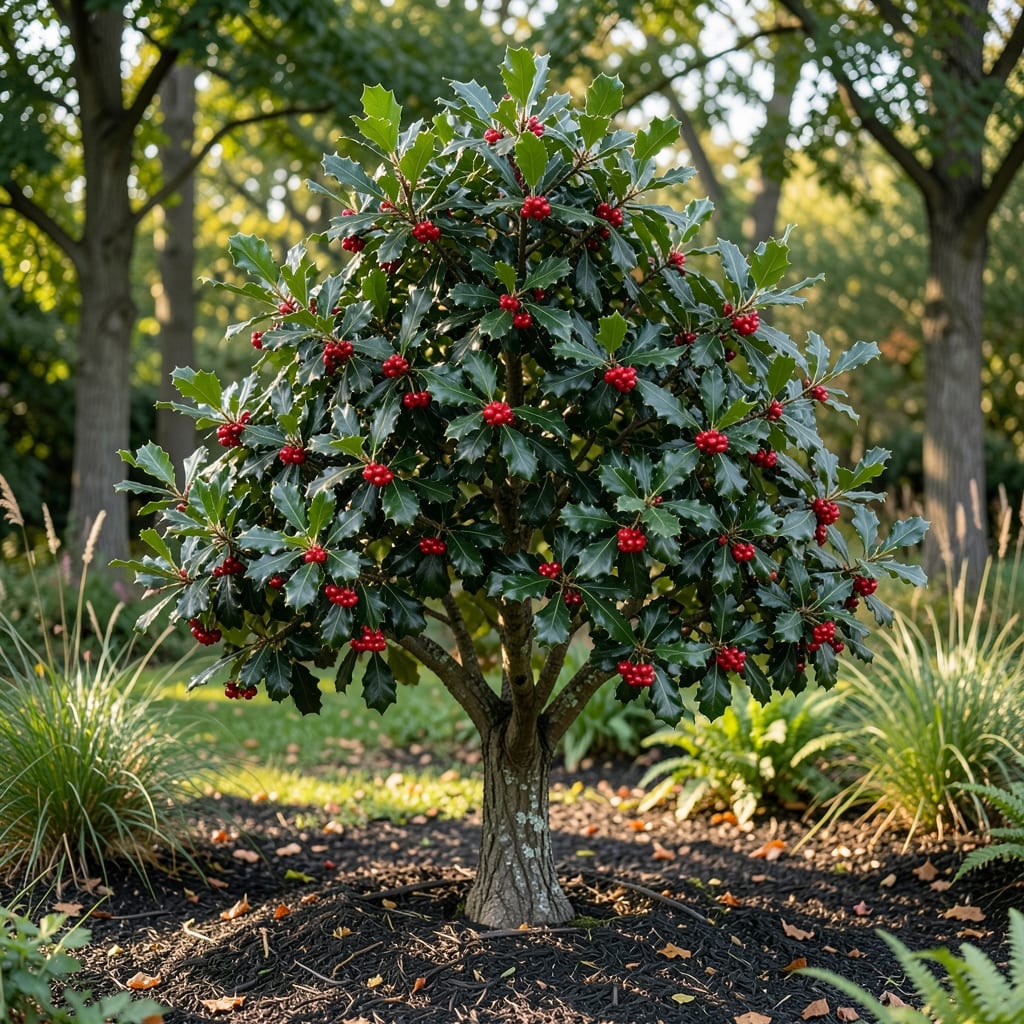
If you’ve ever wondered how tall can a holly tree grow, the answer might surprise you—some varieties stretch toward the sky like towering sentinels, while others stay perfectly proportioned for cozy gardens. The 🌳 Holly Tree isn’t just one size fits all; its height depends on the species, your climate, and even how you prune it.
Picture this: an American holly reaching 30 to 40 feet in ideal conditions, while a dwarf variety like ‘Blue Princess’ stays a modest 6 to 10 feet. That’s a 300% difference in stature! Whether you’re planning a privacy screen or a charming accent plant, knowing these variations helps you choose the perfect fit for your space.
But here’s the twist: growth isn’t just about genetics. Soil quality, sunlight exposure, and pruning habits can push a tree toward its full potential—or keep it smaller. I’ll break down the specifics so you can predict (and control) how tall your holly will grow over time.
Ready to match the right holly to your yard? Let’s dive into the numbers, care tips, and secrets to managing height—no matter your garden’s size.

Holly tree height by variety: from dwarf to giant species
Holly trees aren’t one-size-fits-all—some varieties grow tall enough to shade your entire backyard, while others fit neatly into foundation plantings. The American Holly (Ilex opaca), for example, can reach 30 to 40 feet in ideal conditions, making it a natural privacy screen. Meanwhile, the ‘Blue Princess’ holly stays a compact 6 to 10 feet, perfect for small gardens or container growing.
Understanding these differences helps you plan spacing, sunlight exposure, and even pruning strategies before planting. A 15-foot holly planted too close to your house might outgrow its welcome in a decade, while a 3-foot dwarf variety could get lost in a large landscape. Let’s compare the most popular holly varieties and their mature heights.
🌱 Holly Tree Height Comparison
| Variety | Mature Height | Growth Rate | Ideal Spacing |
|---|---|---|---|
| American Holly (Ilex opaca) | 30–40 ft | Slow to moderate | 20–25 ft from structures |
| English Holly (Ilex aquifolium) | 20–30 ft | Moderate | 15–20 ft from structures |
| ‘Blue Princess’ Holly | 6–10 ft | Slow | 5–8 ft from structures |
| ‘Sky Pencil’ Holly | 20–30 ft (narrow) | Slow | 10–15 ft from structures |
| ‘Dwarf Burford’ Holly | 8–12 ft | Very slow | 5–7 ft from structures |
| ‘Nellie R. Stevens’ Holly | 25–35 ft | Moderate | 20–25 ft from structures |
| ‘Little Gem’ Holly | 20–25 ft (narrow) | Moderate | 10–15 ft from structures |
| ‘Winter Red’ Holly | 10–15 ft | Slow | 8–10 ft from structures |
| ‘Jersey Knight’ Holly | 25–35 ft | Moderate | 20–25 ft from structures |
| ‘Hillspire’ Holly | 12–15 ft | Slow | 8–10 ft from structures |
*Spacing recommendations assume ideal growing conditions. Adjust for smaller gardens or urban planting.
The American Holly and ‘Nellie R. Stevens’ are the tallest varieties, often used for privacy screens or large estate plantings. If you’re working with limited space, dwarf varieties like ‘Blue Princess’ or ‘Dwarf Burford’ are game-changers—they deliver holly’s signature glossy leaves and red berries without the towering presence.
Pro tip: Check the growth rate column in the table. Slower-growing hollies (like ‘Blue Princess’) take 5–7 years to reach half their mature height, while faster varieties like ‘Nellie R. Stevens’ can add 2–3 feet per year in ideal conditions. This helps you estimate how long to wait before your holly fills out.
For urban gardens or small yards, consider columnar hollies like ‘Sky Pencil’ or ‘Little Gem.’ These stay narrow (only 3–5 feet wide) but still reach 20–30 feet tall, making them ideal for tight spaces. Their vertical growth habit saves space while still providing year-round structure and berries.
One common mistake? Assuming all hollies grow at the same pace. A 10-foot holly might be 5 years old, while a 30-foot American Holly could be the same age—it just grows taller. Always verify the mature height and growth rate before planting to avoid surprises.
Next, we’ll dive into how fast hollies grow—because even within a species, factors like soil quality, sunlight, and pruning can accelerate or slow down height gain. Stay tuned!
How fast do holly trees grow? Annual growth rates explained
Holly trees don’t shoot up overnight—their growth rate varies wildly by age, species, and growing conditions. A young ‘Blue Princess’ holly might add just 6 inches per year, while a ‘Nellie R. Stevens’ in rich soil can grow 2–3 feet annually during its fastest years. Understanding these rates helps you predict when your holly will reach its mature height—or when to expect those prized red berries.
Most hollies follow a slow-to-moderate growth pattern. In their first 5 years, they focus on root development, adding only 1–2 feet per year. After that, growth accelerates—especially for faster varieties—before tapering off again in maturity. This S-curve growth pattern means a 10-foot holly could be 5–10 years old, not the 2–3 years you might expect from faster-growing trees.
🌱 Growth Rate Breakdown by Age
📊 Holly Tree Growth Rates by Age
- 🌱 Years 1–3: 1–2 ft/year (root establishment phase)
- 🌿 Years 4–10: 2–3 ft/year (fastest growth phase)
- 🌳 Years 11+: 1–2 ft/year (maturation slows growth)
*Rates vary by species, soil, and climate. Dwarf varieties grow 50% slower.
Three key factors influence how fast your holly grows: soil quality, sunlight exposure, and water availability. Holly trees thrive in well-draining, slightly acidic soil (pH 5.0–6.0). Amend heavy clay with compost to improve drainage—waterlogged roots stunt growth. For sunlight, morning sun + afternoon shade is ideal; full sun can stress young trees in hot climates, slowing their height gain.
Pruning also plays a surprising role. Light pruning to shape the tree encourages bushier growth, while heavy pruning (especially late in the season) can reduce next year’s growth by 30–50%. If you’re aiming for a taller holly, avoid aggressive cuts—focus on removing dead or crossing branches instead. For dwarf varieties, pruning too much can actually speed up height growth as the tree compensates for lost foliage.
One common misconception? That hollies grow slowly period. While they’re not fast growers like willows or poplars, many varieties reach half their mature height in 5–7 years. For example, a 20-foot ‘Sky Pencil’ holly could be 10 feet tall by year 5—meaning it’s halfway to its full potential! Track your tree’s growth with a simple height marker (like a painted line on the trunk) to monitor progress.
To estimate your holly’s future height, multiply its current height by 1.5–2.0 (accounting for slower juvenile growth). For example, a 3-foot holly at age 3 might reach 6–9 feet by maturity. Adjust this estimate if your tree is in poor soil (subtract 20–30%) or ideal conditions (add 10–20%). With these tools, you’ll know exactly when your holly will tower over your fence—or stay perfectly proportioned in your front yard.
Next, we’ll tackle the big question: Can you control a holly tree’s height? Spoiler: The answer is yes—but timing and technique matter. Stay tuned for pruning tips that keep your holly at your desired height, whether you want a privacy screen or a compact accent plant. ✂️