
How To
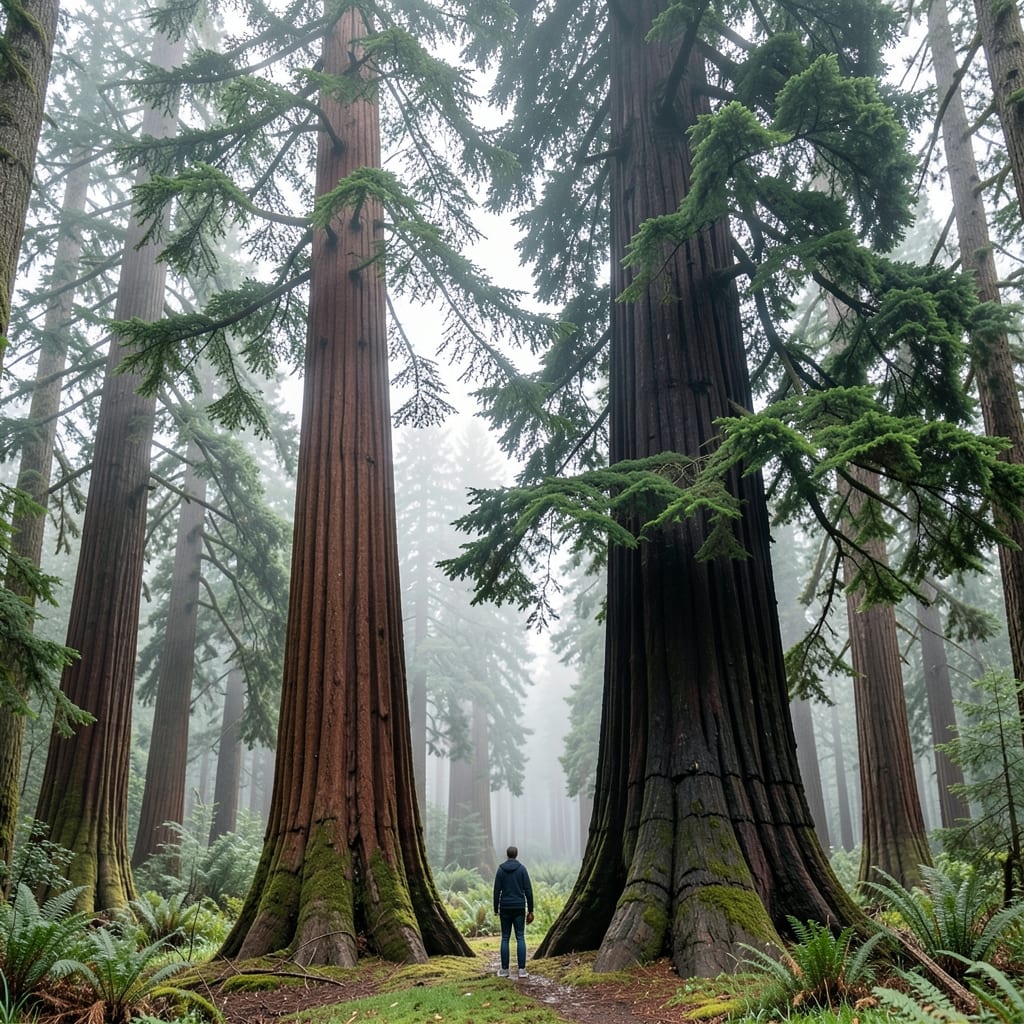
Imagine standing beside a tree so towering it makes the Statue of Liberty look like a shrub—that's the kind of scale we're talking about when we ask how tall can a sequoia tree grow. These ancient giants, native to California’s coastal regions, don’t just stretch toward the sky; they rewrite what’s possible in nature’s skyline.
With heights reaching up to 379 feet—that’s taller than a 30-story building—coast redwoods and giant sequoias grow at a pace that feels almost magical. But their growth isn’t just about height; it’s a dance between climate, soil, and genetics that turns these trees into living skyscrapers over centuries.
What’s even more fascinating? These trees don’t just grow fast—they grow smart. They thrive in foggy coastal climates, their roots diving deep for moisture while their canopies soak up mist like sponges. For gardeners or landowners dreaming of planting one, understanding their needs is key to nurturing a future giant.
Let’s explore the science behind their staggering growth, from record-breaking specimens to the secrets that make them the tallest trees on Earth. You’ll discover why these 🌲 titans aren’t just awe-inspiring—they’re also vital to their ecosystems and a testament to nature’s engineering prowess.

Record-breaking sequoia heights: the tallest trees on Earth
When we ask how tall can a sequoia tree grow, the answer isn't just a number—it's a revolution in nature’s skyline. Coast redwoods (Sequoia sempervirens) and giant sequoias (Sequoiadendron giganteum) aren’t just tall; they’re the undisputed champions of the tree world, dwarfing even the most ambitious human structures. The tallest known specimen, Hyperion, stands at a staggering 379.7 feet, making it the tallest tree ever measured on Earth.
To put that into perspective, Hyperion’s height is equivalent to a 30-story building stacked vertically. That’s taller than the Statue of Liberty’s 305-foot height, and it’s a record that’s held its ground since 2006 when it was discovered in California’s Redwood National and State Parks. What’s even more astonishing is that Hyperion isn’t alone—dozens of coast redwoods surpass 300 feet, with many others nearing that mark.
But how do we know these trees are this tall? Climbing arborists use specialized equipment to measure these giants, including laser rangefinders and climbing spikes. The process is meticulous, often taking days to ensure accuracy. These measurements aren’t just about breaking records; they’re critical for understanding the health and growth patterns of these ancient trees in the face of climate change.
Giant sequoias (Sequoiadendron giganteum), while not as tall as coast redwoods, are champions in volume. The General Sherman tree in California’s Sequoia National Park isn’t the tallest, but it’s the most massive, weighing in at over 2.7 million pounds. Its height? A still-impressive 275 feet. These trees may not reach the same heights as their coastal cousins, but their sheer girth and density make them equally awe-inspiring.
🌲 Sequoia Height Records
| Tree Type | Record Holder | Height (ft) | Location |
|---|---|---|---|
| Coast Redwood | Hyperion | 379.7 | Redwood National Park, CA |
| Coast Redwood | Helios | 379.5 | Redwood National Park, CA |
| Giant Sequoia | General Sherman | 275 | Sequoia National Park, CA |
| Coast Redwood | Icarus | 374.3 | Redwood National Park, CA |
| Giant Sequoia | General Grant | 268 | Kings Canyon National Park, CA |
🌲 Note: Heights are approximate and subject to minor variations due to measurement methods.
What’s fascinating about these records is that they’re not static. New trees are continually being discovered, and old records are occasionally broken. For example, the Icarus tree, discovered in 2019, nearly matched Hyperion’s height at 374.3 feet. This ongoing discovery process highlights the dynamic nature of these forests and the importance of conservation efforts to protect these ancient giants.
For gardeners or landowners dreaming of planting sequoias, understanding these height records is crucial. While you won’t be growing a 300-foot tree in your backyard, even young sequoias grow 2-3 feet per year under ideal conditions. That means a 50-foot tree in just 20 years—a growth rate that’s both exciting and humbling when you consider the centuries it takes for them to reach their full potential.
These trees also play a critical role in their ecosystems. Their towering canopies create microclimates that support diverse plant and animal life. The fog drip from their leaves provides essential moisture to the forest floor, nurturing ferns, mosses, and other understory plants. Without these giants, entire ecosystems would collapse, making their conservation not just a matter of awe but of ecological necessity.
So, when you ask how tall can a sequoia tree grow, you’re not just asking about height—you’re asking about the boundaries of life itself. These trees push the limits of what’s possible in nature, and their stories remind us of the incredible potential that lies in patience, the right conditions, and a little bit of magic. Whether you’re a gardener, a nature enthusiast, or simply someone who loves a good story, sequoias offer a lesson in persistence and grandeur that’s hard to match.
What determines a sequoia’s height: climate, soil, and genetics
A sequoia’s height potential isn’t just luck—it’s a perfect storm of climate conditions, soil quality, and genetic advantages. These trees don’t grow to 379 feet by accident; they thrive in environments where fog, moisture, and deep roots create the ideal recipe for vertical growth. Let’s break down the key factors that turn a sapling into a skyscraper.
First, fog plays a critical role. Coastal redwoods, like those in Redwood National Park, rely on dense morning fog to supplement their water needs. This natural mist can provide up to 40% of their annual moisture intake, allowing them to grow in areas with surprisingly low rainfall. Without this fog, their growth would stall dramatically.
🌱 Pros and Cons of Sequoia Growth Factors
- Foggy climates: Boosts growth by 30-40%
- Deep root systems: Access water 100+ ft underground
- Genetic resilience: Disease-resistant bark
- Well-draining soil: Prevents root rot
- Drought stress: Stunts growth without fog/moisture
- Poor soil: Compacted or clay-heavy soil limits roots
- High elevation: Slows growth above 5,000 ft
- Transplant shock: Mature trees rarely recover
The soil composition is another game-changer. Sequoias prefer well-draining, slightly acidic soil with a pH between 5.0 and 7.0. Their roots can extend 100 feet deep to tap into underground water tables, but rocky or waterlogged soil will choke their growth. In the Sierra Nevada, giant sequoias thrive in nutrient-rich, volcanic soil that provides the minerals they need to reach massive sizes.
Genetics also play a starring role. Some sequoia groves, like the Giant Forest in Sequoia National Park, are home to trees with exceptional growth genes. These trees can grow 2-3 feet per year in their youth, while others grow just 6 inches annually. The fastest-growing specimens often come from clonal colonies, where genetically identical trees share a single root system, allowing them to "feed" off each other’s resources.
Elevation matters too. While coastal redwoods dominate lower elevations near the ocean, giant sequoias prefer the mountains of California’s Sierra Nevada, where they grow best between 5,000 and 7,000 feet. Above this range, colder temperatures and shorter growing seasons slow their growth. Even a 1,000-foot elevation change can reduce a sequoia’s height potential by 20-30 feet.
For gardeners dreaming of growing sequoias, replicating these conditions is nearly impossible—but understanding them helps. If you’re planting a sapling, focus on mimicking foggy, well-drained soil and protecting it from winter cold snaps. Even a small sequoia needs space to spread its roots, so avoid planting near sidewalks or foundations. With the right conditions, your sequoia could one day reach 100 feet or more, though it’ll take centuries to rival the giants of the wild.
🌲