
Trees
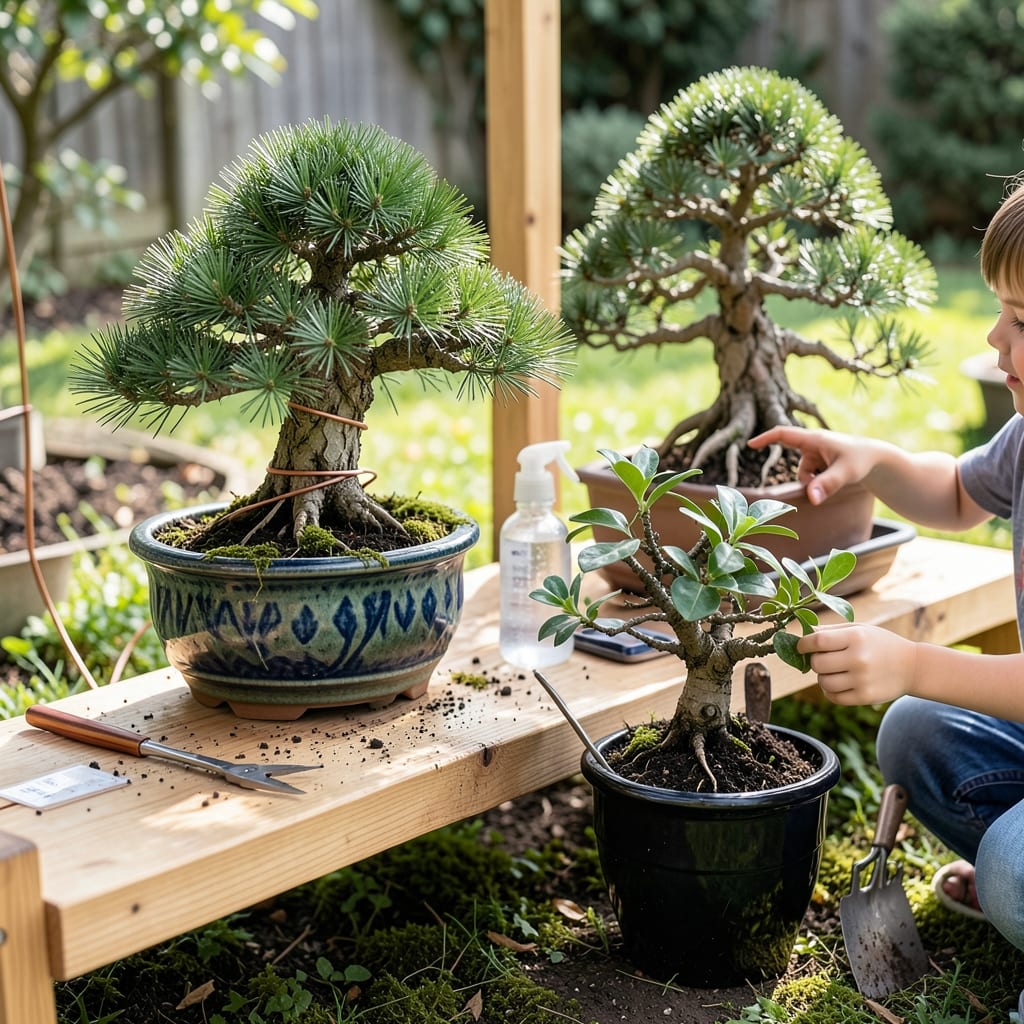
If you’ve ever wondered just how tall a bonsai tree can grow, the answer might surprise you—because these delicate-looking 🌲 trees aren’t as limited as you think. While most bonsai stay small enough to perch on a coffee table, some species and techniques can push their height far beyond what you’d expect, even reaching over 15 feet in rare cases.
The key lies in understanding the balance between nature and nurture. Bonsai trees aren’t inherently tiny—they’re shaped that way through careful pruning, root restriction, and training. But without these techniques, some species could grow as tall as their wild counterparts, like the towering junipers or towering pines found in forests.
In this guide, I’ll break down the factors that influence bonsai height, from the species you choose to the pruning methods that keep them miniature. You’ll also discover why some bonsai enthusiasts intentionally grow "giant" bonsai—yes, they exist—and how to maintain the perfect size for your space, whether you prefer a 6-inch masterpiece or a bold statement piece.
Ready to unlock the secrets behind bonsai size? Let’s explore how to cultivate your ideal tree—whether you dream of a tiny trinket or a breathtaking centerpiece.


Natural bonsai tree height limits: from tiny to towering
Bonsai trees are often mistaken for naturally small plants, but their size is entirely artificial. Without human intervention, many bonsai species could grow into full-sized trees. For example, a Ficus retusa (a popular bonsai choice) could reach 30-50 feet in the wild, but as a bonsai, it’s kept between 12-24 inches tall.
The height of a bonsai depends on three key factors: species selection, root restriction, and age. Some species, like the Chinese Elm, naturally grow slower, making them ideal for small bonsai. Others, like Japanese Black Pine, can grow taller if not carefully managed.
Even the smallest bonsai—like the Dwarf Jade—can grow up to 6 inches tall, but this requires precise pruning and root trimming every few years. Without these techniques, the same plant could easily double or triple in size.
Here’s a quick look at how different bonsai species compare in terms of their natural vs. cultivated heights:
| Species | Wild Height | Bonsai Height | Notes |
|---|---|---|---|
| Japanese Black Pine | 50+ ft | 12-36 in | Slow-growing, ideal for large bonsai |
| Ficus Retusa | 30-50 ft | 12-24 in | Adaptable, forgiving for beginners |
| Chinese Elm | 20-30 ft | 8-18 in | Fast-growing, needs frequent pruning |
| Dwarf Jade | 3-5 ft | 3-6 in | Compact, drought-tolerant |
| Juniper Procumbens | 10-15 ft | 10-24 in | Slow-growing, great for cascading styles |
Age plays a surprising role in bonsai height. A 100-year-old bonsai might still be just 18 inches tall, while a 10-year-old tree in the wild could be 30 feet tall. This is because bonsai trees are repeatedly pruned and re-potted every few years to control growth.
Root restriction is another critical technique. By keeping roots in a small container, you limit the tree’s ability to absorb water and nutrients, slowing its growth. However, this must be balanced—too much restriction can stress the tree and reduce its health.
Some bonsai enthusiasts push the limits by growing ancient-style bonsai, which can exceed 15 feet in height while still maintaining the aesthetic of a miniature tree. These are often outdoor bonsai grown in larger pots or even ground-planted with extensive root systems.
If you’re aiming for a specific height, start by choosing a species with a natural growth rate that aligns with your goals. For example, a Chinese Elm will need more frequent pruning than a Japanese Black Pine to stay small.
Remember, the smaller the bonsai, the more intensive the care required. Tiny bonsai need daily attention to pruning and watering, while larger bonsai can tolerate slightly less frequent maintenance.
How pruning and training shape bonsai tree height
Pruning is the most powerful tool for controlling bonsai height, but it’s not just about cutting branches—it’s about strategic shaping. When you prune the canopy, you limit vertical growth by removing upward-facing branches. This encourages the tree to grow outward instead of upward, creating a fuller, more compact shape.
For tiny bonsai (under 6 inches), I recommend pinching new growth tips every few weeks. This technique stunts elongation and promotes bushier growth. For example, a Dwarf Jade bonsai can stay under 4 inches tall with regular pinching, while a Chinese Elm might reach 12 inches without it.
Root pruning is equally critical—it’s often overlooked but just as important as canopy pruning. When you repot your bonsai every 2-3 years, trim the roots by 20-30% to restrict nutrient uptake. This slows height growth while maintaining overall health. Over-pruning roots, however, can shock the tree, so always use sharp, sterilized tools and repot in early spring when new growth begins.
- 🪴 Step 1: Canopy Pruning – Trim upward-growing branches in early spring to redirect energy outward. Use clean scissors to make cuts just above a leaf node.
- 🌱 Step 2: Root Pruning – Repot every 2-3 years and trim roots by 20-30%. Use a root hook to loosen soil and inspect for circling roots.
- ✂️ Step 3: Wiring – Gently bend branches into desired shapes using aluminum or copper wire. Remove wire after 3-6 months to avoid scarring.
- 🌡️ Step 4: Seasonal Adjustments – Reduce pruning in winter (dormancy) and increase it in spring/summer (active growth). Adjust frequency based on species.
- 💧 Step 5: Watering & Fertilizing – After pruning, water deeply and fertilize lightly to support recovery. Avoid overwatering, which can dilute nutrients.
Wiring is another advanced technique to shape bonsai height. By carefully wrapping branches with wire, you can guide their growth direction—whether to create a cascading style or a twin-trunk design. For example, a Japanese Black Pine bonsai can be trained to grow horizontally with wiring, reducing its overall height while adding dramatic visual interest.
Common mistakes that accidentally encourage vertical growth include over-fertilizing (which speeds up elongation) and ignoring root restriction (allowing roots to spread unchecked). I’ve seen beginners accidentally grow a 6-inch bonsai into a 2-foot shrub in just a year by skipping root pruning.
To maintain the perfect height, monitor your bonsai’s growth seasonally. If you notice branches elongating too quickly, adjust your pruning schedule or switch to a slower-growing species like Azalea or Maple. With patience and precision, you can keep your bonsai at any height—from a desk-sized masterpiece to a conversation-piece statement.