
Size
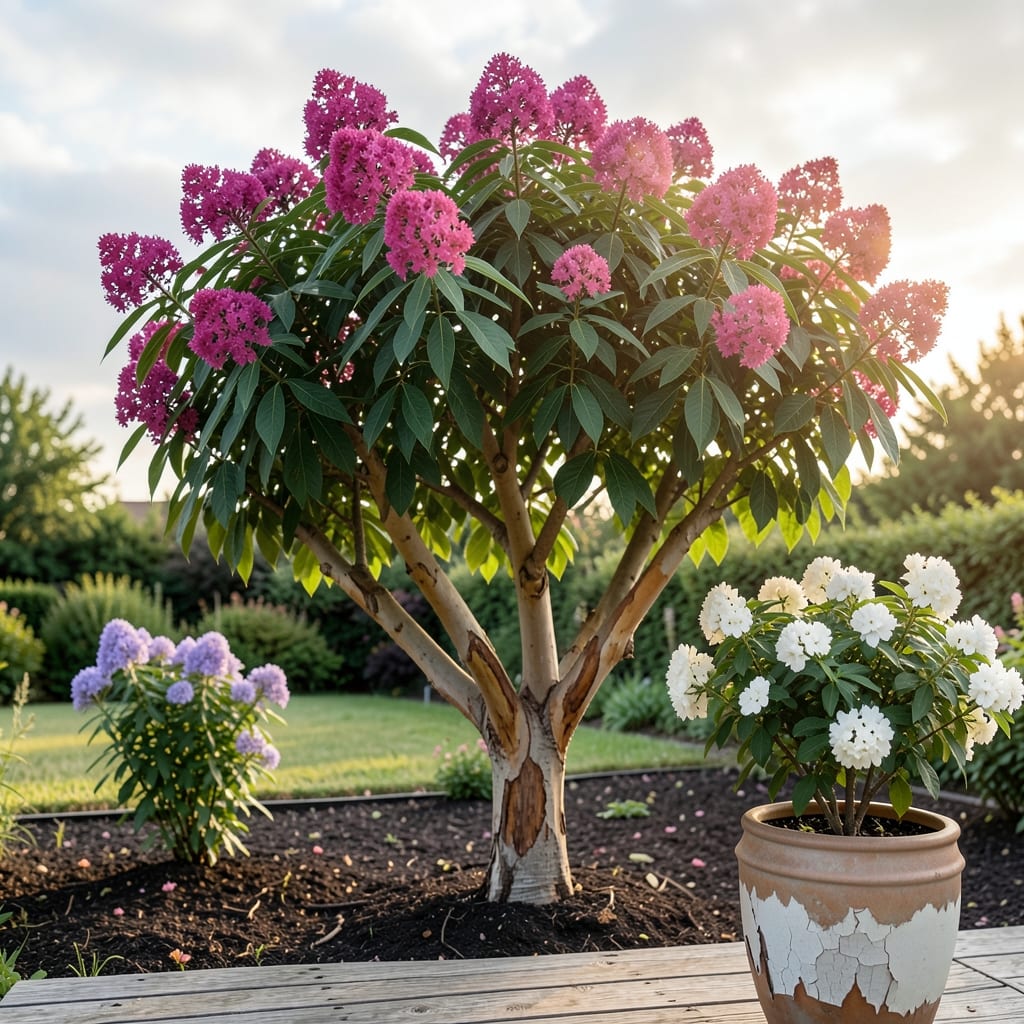
If you're planning your landscape and wondering "how tall can crape myrtles grow", the answer might surprise you—these stunning 🌸 beauties can range from compact shrubs to towering trees, depending on the variety you choose.
Picture this: one crape myrtle could stay neatly under 6 feet, perfect for small gardens or containers, while another might stretch to 30 feet or more, creating a dramatic backyard statement. The key difference? Variety selection and proper care.
In this guide, I'll break down the height ranges for popular crape myrtle types—from dwarf varieties that fit cozy patios to standard cultivars that reach small-tree heights. You'll also discover how pruning techniques can help you control their growth and keep them at your ideal size.
Whether you're designing a privacy screen or adding color to a tight urban space, understanding these height variations is the first step to making crape myrtles work perfectly for your landscape plans.


Crape myrtle height by variety: from dwarf to giant trees
When planning your landscape, the height of crape myrtles is one of the first things to consider. These versatile plants can range from 6-foot shrubs to 30-foot trees, depending on the variety. Understanding these differences helps you choose the perfect crape myrtle for your space—whether you need a privacy screen or a container-friendly accent.
Crape myrtles naturally grow as multi-trunked shrubs or small trees, with some varieties capable of reaching heights over 30 feet in ideal conditions. However, most gardeners prune them to maintain a more manageable size. The key is selecting a variety that matches your landscape goals and available space.
Here’s a quick look at how different crape myrtle types compare in height:
| Variety Type | Mature Height Range | Growth Rate | Best For |
|---|---|---|---|
| Dwarf Varieties | 6–12 ft | Slow to moderate | Containers, patios, small gardens |
| Semi-Dwarf Varieties | 12–18 ft | Moderate | Medium gardens, foundation plantings |
| Standard Varieties | 20–30 ft | Fast | Privacy screens, large yards, focal points |
| Giant Varieties | 30+ ft | Very fast | Large estates, park-like settings |
For example, the 'Acoma' variety stays under 6 feet, making it perfect for urban balconies or small courtyards. On the other hand, the 'Muskogee' crape myrtle can reach 25–30 feet, ideal for creating a natural privacy barrier or a backyard centerpiece.
Some crape myrtles, like the 'Tonto' or 'Centennial' varieties, are bred specifically for compact growth. These are excellent choices if you’re working with limited space or want to keep maintenance low. Meanwhile, varieties like 'Natchez' or 'Zuni' grow taller and are better suited for larger properties.
It’s also worth noting that pruning habits can significantly influence height. Even standard varieties can be kept smaller with regular pruning, while dwarf varieties may grow slightly taller if left unpruned. The key is to choose the right variety for your space and then maintain it to keep it at your desired height.
If you’re unsure which variety to pick, consider your sunlight exposure, soil type, and climate zone. Crape myrtles thrive in full sun and well-draining soil, but some varieties handle partial shade better than others. For instance, 'Biloxi' is more shade-tolerant and stays compact, while 'Sioux' loves full sun and grows taller.
Pro tip: Always check the mature height listed on the plant tag or in gardening catalogs. This gives you a realistic expectation of how tall your crape myrtle will become over time, so you can plan accordingly. With the right variety and care, you can enjoy stunning blooms without worrying about overgrowth.
Ready to pick the perfect crape myrtle for your space? Next, we’ll dive into pruning techniques to help you control height and shape your plant just the way you want it. ✂️🌸
How to control crape myrtle height: pruning tips for different growth goals
Once you’ve chosen your crape myrtle variety, the next step is managing its height through pruning. Whether you want to keep a dwarf variety compact or shape a standard tree into a manageable size, proper pruning is key. The good news? Crape myrtles respond well to pruning, making it easier to control their growth compared to other plants.
Pruning not only controls height but also encourages fuller blooms and a healthier structure. The best time to prune is late winter or early spring, just before new growth begins. This timing helps you avoid cutting off next year’s flower buds, which form on old wood in most varieties.
Here’s a step-by-step guide to pruning crape myrtles for different height goals:
- 1 Assess your goals: Decide if you want to reduce height, maintain shape, or encourage bushiness. For dwarf varieties, minimal pruning may suffice, while taller varieties need regular height control.
- 2 Remove dead or diseased branches: Start by cutting out any dead wood or branches with signs of disease. Use clean, sharp pruners to make cuts at a 45-degree angle just above a healthy bud.
- 3 Thin out crowded branches: Focus on removing branches that cross or rub against each other. This improves airflow and reduces the risk of pests or diseases. Aim to remove no more than 25% of the plant’s foliage in one pruning session.
- 4 Shape the plant: For taller varieties, prune the top branches to encourage a balanced shape. Use hand pruners for smaller branches and loppers for thicker stems. Avoid shearing, as it can lead to a less natural look and fewer blooms.
- 5 Clean up after pruning: Remove all pruned debris from the area to prevent disease spread. Sterilize your pruners with rubbing alcohol between cuts to keep your plant healthy.
Avoid the common mistake of over-pruning in late summer or fall, as this can stimulate new growth that won’t harden off before winter. Instead, stick to light pruning in late winter to shape the plant without removing too much foliage.
For dwarf varieties, you may only need to prune lightly to maintain their compact form. In contrast, taller varieties benefit from annual pruning to control height and prevent them from becoming unmanageable. With the right approach, you can keep your crape myrtle at the perfect height for your landscape—whether that’s a 6-foot shrub or a well-shaped tree.
Pro tip: If you’re unsure about pruning, start with small adjustments and observe how your crape myrtle responds. Over time, you’ll develop a feel for what works best for your specific variety and growing conditions. With consistent care, your crape myrtle will thrive at the ideal height for your space. ✂️🌿