
Flowers
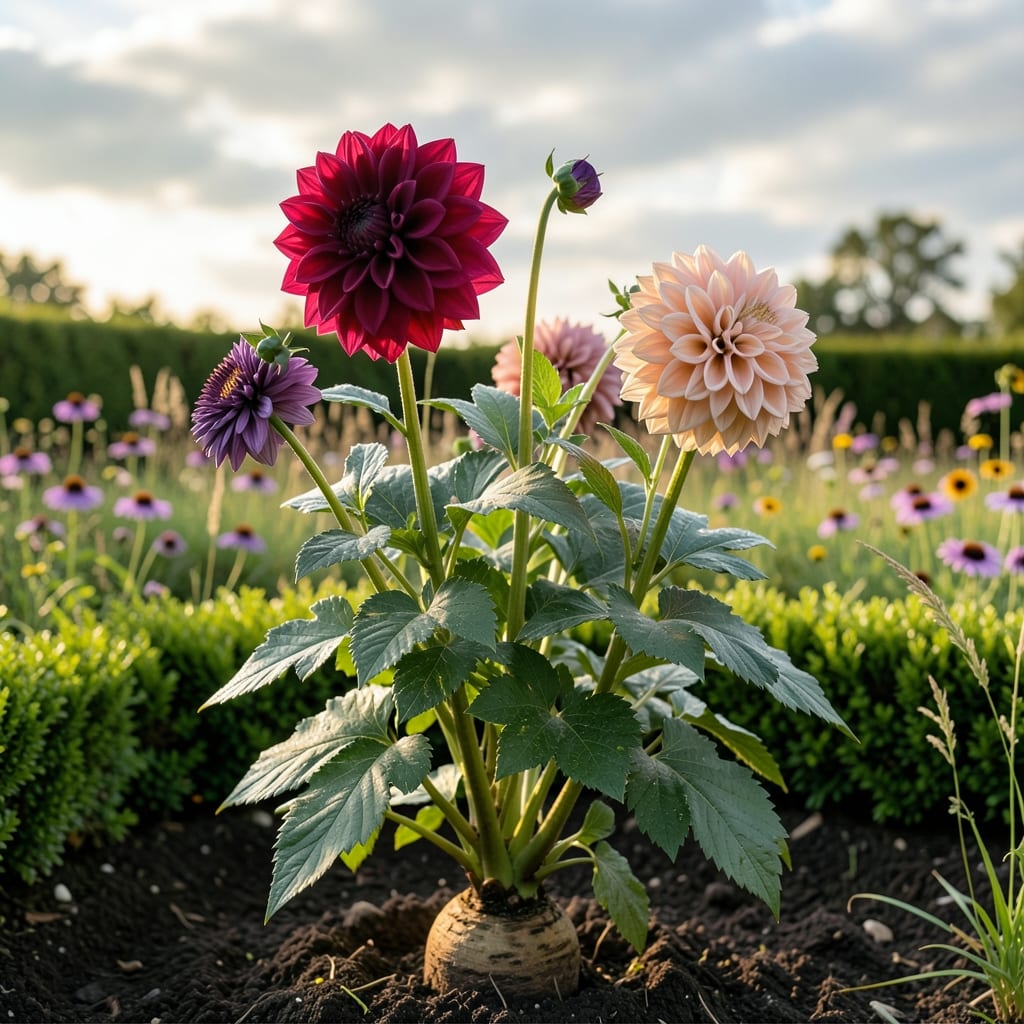
If you’ve ever wondered how tall can dahlias grow, the answer might make your garden dreams even bigger—some varieties reach a staggering 7 feet or more! These stunning 🌼 blooms aren’t just pretty; they’re architectural statements that can transform your outdoor space into a late-summer showstopper.
But before you picture towering dahlias swaying in your backyard, there’s a catch: their height depends entirely on the variety you choose. Compact types stay under 2 feet, while giant cultivars can stretch toward the sky—if you give them the right care. The key to managing their growth lies in understanding their natural habits and a few simple pruning tricks.
Whether you’re working with a small balcony garden or dreaming of a dramatic flower border, knowing how to control dahlia height will help you avoid flopping stems and weak blooms. I’ll share exactly which varieties stay manageable, how to train tall ones for stability, and when to intervene with pruning for the perfect balance of drama and practicality.
Ready to turn your garden into a vertical masterpiece? Let’s explore the full range of dahlia heights—and how to make them work for your space, no matter how big (or small) your plot may be.


Dahlia height variations: from compact to towering giants (with exact measurements)
Dahlias are one of the most dramatic flowering plants in the garden, but their height can vary wildly depending on the variety. If you’re dreaming of a vertical garden statement, some dahlias will reach 7 feet or taller, while others stay neatly contained at just 1-2 feet. The key lies in choosing the right type for your space and understanding how each grows.
For example, dwarf varieties like 'Mignon' or 'Little Chief' top out at 1-2 feet, making them perfect for container gardens or window boxes. Meanwhile, giant cultivars such as 'Karma Choc' or 'Galaxy' can soar to 6-8 feet—ideal for creating dramatic backdrops or cut-flower arrangements. The difference isn’t just height; it’s also growth habit and structural needs.
Here’s how dahlia heights break down by type, so you can pick the perfect fit for your garden:
| Variety Type | Height Range | Best For | Growth Notes |
|---|---|---|---|
| Dwarf | 1–2 ft | Containers, borders | Compact, bushy, minimal staking |
| Semi-Dwarf | 2–3 ft | Small gardens, mixed beds | Moderate height, sturdy stems |
| Standard | 3–5 ft | Backdrop plants, cut flowers | Requires light staking |
| Large Flowering | 4–6 ft | Dramatic displays, focal points | Heavy blooms need support |
| Giant | 6–8 ft | Tall borders, cut-flower gardens | Needs heavy-duty staking |
Even within these categories, growth habits differ based on the flower form. For instance, cactus dahlias often grow taller and leaner, while pompon varieties stay bushier. If you’re working with limited space, opt for ball or dinnerplate types, which tend to be more compact despite their large blooms.
Another factor? Age of the plant. First-year dahlias typically stay shorter (3-5 feet), but by their second or third year, they can double in height if given ideal conditions. This is why many gardeners prune aggressively in early growth to control their eventual size.
For small gardens, I recommend sticking to dwarf or semi-dwarf varieties—they’re just as stunning but won’t overwhelm your space. If you’re going for maximum height, choose giant types and plan for heavy-duty supports like wooden stakes or cages. The right variety can turn your garden into a vertical canvas—just be sure to match it to your space!
🌼
Pruning dahlias for height control: step-by-step guide to train or stunt growth
If you’ve ever watched a 7-foot dahlia flop over like a drunken giant, you know pruning isn’t optional—it’s essential. The right cuts at the right time can transform a lanky mess into a sturdy, bushy powerhouse with stronger stems and more blooms. But timing and technique matter: prune too early, and you’ll stunt growth; too late, and you’ll miss the window to shape the plant.
Most gardeners focus on height reduction, but pruning can also encourage bushier growth or train stems upward. The key is understanding when to pinch back (removing the top growth) versus selective pruning (trimming specific stems). For tall varieties, I recommend a two-phase approach: aggressive early pruning to build a strong base, followed by supportive cuts to guide height.
Here’s my step-by-step pruning schedule to control dahlia height while maximizing blooms:
-
1
Early Season Pinching (4–6 weeks after planting)
When: 4–6 true leaves appear
How: Pinch off the top 2–3 inches above a leaf node
Why: Encourages bushier growth and stronger stems -
2
Mid-Season Pruning (Late June–Early July)
When: Stems reach 12–18 inches
How: Trim back by 1/3 to encourage lateral branches
Why: Prevents top-heavy growth and flopping -
3
Supportive Pruning (August–September)
When: Stems exceed 4 feet
How: Remove weak stems at base; shorten tall stems by 1/2
Why: Redirects energy to stronger blooms and prevents breakage -
4
Final Cleanup (October)
When: After first frost
How: Cut back all stems to 6 inches above ground
Why: Prepares plant for winter dormancy and easier digging
For tall dahlias (5+ feet), I also recommend tying stems to supports as they grow. Use soft plant ties or bamboo stakes to guide stems upward without damaging them. If you’re growing giant varieties, consider cages or trellises for extra stability—these can handle 6–8 foot stems without flopping.
One common mistake? Pruning too late in the season. Dahlias need 6–8 weeks after a major pruning to regenerate. If you cut back in late August, you’ll likely see fewer blooms before frost. Always aim to finish pruning by mid-September to give your plants time to recover.
Pro tip: Save your pruned stems! Many gardeners root cuttings in water to propagate new plants for next year. Just place them in a jar with clean water and change the water every 3–4 days until roots form.
✂️