
Size
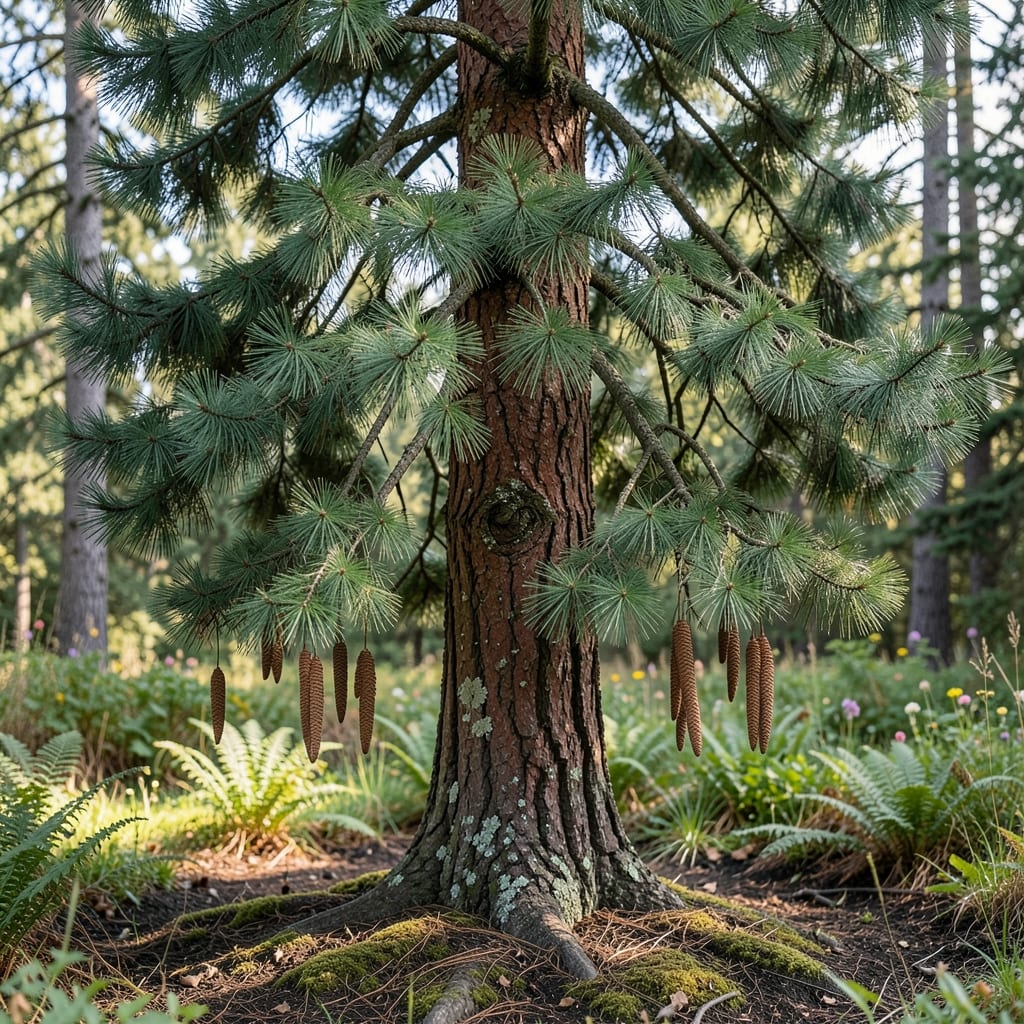
If you’ve ever wondered how tall can Douglas fir 🌲 grow, the answer might surprise you—these evergreen conifers can reach heights that dwarf even the tallest buildings, but their growth depends on far more than just genetics.
Picture this: a 300-foot coastal Douglas fir stretching toward the sky, its branches creating a living canopy that provides shade for entire forests. Yet, in your backyard, a carefully chosen cultivar might stay a manageable 30 feet tall. The difference? Variety, climate, and a little bit of planning.
In this guide, I’ll break down the height ranges of the most popular Douglas fir varieties—from sky-piercing giants to compact landscaping stars—and reveal the factors that determine how tall (or short) your tree will grow.
Whether you’re dreaming of a towering centerpiece or need a low-maintenance evergreen for your yard, you’ll discover how to choose the perfect Douglas fir for your space—and whether pruning can actually control its height.


Douglas fir height by variety: from dwarf to sky-scratching giants
When you plant a Douglas fir (Pseudotsuga menziesii), you’re not just adding greenery—you’re inviting a living monument into your landscape. The height range of these evergreen conifers spans from towering forest giants to compact backyard darlings, depending on the variety. Let’s explore the mature height of the most popular types so you can choose the perfect fit for your space.
The coastal Douglas fir (Pseudotsuga menziesii var. menziesii) is the undisputed champion, with mature specimens reaching 200–300 feet in ideal conditions—think Pacific Northwest forests where they dominate the canopy. In contrast, the Rocky Mountain Douglas fir (Pseudotsuga menziesii var. glauca) typically maxes out at 150–200 feet, making it slightly more manageable for large landscapes.
But here’s the game-changer: cultivated varieties offer dramatic height reductions. For example, the 'Glauca Prostrata' cultivar stays a modest 20–30 feet tall, perfect for small yards or container gardening. Meanwhile, the 'Viridis' variety grows to 50–80 feet, striking a balance between grandeur and practicality.
If you’re planning a landscape design, spacing is everything. A coastal Douglas fir needs at least 30–50 feet of clearance to avoid crowding power lines or neighboring structures. For dwarf varieties like 'Glauca Prostrata' or 'Pendula', you can plant them as close as 5–10 feet apart, making them ideal for hedges or foundation plantings.
One common misconception is that all Douglas firs grow at the same rate. In reality, coastal varieties grow 2–3 times faster in their first decade compared to their Rocky Mountain cousins. This means a 10-year-old coastal fir could already be 30–50 feet tall, while a Rocky Mountain fir might only reach 15–25 feet in the same time.
For those with limited space, container-grown Douglas firs are a game-changer. Varieties like 'Blue Cone' or 'Winter Glow' thrive in large pots (15+ gallons) and can be pruned annually to maintain a compact shape. Just remember: even dwarf varieties need well-draining soil and full sunlight to reach their height potential.
Whether you’re aiming for a forest-like statement or a neat, manageable evergreen, choosing the right Douglas fir variety is the first step. Next, we’ll dive into what limits their growth—and how you can optimize conditions for the height (or lack thereof) you desire.
What limits Douglas fir growth? Climate, soil, and space factors explained
If you’ve planted a Douglas fir and are curious about its potential height, the answer isn’t just in its genetics—it’s in the environment. Coastal Douglas firs, for example, can grow 300 feet tall thanks to their ideal climate, while inland varieties often max out at 150 feet. The difference? Climate, soil, and space play starring roles in how tall your tree will become.
Let’s start with climate. Coastal Douglas firs thrive in the Pacific Northwest’s mild, wet winters and long summers, which fuel rapid growth. In contrast, inland or Rocky Mountain varieties face harsher winters and drier conditions, slowing their ascent. Even within the same region, microclimates—like a sunny slope versus a shady valley—can influence height by 20-30 feet.
Soil quality is another game-changer. Douglas firs prefer acidic, well-draining soil with a pH between 5.0 and 7.0. Compacted or alkaline soil stunts root growth, limiting the tree’s ability to absorb nutrients and water. If your soil is heavy clay, amending it with organic matter can boost height potential by up to 15 feet over 10 years.
🌱 Visual Guide: Key Growth Limits
| Factor | Impact on Height | Solution |
|---|---|---|
| Climate | Coastal: +150 ft vs. inland | Choose native cultivars |
| Soil pH | Acidic (5.0-7.0): optimal growth | Test soil, amend with peat |
| Spacing | 10-15 ft apart: full growth | Plant farther for taller trees |
| Water Availability | Drought: stunted growth | Deep watering weekly (first year) |
| Sunlight | Full sun: +20% growth rate | 6+ hours daily sunlight |
Spacing is often overlooked but critical. Douglas firs need 10-15 feet of space to reach their full height. Crowding a tree forces it to compete for sunlight and nutrients, resulting in a shorter, wider growth habit. If you’re planting multiple firs, space them 20 feet apart to avoid stunted growth and ensure they develop strong, straight trunks.
Even with perfect conditions, water availability can limit height. Young Douglas firs need deep, consistent watering to establish roots. Once established, they tolerate drought, but prolonged dry spells can reduce height by 10-20 feet over a decade. Mulching around the base helps retain moisture and encourages deeper root growth.
Finally, sunlight exposure directly impacts growth rates. Trees in full sun can grow 2-3 feet per year, while those in partial shade may only add 1 foot annually. If your yard is shady, consider a semi-dwarf cultivar like 'Viridis,' which adapts better to lower light conditions while still reaching 50-80 feet tall.
By understanding these factors, you can maximize your Douglas fir’s height—or intentionally keep it smaller—by making simple adjustments to its environment. Whether you’re aiming for a towering forest giant or a manageable backyard evergreen, the key is matching the tree to its ideal growing conditions. 🌳