
Size
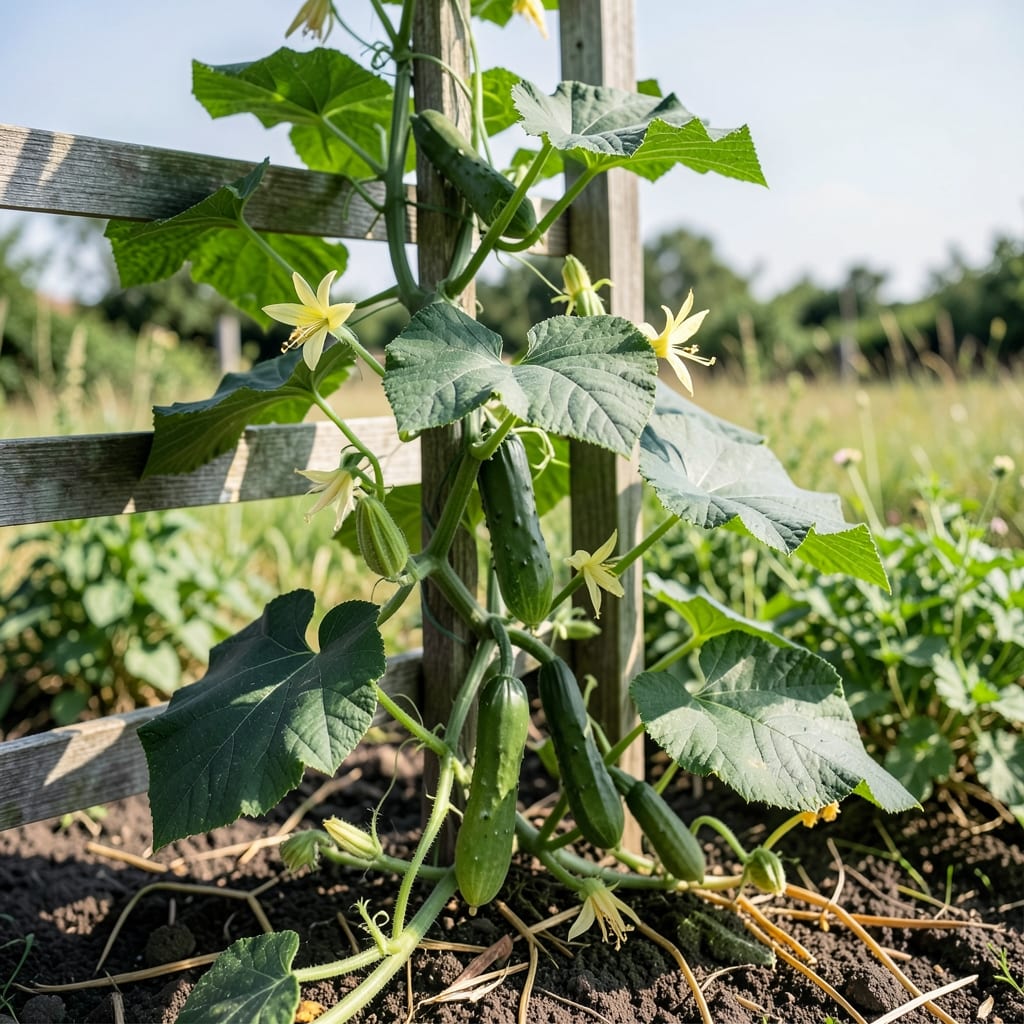
If you’ve ever wondered how tall cucumber plants grow, you’re not alone—many gardeners assume all 🥒 varieties sprawl uncontrollably. But here’s the truth: some cucumbers stay neatly compact, while others climb like jungle vines, reaching heights that’ll make your trellis wish it were taller.
Whether you’re working with a small balcony garden or a sprawling backyard, choosing the right cucumber variety is the key to maximizing space without sacrificing yield. Bush types top out at just 3–5 feet, while traditional vining varieties can stretch 10–20 feet if given the right support.
In this guide, I’ll break down the height differences between varieties, how trellising and pruning can control growth, and which space-saving options are perfect for containers or tight spaces. You’ll also discover how to train your plants for vertical growth—because even the tallest cucumbers can be managed with the right techniques.
Ready to transform tangled vines into a neat, productive garden feature? Let’s dive into the specifics so you can pick the perfect cucumber for your space—and enjoy a bountiful harvest without the chaos.


Cucumber vine growth heights: from towering vines to compact bushes
If you’ve ever planted cucumbers, you’ve probably noticed they don’t all grow the same way. Some varieties sprawl like wild vines, while others stay neatly contained. The height difference between cucumber plants can be staggering—from 3-foot bush varieties to 20-foot vining giants. Understanding these growth patterns helps you plan your garden layout and choose the right support system.
The average cucumber vine reaches 10–20 feet when given proper trellising, but without support, it can sprawl up to 25 feet across the ground. This is why many gardeners opt for vertical growing to save space and improve air circulation. Bush cucumbers, on the other hand, stay compact at 3–5 feet tall, making them ideal for containers or small gardens.
Here’s the key: Vining cucumbers need support to reach their full height, while bush varieties don’t require trellises but still benefit from a small cage or stake. The growth habit also affects fruit production—vining types often yield more but need more space, whereas bush types produce smaller harvests in tighter areas.
| Variety Type | Height Range | Space Needs | Support Required |
|---|---|---|---|
| Traditional Vining | 10–20 ft | Large (sprawling) | Trellis or strong fence |
| Semi-Dwarf Vining | 6–10 ft | Moderate | Trellis or stakes |
| Bush Varieties | 3–5 ft | Small (compact) | None or small cage |
When planning your garden, consider the mature height of your cucumber plants. Vining types like ‘Marketmore 76’ or ‘Straight Eight’ can climb 15–20 feet if given a sturdy trellis, while bush varieties like ‘Bush Champion’ stay under 4 feet. The right choice depends on your space and how much maintenance you’re willing to invest in trellising.
Another factor influencing height is pruning. Regular pruning can keep vines manageable, but over-pruning reduces yield. I recommend trimming side shoots to encourage upward growth and improve airflow, which helps prevent diseases like powdery mildew. Without pruning, vines can become unruly and shade out other plants.
If you’re growing cucumbers in containers, opt for bush varieties or dwarf vining types like ‘Spacemaster’, which tops out at 3–4 feet. These varieties are perfect for balconies or small patios, as they don’t require extensive support. Just ensure your container is at least 12–18 inches deep to accommodate their root systems.
For in-ground gardens, vining cucumbers thrive when planted near a trellis or fence. I’ve found that a 6–8 foot trellis works well for semi-dwarf varieties, while traditional vining types need taller support. Always plant seeds 1 inch deep and space them 3–4 feet apart to give roots room to spread.
One common misconception is that taller cucumbers always produce more fruit. While vining types can yield larger harvests, bush varieties often ripen faster and are easier to manage in small spaces. The key is balancing space efficiency with yield potential—whether you prioritize height or compact growth depends on your garden’s layout.
Finally, remember that soil quality and sunlight play a huge role in vine growth. Cucumbers need 6–8 hours of full sun daily and well-draining soil rich in organic matter. Poor soil conditions can stunt growth, while ideal conditions help vines reach their full height potential. Amend your soil with compost before planting to give your cucumbers the best start.
Best space-saving cucumber varieties for small gardens and containers
If you’re working with limited space, don’t let that stop you from growing cucumbers! The right compact varieties can thrive in containers, hanging baskets, or small garden beds—without sacrificing yield. These space-saving cucumbers are perfect for balconies, patios, or urban gardens where sprawling vines would take over. I’ve grown several of these myself, and they consistently deliver reliable harvests in tight spaces.
One of my top recommendations is ‘Bush Champion’, a true bush cucumber that stays under 4 feet tall and produces slicing-type cucumbers perfect for salads. It’s a heavy producer and doesn’t require trellising, making it ideal for 5-gallon containers or raised beds. Another favorite is ‘Spacemaster’, a semi-dwarf vining type that tops out at 3–4 feet when trained vertically. It’s great for hanging baskets or small trellises.
For those with even tighter spaces, ‘Diva’ is a parthenocarpic (self-pollinating) variety that stays compact at 2–3 feet tall and produces small, sweet cucumbers perfect for snacking. It’s also disease-resistant, which is a huge plus in crowded gardens. If you’re looking for a high-yielding bush type, ‘Sweet Success’ is another excellent choice, producing 6–8 inch cucumbers in a 3–4 foot frame.
| Variety | Height | Yield | Best For |
|---|---|---|---|
| Bush Champion | 3–4 ft | High (slicing) | Containers, small gardens |
| Spacemaster | 3–4 ft | Moderate (pickling) | Hanging baskets, trellises |
| Diva | 2–3 ft | High (snacking) | Balconies, urban gardens |
| Sweet Success | 3–4 ft | High (slicing) | Containers, small spaces |
When choosing a container-friendly cucumber, prioritize varieties labeled as bush or compact. These are bred to stay small and produce well in limited root space. For containers, use a large pot (at least 12–18 inches deep) with drainage holes and fill it with well-draining potting mix. I also recommend adding a slow-release fertilizer at planting time to support steady growth.
One challenge with container cucumbers is water retention. Potted plants dry out faster than in-ground ones, so I water mine daily during hot weather and mulch the soil surface to retain moisture. Overwatering is just as bad, so always check the top inch of soil before watering—it should be slightly dry to the touch. A self-watering container can also help maintain consistent moisture levels.
If you’re growing cucumbers in small garden beds, consider interplanting with compatible crops like radishes or lettuce, which won’t compete for space. Just ensure your cucumbers get at least 6 hours of sunlight daily, as they need plenty of light to produce fruit. In shadier spots, opt for shade-tolerant varieties like ‘Sweet Gran’, which performs well with 4–6 hours of sun.
Finally, don’t overlook vertical growing even for compact varieties. A small 3-foot trellis can help train vines upward, saving space and improving airflow. I’ve seen ‘Spacemaster’ produce just as well on a trellis as it does in a bush form. The key is to prune regularly to encourage upward growth and remove any yellow or diseased leaves to keep the plant healthy.