
Trees
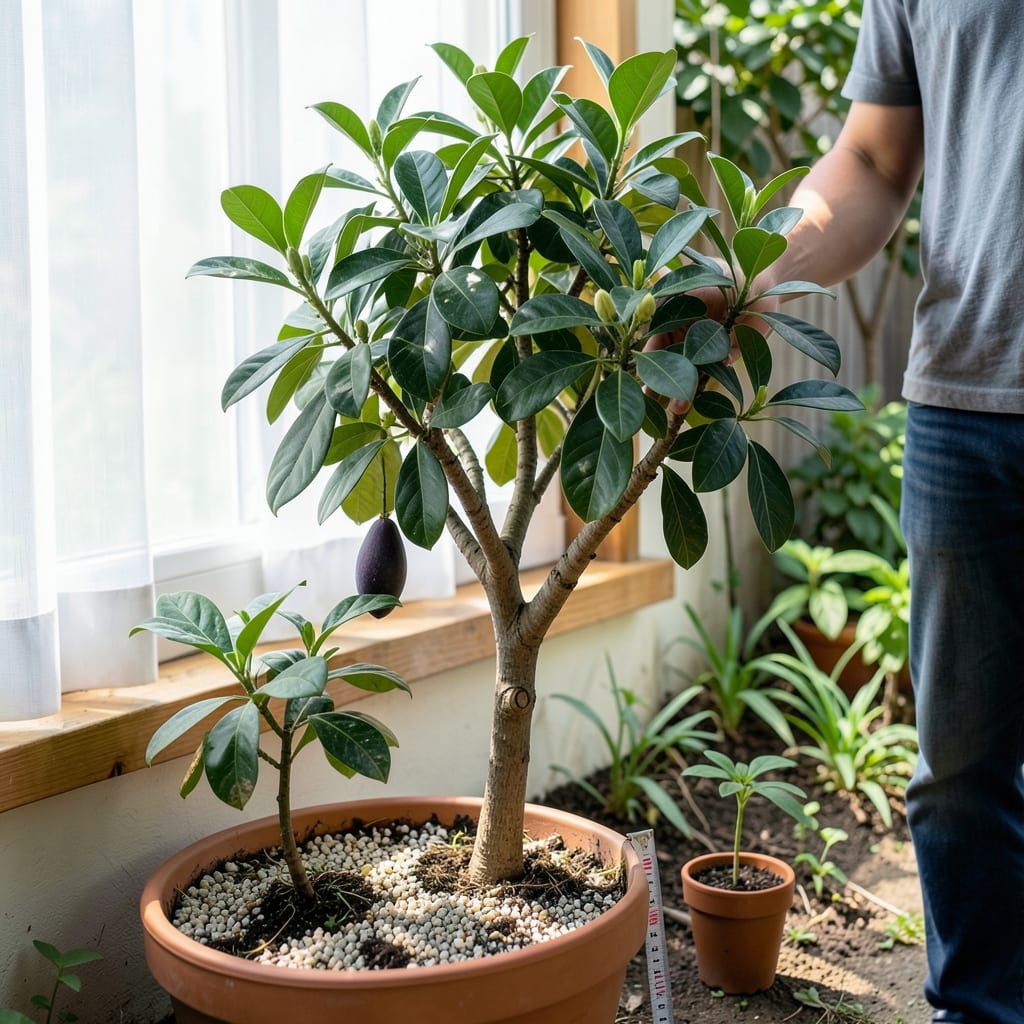
How tall do avocado trees grow indoors? If you're dreaming of a lush 🥑 tree indoors but worried about it towering over your living room, you're not alone. The good news is that with the right variety and care, you can keep your avocado tree at a manageable height—even in small spaces.
Indoor avocado trees typically reach 6 to 10 feet if left unchecked, but dwarf varieties can stay under 6 feet with proper pruning and container limits. The key is choosing a compact variety like 'Bacon' or 'Wurtz' and giving it the right conditions to thrive without shooting up like a jungle giant.
In this guide, I’ll break down exactly what to expect from your indoor avocado tree’s growth, how to control its height, and which varieties are best for small spaces. Whether you're starting with a seed or buying a young plant, you’ll learn how to keep it lush, healthy, and—most importantly—within your ceiling’s reach.
Ready to grow a stunning indoor avocado tree that fits your space? Let’s dive into the details so you can enjoy your tropical green friend without the worry of it becoming a skyscraper in your home.

Indoor avocado tree height expectations: varieties and growth patterns
Avocado trees grown indoors can reach 6 to 20 feet if left unpruned, but their growth depends heavily on the variety, container size, and care routine. Most seed-grown trees will naturally grow toward the taller end of that spectrum, while dwarf varieties like 'Bacon' or 'Wurtz' stay between 6 and 10 feet with proper management. The key to controlling height lies in understanding your tree’s growth habits and adjusting care accordingly.
In the first year, your indoor avocado tree will likely grow 1 to 2 feet tall, with rapid growth spurts during spring and summer. By year two, you can expect 3 to 5 feet of height, and by year three, many trees reach 6 to 10 feet if not pruned. Without intervention, some varieties can even exceed 15 feet indoors, which is why pruning and container selection are critical for small spaces.
Your tree’s container plays a huge role in its height. Smaller pots restrict root growth, which naturally limits how tall the tree can become. A 15-gallon pot is ideal for dwarf varieties, while seed-grown trees may need 20+ gallons to stay manageable. Additionally, avocado trees grown from seed tend to grow faster and taller than grafted dwarf varieties, so choosing the right starting material is essential.
Light exposure also impacts height. Avocado trees need 6+ hours of bright, indirect sunlight daily to grow evenly. Insufficient light leads to leggy, stretched growth as the tree reaches for light, causing it to grow taller and weaker. Place your tree near a south- or west-facing window or use a grow light to maintain compact growth.
Pruning is another powerful tool for managing height. Regular pruning not only controls size but also encourages bushier growth and better fruit production (if your tree is mature enough). The best time to prune is in late winter or early spring, just before new growth begins. You can also do light pruning throughout the growing season to maintain shape and size.
Here’s a quick comparison of what to expect from different avocado tree types indoors:
| Variety Type | Mature Height Indoors | Growth Rate (First 3 Years) | Pruning Needs |
|---|---|---|---|
| Seed-Grown | 15-20 ft (without pruning) | 1-2 ft/year (fast) | High (regular pruning required) |
| Dwarf Varieties (e.g., 'Bacon', 'Wurtz') | 6-10 ft (with care) | 1 ft/year (moderate) | Moderate (light pruning suffices) |
| Grafted Semi-Dwarf | 10-15 ft (with pruning) | 1.5 ft/year (moderate-fast) | Moderate-High (structured pruning) |
If you’re starting with a seed, expect your tree to grow faster and taller, requiring more aggressive pruning to keep it in check. On the other hand, dwarf varieties are bred specifically for smaller spaces and often produce fruit earlier—though indoor fruiting is still rare without ideal conditions. The trade-off is that they require slightly more attention to maintain their compact size.
Another factor to consider is your tree’s root-bound status. When roots fill the container, the tree may grow taller as it searches for nutrients and space. To prevent this, repot your avocado tree every 2-3 years into a slightly larger container. This encourages outward growth rather than upward.
For those worried about ceiling clearance, remember that avocado trees can be trained to grow in unique shapes, like espalier or standard forms, to fit your space. With the right variety and care, you can enjoy a lush, tropical-looking tree that stays well within reach—literally and figuratively. The key is consistency in pruning, light exposure, and container management.
🌱
How to control avocado tree height indoors: pruning and training techniques
Keeping your indoor avocado tree at a manageable height isn’t just about choosing the right variety—it’s also about strategic pruning and training. With the right techniques, you can shape your tree to fit your space while encouraging healthy, bushier growth. The key is to prune at the right time and use methods like topping or espalier to control vertical growth.
Pruning is most effective when done in late winter or early spring, just as new growth begins. This timing encourages balanced growth and prevents the tree from becoming leggy. For faster height control, you can also prune lightly throughout the growing season, removing any overly long branches. Always use sterilized pruning shears to avoid introducing diseases to your tree.
One of the most effective techniques for controlling height is topping, where you cut the main stem just above a leaf node. This encourages the tree to branch out, creating a fuller, bushier shape. Repeat topping every few months if needed, but avoid cutting more than 25% of the tree’s height at once to prevent stress.
For even more control, consider training your avocado tree using espalier or standard pruning techniques. Espalier involves guiding branches along a flat surface, like a wall or trellis, to keep the tree compact and spread out horizontally. This method is perfect for small spaces and adds a decorative touch to your home. Standard pruning, on the other hand, involves shaping the tree into a traditional, rounded form while keeping the height in check.
Here’s a step-by-step guide to pruning and training your indoor avocado tree for optimal height control:
- Choose the right time: Prune in late winter or early spring for best results.
- Use sterilized tools: Always clean your pruning shears with rubbing alcohol to prevent disease.
- Top the main stem: Cut just above a leaf node to encourage branching.
- Shape the canopy: Remove any overly long or crossing branches to maintain balance.
- Train with espalier or trellis: Guide branches along a flat surface for compact growth.
- Monitor growth: Adjust pruning as needed throughout the growing season.
Another critical factor in controlling height is container selection. Smaller pots restrict root growth, which naturally limits how tall the tree can become. A 15-gallon pot is ideal for dwarf varieties, while seed-grown trees may need 20+ gallons to stay manageable. Additionally, repotting every 2-3 years into a slightly larger container encourages outward growth rather than upward.
If you’re worried about your tree outgrowing its space, don’t hesitate to prune aggressively during the first few years. Young trees are more resilient to pruning and will recover quickly. Just
🪴