
Size
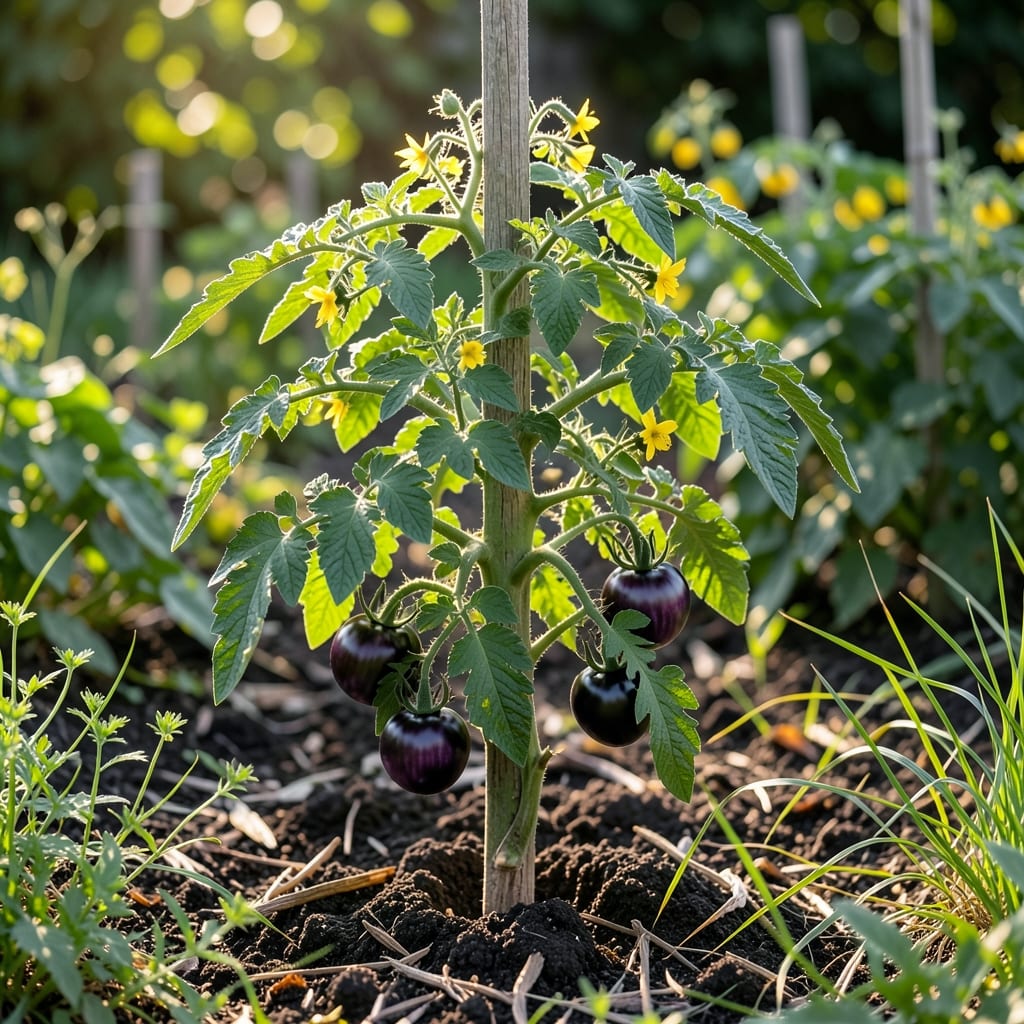
If you're planning your garden but wondering "how tall do Black Krim tomatoes grow", the answer might surprise you—these striking 🍅 varieties can reach heights of 4 to 6 feet when left unchecked, but with the right pruning, you can easily manage them in smaller spaces.
Black Krims are classic indeterminate tomatoes, meaning they grow continuously throughout the season, producing fruit until frost. Without support, their vines can sprawl, but when trained on a trellis or cage, they grow vertically, saving valuable garden real estate. This makes them perfect for both sprawling gardens and container setups.
Whether you're working with limited space or aiming for a lush trellis display, understanding how to control their height is key. I'll walk you through the best pruning techniques, spacing guidelines, and support options to keep your Black Krims thriving—no matter how much room you have.
From small containers to full sun patches, these tomatoes adapt beautifully, but getting their height right ensures bigger yields and easier harvesting. Let’s dive into how to grow them at the perfect height for your setup.


Black Krim tomato height by growth habit: indeterminate vs determinate varieties
When asking how tall do Black Krim tomatoes grow, the answer depends entirely on whether you're dealing with the indeterminate or determinate growth habit. Most Black Krims sold as seeds or transplants are indeterminate, meaning they grow continuously until frost, reaching heights of 4 to 6 feet without pruning. However, some newer hybrids or grafted varieties may exhibit determinate traits, staying compact at 2 to 3 feet.
The key difference lies in their vine structure and fruit production pattern. Indeterminate Black Krims produce fruit along the entire stem, while determinate types set fruit only on the top portion of the plant, then stop growing. This makes indeterminate varieties ideal for trellises or cages, while determinate types are better for bush-style planting.
For indeterminate Black Krims, the natural height range is 5 to 7 feet if left unpruned, but with proper training, you can limit them to 3 to 4 feet for container growing. Determinate types, on the other hand, rarely exceed 3 feet, making them perfect for small gardens or patio containers.
Here’s how the two types compare in terms of height and care requirements:
| Growth Habit | Mature Height | Pruning Needs | Best For |
|---|---|---|---|
| Indeterminate | 5–7 ft (unpruned) 3–4 ft (pruned) |
High (regular pruning) | Trellises, cages, large containers |
| Determinate | 2–3 ft | Low (minimal pruning) | Bush planting, small gardens |
If you’re growing indeterminate Black Krims, their height can be managed through pruning and support. For example, I’ve seen Black Krims on a 6-foot trellis produce just as many tomatoes as an unpruned plant, but with much easier access for harvesting. The trick is to remove suckers (the small shoots that form in the leaf axils) regularly to encourage upward growth and focus energy on fruit production.
For determinate Black Krims, height control is simpler—just ensure they’re planted in well-draining soil and given enough space (about 18 inches apart). These varieties are great for beginners because they require little to no pruning and produce a heavy crop all at once, making them ideal for canning or preserving.
One common mistake I see is assuming all Black Krims are indeterminate. Always check the seed packet or plant tag—some newer varieties, like Black Krim Cherry, may have determinate traits. If you’re unsure, start with indeterminate types and prune aggressively to keep them in check.
For maximum height control, I recommend using a cage or trellis from the start. This not only limits sprawl but also improves air circulation, reducing the risk of blight and disease, which are common issues with tall, dense tomato plants. A 5-foot tomato cage works well for pruned indeterminate Black Krims, while a 3-foot cage suits determinate types perfectly.
🌱
How pruning affects Black Krim tomato height: step-by-step height control guide
Pruning is the secret weapon for controlling how tall your Black Krim tomatoes grow. Whether you're aiming for a compact container plant or a towering trellis display, the right pruning techniques can adjust their height by up to 3 feet. The key is understanding when and how to prune to balance plant vigor with fruit production—too much pruning reduces yield, while too little leads to unruly vines.
For indeterminate Black Krims, which are the most common, pruning focuses on removing suckers (the small shoots that grow between the main stem and branches) and lower leaves. This encourages upward growth and improves air circulation, which is critical for preventing disease in tall plants. Start pruning when your plant reaches about 12 inches tall, and continue every 1-2 weeks throughout the growing season.
Here’s a step-by-step guide to pruning for height control, whether you're growing in containers, on trellises, or in the ground:
- Step 1: Identify Suckers – Suckers are the small shoots that grow in the leaf axils (where the leaf meets the stem). Pinch them off with your fingers or use clean pruners to avoid damaging the plant.
- Step 2: Prune Lower Leaves – Remove leaves that grow below the first flower cluster. This improves air flow and reduces disease risk while directing energy upward.
- Step 3: Limit Main Stem Height – For container growing, prune the main stem to 3-4 feet to keep the plant manageable. For trellises, allow the stem to grow taller but prune side shoots to 1-2 feet per branch.
- Step 4: Thin Fruit Clusters – If your plant is producing too many tomatoes, remove some fruit to reduce weight and prevent stem breakage. Focus on keeping 6-8 tomatoes per cluster.
- Step 5: Prune Aggressively in Containers – In 5-gallon containers, prune heavily to limit height to 3 feet. Use a small tomato cage or stake to support the plant.
One common mistake I see is pruning too late in the season. If you wait until July or August to start pruning, your plant may have already put too much energy into growing, and the height control will be less effective. Start early—within 2-3 weeks of transplanting—for the best results. Additionally, avoid pruning during hot afternoons, as this can stress the plant and make it more susceptible to sunburn or disease.
For determinate Black Krims, pruning is minimal. These varieties naturally stay compact (2-3 feet), so you only need to remove damaged leaves or suckers that compete with fruit production. Focus on removing lower leaves to prevent soil-borne diseases from splashing onto the fruit. Determinate types are perfect for small-space gardens or balcony containers because they require almost no height management.
If you're growing Black Krims in containers, pruning becomes even more critical. A 5-gallon container can support a pruned indeterminate plant up to 4 feet tall, but without pruning, the plant may struggle due to root restriction. Use a lightweight trellis or cage to support the plant and prevent it from toppling over. For larger containers (10+ gallons), you can allow the plant to grow taller, but still prune to encourage bushier growth and better fruit distribution.
🌿