
How To
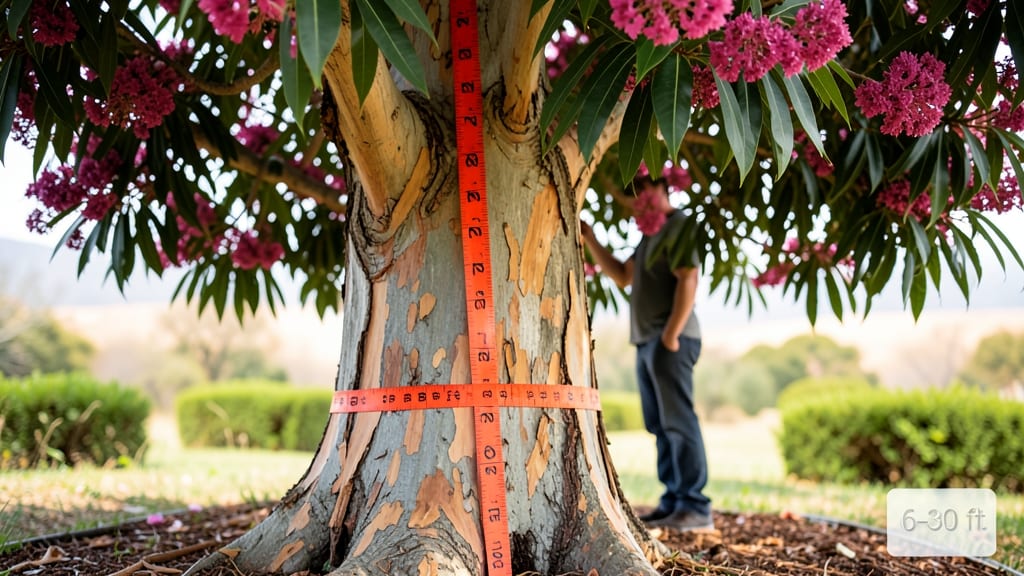
Wondering how tall do crepe myrtles grow before you commit to planting one? You’re not alone—this stunning 🌸 tree can transform from a modest shrub to a towering landscape star, depending on the variety.
Whether you’re working with a cozy backyard or a sprawling property, knowing these height ranges helps you pick the perfect fit for your space.
Crepe myrtles come in three main size categories: dwarf varieties stay compact at 6–10 feet, ideal for patios or small gardens, while standard types reach 15–30 feet, perfect for privacy screens or focal points.
If you’re dreaming of a dramatic statement tree, some giant varieties even surpass 30 feet—think two-story height!
The key to managing their growth lies in pruning and variety selection. With the right techniques, you can keep even a large crepe myrtle in check or encourage a smaller one to fill out beautifully.
I’ll walk you through the best practices so you can enjoy their vibrant blooms without overcrowding your yard.
Ready to find the perfect crepe myrtle for your space? Let’s dive into the details—from dwarf options for tight spots to giant varieties that steal the show.


Crepe myrtle height ranges: from dwarf to towering giants
Crepe myrtles (Lagerstroemia) are famous for their vibrant summer blooms and adaptability, but their mature heights can vary dramatically depending on the variety. If you're planning your landscape, knowing these height ranges is key to selecting the perfect tree for your space.
Some stay compact enough for patios, while others grow tall enough to rival your home's roofline.
Most crepe myrtles fall into three main height categories: dwarf varieties (3–6 ft), standard types (15–25 ft), and giant cultivars (30+ ft). The variety you choose will dictate not just the space you need, but also the maintenance required.
For example, a 6-foot dwarf fits snugly in a small yard, while a 30-foot giant makes a bold statement as a privacy screen or shade provider.
Here’s how these heights break down in real-world terms: A dwarf crepe myrtle might reach the height of a basketball hoop, while a standard variety could tower over a two-story house.
Understanding these differences helps you avoid planting regrets—like realizing too late that your "small tree" is now blocking your neighbor’s view!
Growth rates also vary. Dwarf varieties typically mature in 3–5 years, while standard types may take 10+ years to reach their full height. This means your yearly growth could be just 1–2 feet for smaller types or 3–5 feet for faster-growing giants.
Patience is key, especially if you’re aiming for a quick privacy solution.
Your climate zone plays a role too. Crepe myrtles thrive in USDA Zones 7–9, where they grow faster and taller. In cooler zones (like Zone 6), growth may slow, and mature heights could be 20–30% shorter.
If you’re in a colder region, opt for hardier dwarf varieties like 'Tonto' or 'Sioux' to ensure they survive winter without stunting.
Another factor? Pruning habits. Regular pruning can keep even a standard variety in check, while neglect can turn a 15-foot tree into a 20-foot monster in just a few years. I’ll share my go-to pruning tips later, but for now, remember: height control starts at planting.
Choose the right variety for your space, and you’ll avoid the heartbreak of a tree outgrowing its welcome.
For urban gardens or small yards, dwarf varieties like 'Arapaho' or 'Dwarf Natchez' are game-changers. They offer all the beauty of crepe myrtles without the space commitment. Meanwhile, giant varieties like 'Muskogee' or 'Tonto' are perfect for rural properties or as focal points in large landscapes.
Think of your yard’s layout: Do you need a privacy screen, a shade provider, or just a colorful accent?
One last tip: Always measure your space before buying. A 10-foot clearance from power lines or structures is a must for standard varieties. And if you’re unsure, err on the side of smaller—you can always prune upward, but you can’t shrink a tree back down! 🌳
Ready to pick the perfect crepe myrtle for your space? Let’s dive into the best varieties for small yards versus large landscapes next—where we’ll compare bloom colors, maintenance needs, and real-world performance. 🌸
Crepe myrtle height ranges: from dwarf to towering giants
Crepe myrtles are famous for their vibrant blooms and adaptability, but their mature height can vary dramatically. Some varieties stay small enough for patio gardens, while others grow tall enough to rival two-story homes.
Knowing these differences helps you pick the right type for your space—whether you need a privacy screen or a compact accent plant.
Most crepe myrtles fall into three height categories: dwarf (3–6 ft), standard (15–25 ft), and giant (30+ ft). Their growth rate also depends on soil quality, sunlight exposure, and pruning habits.
For example, a dwarf variety planted in full sun may reach its full height in just 3–5 years, while a tall variety could take a decade or more.
Here’s a quick comparison to help you visualize their sizes:
| Variety Type | Mature Height | Growth Rate | Best For |
|---|---|---|---|
| Dwarf | 3–6 ft | Slow to moderate | Patios, containers, small gardens |
| Semi-Dwarf | 10–15 ft | Moderate | Small yards, foundation plantings |
| Standard | 15–25 ft | Fast | Privacy screens, large gardens |
| Giant | 30+ ft | Very fast | Statement trees, large landscapes |
If you’re working with limited space, dwarf varieties like 'Arapaho' or 'Dwarf Natchez' are ideal—they top out at 6 ft and thrive in containers or small beds. Meanwhile, standard varieties like 'Muskogee' or 'Tonto' can create a dramatic focal point in larger yards, reaching heights of 20–25 ft.
For those who love a challenge, giant crepe myrtles like 'Yankee Doodle' can soar to 30+ ft, making them perfect for privacy hedges or shade trees. Just be prepared for their rapid growth—some varieties can add 3–5 ft per year in ideal conditions.
Pro tip: Always check the specific variety’s tag when shopping, as even "dwarf" types can vary slightly. Pair your choice with proper pruning techniques to keep growth in check or encourage fuller shapes.
Ready to pick the perfect crepe myrtle? Next, we’ll dive into the best varieties for small yards vs. large landscapes—so you can make an informed choice that fits your vision. 🌸