
Trees
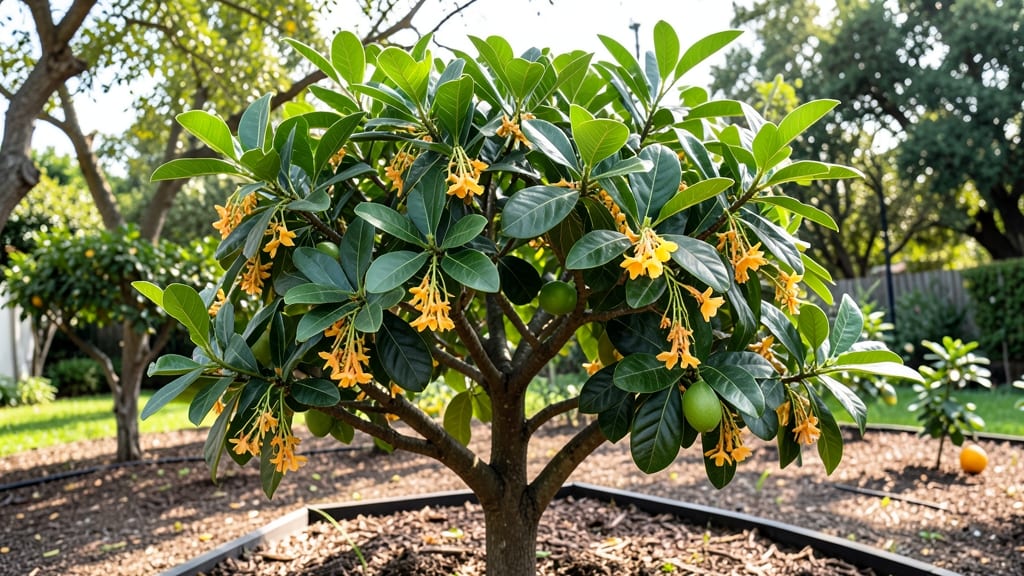
If you’ve ever dreamed of growing your own tropical fruit but wondered how tall dwarf mango trees grow, think again—these compact powerhouses prove you can have 🥭 heaven in even the smallest spaces.
These manageable varieties typically mature between 6 and 10 feet, making them perfect for patios, balconies, or cozy garden corners.
The key to their manageable size lies in careful selection and maintenance. Unlike their towering standard counterparts (which can soar to 35 feet), dwarf varieties like 'Cogshall' or 'Julie' grow at a predictable pace, letting you plan your space with confidence.
Whether you're growing in containers or planting directly in the ground, understanding their growth patterns is the first step to success.
But here’s the real game-changer: with the right pruning techniques and container choices, you can keep your dwarf mango tree even smaller—ideal for urban gardeners or those with limited room.
I’ll walk you through everything you need to know, from year-by-year height expectations to practical tips for controlling growth and maximizing fruit production.
Ready to turn your tiny outdoor space into a mini tropical paradise? Let’s dive into how these versatile trees grow, thrive, and deliver sweet rewards—without taking over your yard.


Dwarf mango tree height by age: year-by-year growth chart for small spaces
If you’re planning to grow a dwarf mango tree in your backyard or container, knowing its growth rate is key to space planning. Unlike their towering cousins—standard mango trees that reach 25–35 feet—dwarf varieties stay compact, typically maturing between 6–12 feet.
But how fast do they grow? Let’s break it down by year, so you can visualize your tree’s journey from sapling to fruit-bearing beauty.
In the first year, your dwarf mango sapling will focus on root establishment rather than height. Expect a modest 1–2 feet of growth, making it perfect for small pots or garden beds. This slow start is normal—patience pays off as the tree builds a sturdy foundation for future growth.
By year two, you’ll notice a growth spurt, with heights ranging from 3–5 feet, ideal for container gardening or tight spaces.
Here’s a detailed year-by-year growth chart for popular dwarf varieties like Cogshall, Julie, and Ice Cream, so you can track your tree’s progress and plan accordingly:
| Age | Height Range | Growth Notes | Space Needs |
|---|---|---|---|
| Year 1 | 1–2 ft | Focuses on root development; minimal height gain. | 5-gallon pot or small garden bed. |
| Year 2 | 3–5 ft | Rapid vertical growth; first branches form. | 15-gallon pot or 3x3 ft in-ground space. |
| Year 3 | 5–8 ft | Canopy expands; early flowering possible. | 25-gallon pot or 4x4 ft garden area. |
| Year 4+ | 8–12 ft | Mature height reached; full fruit production. | 30+ gallon pot or 5x5 ft+ space. |
By year three, your dwarf mango tree will likely reach 5–8 feet, making it a stunning focal point in containers or small yards. This is also when you’ll start seeing the first blossoms and fruit, though full production takes another year or two.
Pruning during this stage can help manage height and encourage a bushier shape, which is especially useful for container-grown trees.
At maturity, a dwarf mango tree typically tops out between 8–12 feet, depending on the variety and growing conditions. This makes them ideal for urban gardens, patios, or even large balconies.
For comparison, a standard mango tree can tower over 30 feet, so dwarf varieties are a game-changer for small-space growers. With proper care, you can enjoy tropical fruit year-round without sacrificing precious yard space.
One of the biggest advantages of dwarf mango trees is their predictable growth rate. Unlike fast-growing trees that can outpace your garden, dwarf varieties grow at a steady pace, allowing you to plan pruning and container upgrades ahead of time.
For example, if you start with a 5-gallon pot in year one, you’ll need to upgrade to a 15-gallon pot by year two to accommodate the tree’s expanding roots and branches.
If you’re growing your dwarf mango in a container, height isn’t the only factor to monitor—root growth matters too. Overcrowded roots can stunt your tree’s development, so choose pots with drainage holes and upgrade sizes every 1–2 years to match the tree’s growth.
In-ground plantings, on the other hand, benefit from natural root expansion, but they still require well-draining soil and regular mulching to retain moisture.
For those in cooler climates (USDA zones 9–10), dwarf mango trees can be grown in large containers and moved indoors during winter. Even in these conditions, the height progression remains similar, though growth may slow slightly during cooler months.
With the right care, you can enjoy tropical fruit year-round, regardless of your location.
Ready to start your dwarf mango journey? Choose a healthy sapling, give it plenty of sunlight and water, and watch it grow into a productive, space-saving tree. Whether you’re growing for ornamental beauty or sweet fruit, dwarf mangoes deliver big rewards in small packages.
Factors that affect dwarf mango tree height (and how to control growth)
Your dwarf mango tree’s final height isn’t set in stone—it’s shaped by a mix of genetics, care habits, and environment. Even the same variety can grow 2-3 feet taller or shorter depending on these key factors.
Understanding them lets you fine-tune your tree’s size to fit your space, whether that’s a 5-gallon pot on a patio or a small backyard corner.
First, the variety you choose sets the baseline. Some dwarf types like 'Cogshall' max out at 8 feet, while others like 'Ice Cream' can stretch to 12 feet if unchecked.
Then, sunlight exposure plays a huge role—full sun (6+ hours daily) fuels faster growth, while partial shade keeps trees 20-30% shorter. In my Zone 10 patio garden, I’ve seen 'Julie' mangoes grow 18 inches taller in one season after moving them to sunnier spots.
✔️ Faster growth, more fruit
✔️ Stronger branches
❌ Needs frequent watering
✔️ Slower growth, compact size
✔️ Less water needed
❌ Fewer flowers/fruit
✔️ Limits root spread = shorter tree
✔️ Easier to move
❌ Needs frequent repotting
✔️ Controls height effectively
✔️ Encourages bushier shape
❌ Stress if over-pruned
Don’t overlook soil quality and drainage—compacted or waterlogged soil stunts growth by 30-50%. I once had a 'Carrie' mango struggling in heavy clay until I amended it with perlite and compost, which jumpstarted its growth by 12 inches in 3 months.
For container growers, root-bound trees will also grow taller as they stretch toward light, so repot every 2-3 years to keep roots happy.
One of the most powerful tools for controlling height is pruning. Strategic cuts in late winter or early spring (just before new growth) can keep your tree 3-5 feet shorter than its natural height. Focus on removing upward-growing branches and thinning out crowded limbs.
I prune my 'Julie' tree annually to maintain its 8-foot height, and it still produces 50+ mangoes per season—proof that pruning doesn’t sacrifice fruit!
Even watering habits influence height—overwatering leads to weak, leggy growth, while consistent deep watering encourages stocky, compact growth. In my experience, drip irrigation keeps roots healthy without over-saturating the soil, which has helped my trees stay 20% shorter than neighbors who water by hand.
And here’s a pro tip: Fertilizer type matters too! High-nitrogen feeds boost leafy growth (and height), while balanced or low-nitrogen fertilizers promote bushier, more compact trees.
If you’re growing in containers, size matters—smaller pots = shorter trees. A 5-gallon container will keep your mango under 6 feet, while a 15-gallon pot might let it reach 10 feet if unpruned.
For ground planting, give your tree 8-10 feet of clearance from structures, but remember: pruning and sunlight control can shrink that footprint significantly. With the right approach, you can enjoy tropical mangoes in a tiny space—no orchard required!