
Trees
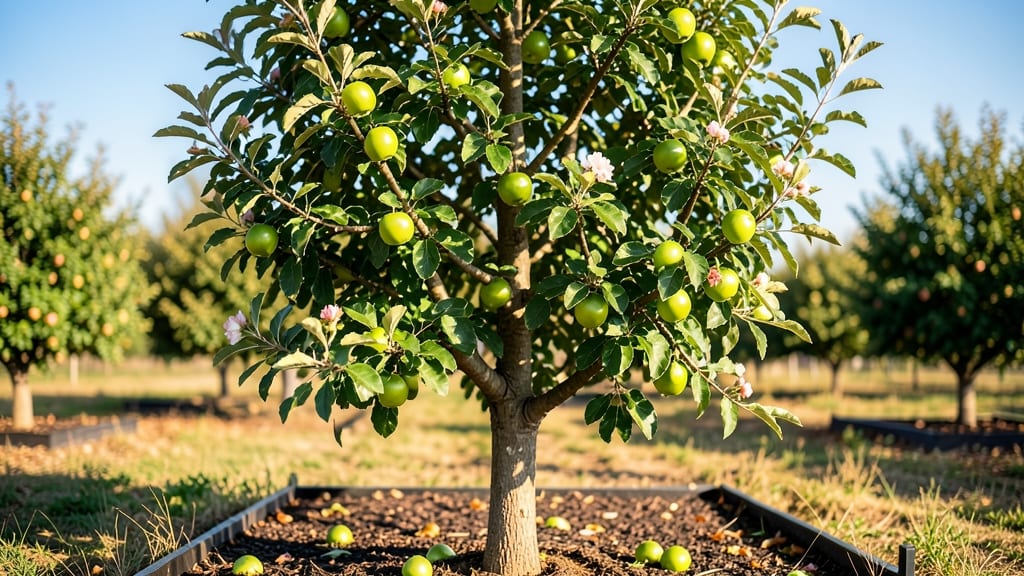
Granny Smith apple tree height variations: standard vs dwarf vs semi-dwarf sizes explained
When planning your home orchard, the height of Granny Smith apple trees is one of the first questions you’ll ask—and for good reason. These trees aren’t one-size-fits-all. Standard varieties can reach 20-25 feet tall, while dwarf cultivars stay between 6-8 feet.
Choosing the right size depends on your space, sunlight, and even your pruning goals.
If you’re working with limited backyard space, dwarf Granny Smith trees are your best bet. They mature quickly and produce fruit within 3-5 years, making them perfect for containers or small urban gardens.
But if you have room to spare, standard trees offer larger fruit yields and a classic orchard look.
Here’s the key difference: rootstock determines height. Dwarf trees are grafted onto M9 or B9 rootstock, while standard trees use seedling or MM106 rootstock. Semi-dwarf trees (10-12 ft) strike a balance, ideal for suburban yards.
Climate also plays a role in height. In warmer USDA zones (7-9), Granny Smith trees grow faster and taller due to longer growing seasons. In cooler zones (5-6), growth slows, but dwarf varieties still thrive with proper winter protection.
For container growing, stick to dwarf trees in large pots (20+ gallons). Ensure pots have drainage holes and use a well-draining potting mix to prevent root rot. Rotate containers seasonally to promote even growth.
If you’re aiming for a taller tree but limited space, consider espalier training. This technique spreads branches horizontally along a fence or wall, keeping the tree’s height manageable while increasing fruit production.
Remember: pruning in early spring (just before buds swell) can control height and shape. Remove suckers and water sprouts to redirect energy toward fruit production rather than vertical growth.
For urban gardeners, semi-dwarf Granny Smith trees are a happy medium. They fit in most backyards, produce high-quality fruit, and require less frequent pruning than standard varieties. Just ensure they get full sun (6+ hours daily) and well-draining soil.
Whether you choose a dwarf for containers or a standard for a full orchard, understanding these height variations ensures your Granny Smith tree thrives—and so does your harvest!
Optimal spacing requirements for Granny Smith trees by size type
Choosing the right spacing for your Granny Smith apple tree isn't just about aesthetics—it's about ensuring healthy growth, better airflow, and maximum fruit production. Crowded trees compete for nutrients, leading to smaller harvests and increased disease risk.
Let's break down the ideal spacing for each size type to help you plan your orchard like a pro.
For standard Granny Smith trees (16–25 ft tall), aim for 12–15 feet between trees. This gives roots plenty of room to spread while allowing sunlight to reach all branches.
In a small backyard, you might plant just one standard tree as a focal point, but avoid pairing it with other large trees nearby.
Semi-dwarf varieties (10–12 ft tall) need slightly less room—8–10 feet of space. This makes them perfect for smaller yards or container growing with proper rootstock. Semi-dwarfs strike a balance between manageable size and high productivity, making them a favorite among urban gardeners.
📏 Granny Smith Tree Spacing Guide
- Standard Trees (16–25 ft): 12–15 ft apart (full sun access, minimal competition)
- Semi-Dwarf Trees (10–12 ft): 8–10 ft apart (ideal for small yards)
- Dwarf Trees (6–8 ft): 4–6 ft apart (perfect for containers or tight spaces)
💡 Pro Tip: Space trees north-south to maximize sunlight exposure and airflow.
Dwarf Granny Smith trees (6–8 ft tall) are the space-savers of the orchard, thriving in 4–6 feet of space. These are your best bet for containers, balconies, or even indoor growing near sunny windows.
Just ensure their containers have drainage holes and are large enough (at least 15–20 gallons of soil volume) to support root growth.
Beyond horizontal spacing, consider vertical clearance. Standard trees need 10–12 feet of overhead space to avoid branches rubbing against structures or each other. Prune lower branches early to create a clear trunk and improve airflow at the base, reducing fungal diseases like apple scab.
If you're planting multiple trees, arrange them in rows with 12–18 feet between rows. This layout mimics commercial orchards, making harvesting easier and allowing equipment (like lawnmowers) to pass through. For urban gardens, consider espalier training to grow trees flat against a fence or wall, saving space without sacrificing yield.
Remember, proper spacing isn’t just about the numbers—it’s about creating an environment where your Granny Smith tree can thrive. With the right layout, you’ll enjoy bountiful harvests for years to come. 🍏