
Trees
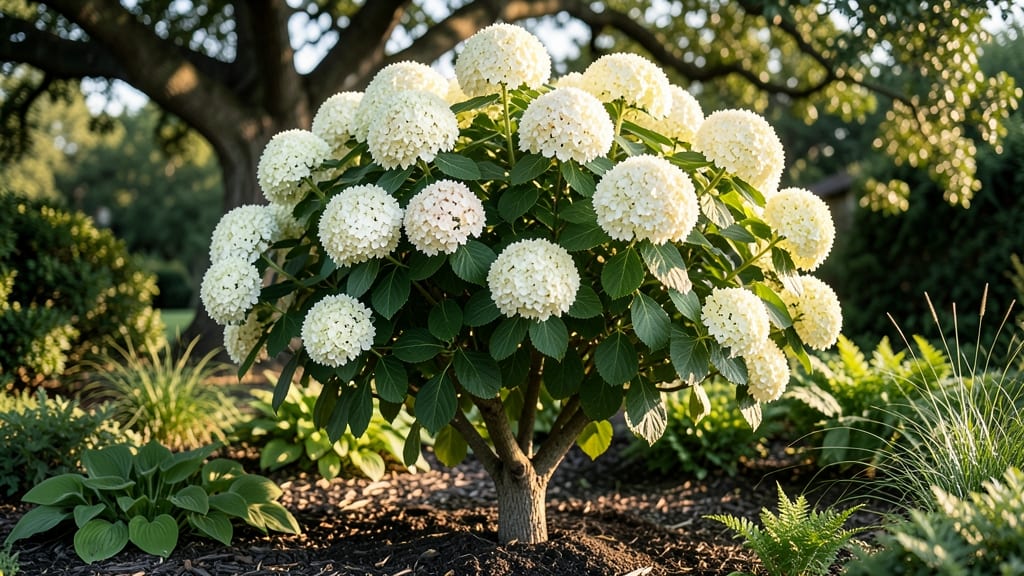
Wondering how tall do hydrangea trees grow before they become the centerpiece of your garden—or the space hog you didn’t plan for? The answer depends entirely on the variety you choose, with some reaching 15 feet or more while others stay neatly under 5 feet.
If you’re envisioning a lush, 🌸 Hydrangea Tree that provides shade for your patio or borders your driveway, knowing the mature height of your specific type is the first step.
Whether you’re working with USDA Zone 6a conditions or planning a spring planting in April-May, the right choice can transform your outdoor space without overwhelming it.
From the towering Hydrangea paniculata varieties that can grow taller than a mailbox to the compact Hydrangea arborescens perfect for containers, each type has its own growth story.
I’ll break down the height ranges, growth habits, and what you can do to keep them at your desired size—whether that means pruning for privacy or letting them reach their full potential.
Ready to pick the perfect hydrangea for your garden? Let’s dive into the varieties that will thrive in your space, so you can enjoy their stunning blooms without the surprises.


Hydrangea tree height by variety: from dwarf to giant sizes
Choosing the right hydrangea variety is all about matching its mature height to your space. Some varieties stay compact enough for container gardens, while others grow tall enough to create privacy screens or shade for patios.
The key is understanding each type’s growth habits—whether they’re slow-growing Oakleaf hydrangeas or fast-climbing Panicle hydrangeas.
Hydrangea trees typically reach maturity between 3 to 15 feet, but some rare varieties can exceed 20 feet with ideal conditions. Your climate zone, pruning habits, and soil quality all influence how tall your hydrangea will grow.
For example, Hydrangea arborescens (Smooth hydrangea) often stays under 5 feet, while Hydrangea paniculata can soar to 12 feet or more.
Here’s a quick guide to help you visualize each variety’s potential height and growth habit:
| Variety | Mature Height | Growth Habit | Best For |
|---|---|---|---|
| Oakleaf (Hydrangea quercifolia) | 6–12 ft | Upright, tree-like | Shade trees, specimen plants |
| Panicle (Hydrangea paniculata) | 8–15 ft | Fast-growing, arching | Privacy screens, borders |
| Smooth (Hydrangea arborescens) | 3–5 ft | Compact, rounded | Containers, foundation plants |
| Bigleaf (Hydrangea macrophylla) | 3–6 ft | Bushy, multi-stemmed | Cut flowers, borders |
| Annabelle (Hydrangea arborescens 'Annabelle') | 3–5 ft | Dense, globe-shaped | Mass plantings, containers |
| Grandiflora (Hydrangea paniculata 'Grandiflora') | 8–12 ft | Vigorous, upright | Large gardens, hedges |
| Limelight (Hydrangea paniculata 'Limelight') | 6–8 ft | Pyramidal shape | Focal points, mixed borders |
If you’re working with limited space, dwarf varieties like 'Endless Summer' (Bigleaf hydrangea) or 'Little Lime' (Panicle hydrangea) stay under 4 feet and thrive in pots.
For bold statements, consider 'PeeGee' or 'Little Quickfire', which can reach 10+ feet and provide year-round interest with their exfoliating bark and late-season blooms.
One common misconception is that all hydrangeas grow into towering trees. In reality, Bigleaf and Smooth hydrangeas are more likely to stay shrub-sized unless heavily pruned. Meanwhile, Panicle and Oakleaf types naturally grow taller and benefit from regular pruning to control their height and encourage bushier growth.
Before planting, check your variety’s mature height against your space. For example, a 12-foot hydrangea planted too close to a house or driveway could become a pruning nightmare. Always leave 3–5 feet of clearance around the base for airflow and maintenance.
If you’re unsure, opt for a semi-dwarf variety like 'Vanille Fraise', which tops out at 6 feet while still making a statement.
Pro tip: If you love the look of a tall hydrangea but lack the space, consider training it on a trellis or arbor. Varieties like 'Nikko Blue' (Oakleaf) can be pruned to grow vertically, adding height without spreading width.
Just be prepared for slower growth compared to their natural habit.
🌿
How fast do hydrangea trees grow? Growth rates by type
Hydrangea trees don’t grow at the same speed—some varieties shoot up 3 feet per year while others creep along at just 6 inches annually. Your choice of hydrangea can mean the difference between a 3-year wait for a lush canopy or a 10-year investment in patience.
Let’s break down which types grow fastest and how to optimize their growth for your garden.
Fast-growing Panicle hydrangeas like 'Limelight' or 'Little Lime' can add 2-3 feet annually under ideal conditions, reaching their 8-15 foot mature height in just 5-7 years.
Meanwhile, Oakleaf hydrangeas like 'Snow Queen' grow slower—expect only 1-2 feet per year, taking up to a decade to reach their 10-15 foot maximum. Even slower are Smooth hydrangeas, which mature at 5-8 feet over 8+ years.
Your climate zone plays a huge role—hydrangeas in USDA Zone 7+ grow faster due to longer growing seasons, while cooler zones may see 20-30% slower growth. For example, a 'Grandiflora' hydrangea might hit 10 feet in 5 years in Georgia but take 7 years in New York.
Sunlight also matters: Morning sun + afternoon shade fuels the fastest growth, while full sun can stress some varieties.
To speed up growth, focus on soil quality—hydrangeas thrive in acidic, well-draining soil with a pH of 5.5-6.2. Amend clay soil with compost or peat moss, and fertilize in early spring with a balanced 10-10-10 NPK fertilizer.
Avoid over-fertilizing, which can lead to leafy growth at the expense of blooms. Water deeply once a week (more in summer), keeping the soil consistently moist but not soggy.
Pruning can also influence height—late-winter pruning of Panicle hydrangeas encourages taller growth, while summer pruning of Bigleaf types promotes bushier, shorter habits. If your hydrangea starts growing too tall for its space, prune back by 1/3 in late winter to redirect energy toward width rather than height.
Just avoid heavy pruning in fall, as new growth won’t harden off before winter.
With the right variety and care, you could have a 10-foot hydrangea tree in just 5 years—or a 3-foot dwarf specimen in 3 years. The key is matching your space, climate, and patience level to the right type.
For fastest results, go for Panicle hydrangeas in Zone 7+ with morning sun—they’ll reward you with dramatic height gains and stunning summer blooms.