
Trees
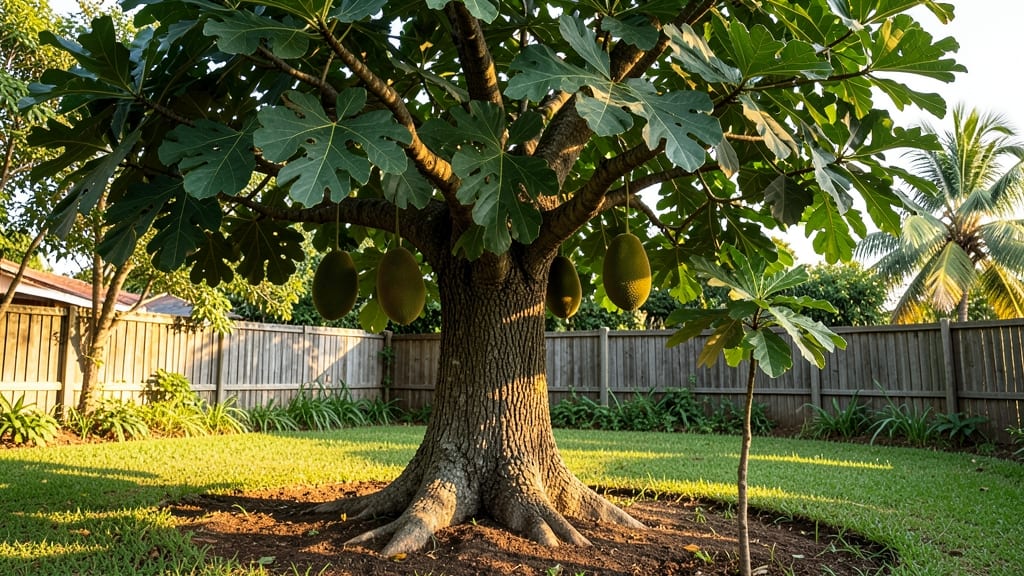
If you're curious about how tall do jackfruit trees grow, prepare to be amazed—these tropical giants can reach heights of 40 to 120 feet, dwarfing even the tallest trees in your neighborhood.
The Jackfruit Tree 🌴 isn’t just a statement piece; it’s a living monument that thrives in warm climates like zones 10-12.
But before you picture a backyard crowded by this towering tree, there’s good news: not all jackfruit varieties grow to skyscraper proportions. Some stay more manageable, especially with the right care, making them a feasible option for larger gardens or even container growing (with proper pruning).
What really determines their height? Sunlight, soil quality, and pruning habits play a huge role. In ideal conditions, these trees grow fast, adding 10 to 20 feet per year in their early years. That means a 3-year-old tree could already be taller than your house!
Whether you're dreaming of a compact dwarf variety or embracing the challenge of a full-sized tree, understanding their growth patterns is key. Let’s break down exactly what to expect—and how to keep your Jackfruit Tree 🌴 thriving without overpowering your space.


Jackfruit tree height by variety: from dwarf to giant
If you're considering adding a jackfruit tree (Artocarpus heterophyllus) to your landscape, understanding its mature height is crucial. These tropical trees can grow into towering giants, but some varieties stay surprisingly manageable.
The average jackfruit tree reaches 40–80 feet tall, though exceptional specimens can exceed 100 feet—taller than a four-story building!
Growth speed is another key factor. In ideal conditions, jackfruit trees grow 3–6 feet per year during their first decade, then slow to 1–3 feet annually as they mature. This means a tree planted today could reach 20 feet by age 5 and 50 feet by age 15.
Most backyard gardeners focus on three main categories: standard varieties, semi-dwarf hybrids, and rare dwarf selections. While true dwarf jackfruit trees don’t exist in commercial cultivation, some pruning techniques can help control height. Let’s break down what to expect from each type.
Standard jackfruit varieties like the classic Ettavan and J33 are the most common in tropical regions. These can easily reach 60–100 feet with a 30–50 foot canopy spread, making them unsuitable for small yards. Their rapid growth and massive size require ample space and professional pruning.
| Variety | Mature Height | Canopy Spread | Growth Rate (First 10 Years) | Space Needs |
|---|---|---|---|---|
| Ettavan (Standard) | 60–100 ft | 30–50 ft | 3–6 ft/year | Large estate or farm |
| J33 (Standard) | 50–80 ft | 25–40 ft | 4–5 ft/year | Large yard or orchard |
| Golden Jack (Hybrid) | 40–60 ft | 20–30 ft | 2–4 ft/year | Medium-sized property |
| Dwarf Hybrid (Rare) | 20–30 ft (with pruning) | 15–20 ft | 1–2 ft/year | Large backyard or container (with care) |
For those with limited space, the Golden Jack hybrid offers a more manageable option, typically reaching 40–60 feet. While still large, its slightly slower growth rate and slightly smaller canopy make it a better fit for medium-sized properties in tropical climates.
If you’re determined to grow jackfruit in a small urban garden, you’ll need to focus on aggressive pruning and container cultivation. Even "dwarf" jackfruit trees (which are more accurately described as pruned standard varieties) can still reach 20–30 feet without careful maintenance.
One critical factor to consider is the root system. Jackfruit trees develop extensive, aggressive roots that spread farther than their canopy. This means you’ll need to account for at least 2–3 times the canopy width in ground space to prevent root competition with other plants.
Before planting, check local regulations—some municipalities restrict large tree varieties due to their potential to damage sidewalks, driveways, and underground utilities. Always verify tree height restrictions in your area to avoid legal issues or costly removals.
For the best results, pair your jackfruit tree with companion plants that thrive in its dappled shade, such as banana plants, papaya, or citrus trees. These can help utilize the space beneath the towering jackfruit while creating a lush, tropical ecosystem.
🌴
Factors that influence jackfruit tree height and growth speed
Your jackfruit tree’s final height isn’t set in stone—it’s shaped by where you live, how you care for it, and even the variety you choose.
In tropical climates like USDA Zones 10-12, these trees can reach their full 40-120 ft potential, while cooler subtropical zones may limit growth to 20-40 ft. The difference? Temperature, sunlight, and soil all play starring roles in your tree’s growth story.
Sunlight is the #1 growth accelerator for jackfruit trees. They crave 6+ hours of direct sun daily, but partial shade (like in Florida’s afternoon heat) can stunt their vertical ambitions.
If you’re in a subtropical zone, consider planting near a south-facing wall to maximize warmth and light during cooler months.
🌱 Key Factors Affecting Jackfruit Tree Height
- 🌞 Sunlight: Full sun = faster, taller growth; partial shade = slower, shorter trees
- 🌡️ Climate: Tropical zones (10-12) = giant trees; subtropical = compact growth
- 🪴 Soil: Well-draining, nutrient-rich soil fuels rapid height gains
- ✂️ Pruning: Regular pruning can reduce height by 30-50% over time
- 💧 Water: Deep, consistent watering boosts growth; drought stress slows it
💡 Pro Tip:
If you’re in Zone 11 or cooler, start your jackfruit from a grafted dwarf rootstock—it can cut mature height by nearly half while keeping fruit production strong.
Soil quality is another hidden height controller. Jackfruit trees thrive in well-draining, slightly acidic soil (pH 5.5-7.0). If your soil is clay-heavy or waterlogged, roots struggle to absorb nutrients, and your tree may max out at 30 ft instead of 60.
Amend with compost and perlite to create the ideal growing medium—your tree’s future height depends on it!
Don’t underestimate the power of pruning. While it won’t shrink a mature jackfruit tree overnight, strategic pruning during late winter or early spring can keep a young tree under 20 ft for years.
Focus on removing suckers and water sprouts—these compete for energy, slowing vertical growth. Just avoid heavy pruning after flowering season, or you’ll sacrifice fruit production.
Even watering habits impact height. Deep, infrequent watering (every 7-10 days) encourages deep root growth, which supports taller stature. Shallow, frequent watering leads to weak roots and stunted growth.
In summer heat, increase watering to every 5-7 days—but always let the top 6 inches of soil dry between sessions to prevent root rot.
Lastly, patience is key. Jackfruit trees grow 2-3 ft per year in ideal conditions, but it takes 5-10 years to reach mature height.
If you’re in a smaller backyard, consider starting with a container-grown tree (up to 10 ft tall) and pruning aggressively—though even then, expect it to outgrow its space eventually.