
Trees
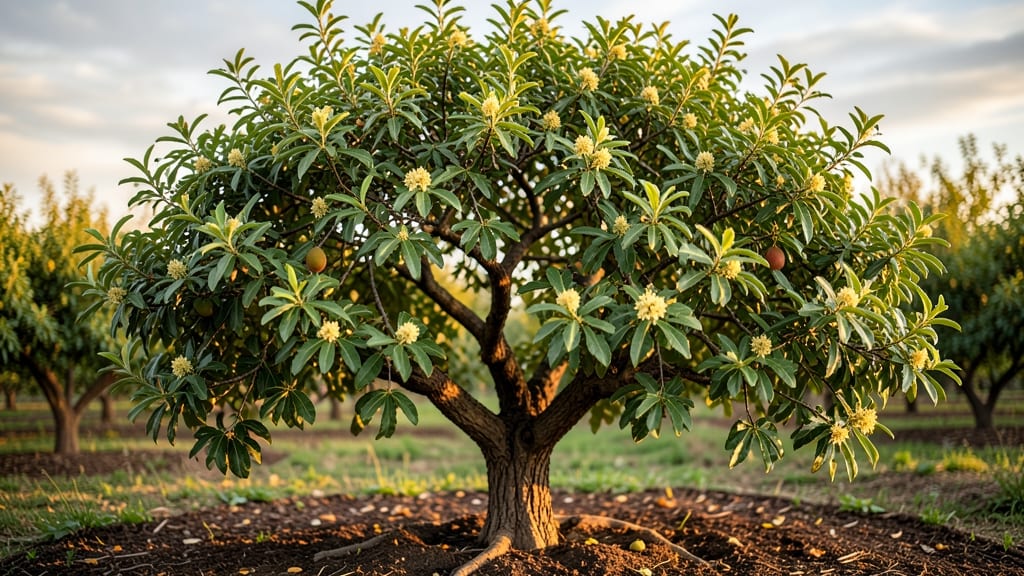
If you're wondering "how tall do jujube trees grow", the answer might surprise you—these resilient 🌳 trees can range from compact backyard additions to towering orchard giants, depending on the variety and care you provide.
Whether you're dreaming of a small container tree or planning a full-sized fruit orchard, understanding their growth potential is the first step to creating your ideal landscape.
Most jujube trees mature between 15 to 30 feet tall, but some dwarf varieties stay as short as 8 feet, making them perfect for urban gardens or patios. The key to managing their height lies in choosing the right variety and implementing smart pruning techniques early on.
In their first year, jujube trees grow just 3 to 5 feet, but by year three, they can reach 12 to 18 feet—that’s faster than many homeowners expect! With proper care, you’ll see dramatic height increases, especially in warmer climates like USDA Zone 6a where they thrive.
Ready to learn how to control their growth and pick the perfect variety for your space? I’ll break down everything you need to know—from dwarf options for small yards to pruning tips that keep these trees manageable without sacrificing fruit production.


Jujube tree height by variety: dwarf vs. standard vs. giant sizes
Jujube trees (Ziziphus jujuba) are stunning ornamental and fruit-bearing trees, but their mature height can vary dramatically depending on the variety you choose.
If you're planning your garden layout, knowing these differences will help you decide whether to go for a dwarf variety for containers or a standard/giant tree for your backyard orchard. Let’s break down the exact heights you can expect from popular jujube varieties.
Most jujube trees fall into three height categories: dwarf (8–12 ft), semi-dwarf (12–18 ft), and standard/giant (20–30 ft). The variety you select will determine how much space you need to allocate for growth and whether you can grow them in containers or small spaces.
For example, the 'Li' variety stays compact, while 'Lang' can reach impressive heights.
Here’s a quick comparison to help you visualize the differences:
| Variety | Mature Height (ft) | Best For | Notes |
|---|---|---|---|
| 'Li' | 8–12 ft | Containers, small yards | Dwarf variety, great for urban gardens. |
| 'Lang' | 15–25 ft | Orchards, large backyards | Popular for fruit production, needs space. |
| 'Chu' | 20–30 ft | Orchards, rural settings | Tallest variety, requires pruning. |
| 'Yanhe' | 12–18 ft | Medium yards, small orchards | Semi-dwarf, good for mixed landscapes. |
| 'Mogami' | 10–15 ft | Containers, patios | Compact, cold-hardy, ideal for small spaces. |
If you're working with limited space, dwarf varieties like 'Li' or 'Mogami' are perfect for containers or small patios. These can thrive in 15–25 gallon pots with proper drainage and pruning.
On the other hand, standard varieties like 'Lang' or 'Chu' are better suited for larger properties or orchards where their full height can be accommodated.
One key factor to consider is how quickly these trees grow. Dwarf varieties may reach their mature height in 5–7 years, while standard varieties can take 10–15 years to fully mature.
This growth rate will influence how soon you can expect fruit production and how much maintenance you’ll need to manage their size.
For those in USDA Zones 6–9, where jujube trees thrive, climate also plays a role in their height. Warmer climates may encourage slightly faster growth, while cooler zones might see slightly slower vertical development. Always choose a variety that matches your local climate and space constraints to ensure success.
If you're unsure which variety to pick, start with a semi-dwarf like 'Yanhe'—it offers a balance between manageable size and productive fruit yields. And remember, even standard varieties can be pruned to keep them in check if needed!
Now that you know the height ranges, the next step is understanding how your jujube tree will grow over time. Let’s explore the year-by-year height progression in the next section to help you plan for long-term care and space management.
Jujube tree height by variety: dwarf vs. standard vs. giant sizes
Choosing the right jujube tree variety is the first step to controlling its height—some stay as short as 8 feet, while others reach 30 feet at maturity.
The difference often comes down to whether you're growing a dwarf, semi-dwarf, or standard variety, each suited for different garden spaces. For example, the 'Li' variety typically stays compact, while 'Lang' can grow tall enough for orchards.
If you're working with limited space, dwarf varieties like 'Mogami' or 'Yanhe' are excellent choices, maxing out around 8-12 feet. These are perfect for containers or small backyards.
Meanwhile, standard varieties like 'Chu' or 'Lang' can easily reach 20-30 feet, making them ideal for larger properties or commercial orchards.
| Variety | Mature Height | Best For | Notes |
|---|---|---|---|
| 'Li' | 8–12 ft | Containers, small yards | Dwarf, cold-hardy |
| 'Mogami' | 8–12 ft | Urban gardens, patios | Slow-growing, great for espalier |
| 'Yanhe' | 12–18 ft | Medium yards, espalier | Semi-dwarf, high yield |
| 'Chu' | 20–30 ft | Orchards, large properties | Standard size, needs space |
| 'Lang' | 25–30 ft | Commercial orchards | Fast-growing, large canopy |
When selecting a variety, consider your garden layout and pruning goals. For instance, 'Mogami' is a favorite for container gardening because it stays under 12 feet even with minimal pruning. Meanwhile, 'Lang', which can grow over 25 feet, requires regular pruning to manage its height and shape.
Always check the cold hardiness of your chosen variety—some dwarf types handle Zone 5, while others thrive only in Zones 7-9.
Another factor is the growth rate. Dwarf varieties like 'Li' grow about 1-2 feet per year, while standard varieties like 'Lang' can add 3-5 feet annually.
If you're impatient for fruit, faster-growing varieties may be worth the extra space they’ll eventually occupy. Just remember: taller trees often mean longer pruning sessions and more maintenance.
For small-space gardens, consider espalier training—this technique can flatten even standard varieties against a fence or wall, keeping their height under control while maximizing fruit production.
I’ve seen 'Yanhe' trees trained horizontally in my own garden, producing just as many jujubes as their untrained counterparts but taking up far less vertical space.
If you're unsure which variety to pick, start with a dwarf or semi-dwarf like 'Mogami' or 'Yanhe'. They’re forgiving for beginners and give you a chance to test the waters before committing to a larger tree.
And don’t forget: soil quality and sunlight exposure play a huge role in how tall your jujube tree will grow—even dwarf varieties can stretch taller if they’re not getting enough nutrients or light.