
How To
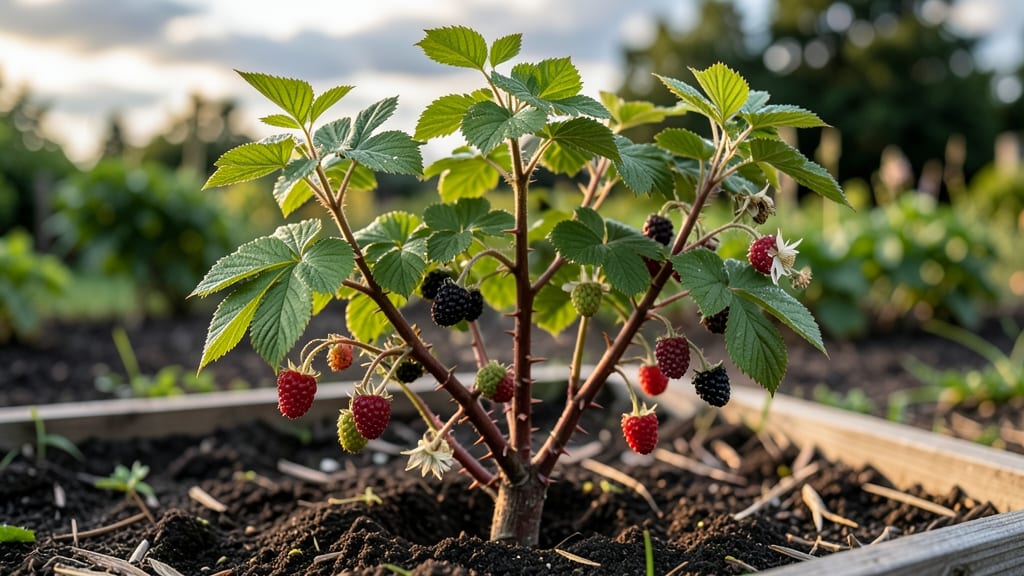
If you're planning a raspberry patch, knowing how tall do raspberries grow is the first step to avoiding a jungle of tangled canes or a patchy, underperforming garden.
These 🍇 shrubs aren't one-size-fits-all—they can stretch from waist-high to nearly ceiling height, depending on the variety and how you care for them.
The height of your raspberries directly impacts everything from spacing to pruning, and even your harvest potential. A compact variety might stay neatly contained in a small space, while taller types need sturdy trellising and more room to thrive.
Without the right setup, you could end up with crowded plants that struggle to produce fruit—or worse, a mess that's hard to manage.
But here's the good news: understanding your raspberry's growth habits lets you customize your garden for success.
Whether you're working with 3-foot dwarf varieties or towering 8-foot giants, I'll walk you through the key factors that determine height, how to space them properly, and the simple tricks to keep them healthy and productive.
Ready to transform your raspberry patch from a guessing game into a well-planned, high-yielding success? Let's dive into the varieties, spacing secrets, and care tips that will give you the perfect-sized harvest every season.


Raspberry variety heights: from compact dwarfs to towering giants
Raspberries aren’t one-size-fits-all when it comes to height—some varieties stay at waist level, while others reach rooftop heights. Understanding these differences helps you plan your garden layout, trellising needs, and even pruning strategies.
Whether you have limited space or dream of a towering raspberry hedge, choosing the right variety is key to maximizing your harvest.
Most raspberries fall into three height categories: dwarf, semi-dwarf, and standard. Dwarf varieties like 'Boyne Gold' or 'Heritage' top out at 2-4 feet, making them perfect for containers or small gardens.
Semi-dwarf types, such as 'Caroline' or 'Nova', grow 4-6 feet tall and work well in raised beds or along fences. Standard varieties, including 'Dormanred' or 'Boyne', can soar to 6-8 feet, requiring sturdy trellises or support.
Here’s how raspberry height breaks down by variety type, including growth habits that affect your garden planning:
| Variety Type | Height Range | Growth Habit | Best For |
|---|---|---|---|
| Dwarf (Summer-Bearing) | 2–4 ft | Compact, bushy, minimal trellising | Containers, small gardens, urban yards |
| Semi-Dwarf (Summer-Bearing) | 4–6 ft | Upright, moderate spread, needs light support | Raised beds, fence lines, small orchards |
| Standard (Summer-Bearing) | 6–8 ft | Tall, vigorous, requires strong trellis | Large gardens, commercial patches, windbreaks |
| Primocane (Fall-Bearing) | 5–7 ft | Fast-growing, arching canes, needs heavy support | Trellises, pergolas, vertical gardens |
Primocane varieties, like 'Autumn Bliss' or 'Heritage', are the tallest and fastest-growing, often reaching 5-7 feet in a single season. These fall-bearing types produce fruit on new growth, so their height is driven by aggressive cane production.
If you’re growing them in a small space, consider pruning tips to control their spread while still encouraging fruit production.
Height also plays a role in fruit accessibility. Taller varieties may require ladders or sturdy trellises, while dwarf types are easier to harvest but produce fewer berries.
For example, 'Boyne Gold' (a dwarf) yields 1-2 pints per plant, while 'Dormanred' (standard) can produce 3-5 pints—but only if given enough space to thrive.
Another factor is canes vs. bushes. Raspberry plants grow on canes that die back after fruiting (summer-bearing) or persist into winter (fall-bearing). Taller varieties with long canes need vertical support to prevent breakage, especially in windy areas. Without proper trellising, even dwarf varieties can sprawl and become unruly.
If you’re planning a raspberry patch, consider mixing heights for visual interest and functional benefits. For instance, plant dwarf varieties along the front of a raised bed and taller types in the back to create a layered effect.
This also makes harvesting easier, as you won’t have to bend as far for the shorter bushes.
One common mistake is assuming all raspberries need the same space. A 6-foot-tall standard variety like 'Nova' needs at least 3 feet of space between plants, while a 3-foot dwarf like 'Heritage' can thrive just 1.5 feet apart.
Overcrowding leads to poor airflow, which increases the risk of fungal diseases like cane blight.
Pro tip: Check the USDA zone hardiness of your raspberry variety before planting. Taller varieties in Zone 5 or colder may need winter protection, like mulch or row covers, to survive freezing temperatures. Dwarf types are often more cold-hardy due to their compact size and lower water demand.
Ready to pick the perfect raspberry for your space? Start by measuring your garden’s height constraints—then choose a variety that fits like a glove. Your future harvest (and back) will thank you! 🍇
Optimal spacing for raspberry bushes by height and growth type
When planning your raspberry patch, proper spacing is just as critical as choosing the right variety. Too little space leads to overcrowding, while too much wastes garden real estate.
The height of your raspberries directly influences how much room they need to thrive—taller varieties require more horizontal and vertical space than dwarf types. Let’s break down the science-backed spacing guidelines tailored to raspberry heights and growth habits.
For standard-height varieties (6–8 feet tall), aim for 3–4 feet between plants in a single row. This spacing ensures adequate airflow and sunlight penetration, reducing the risk of fungal diseases like cane blight.
If you’re planting a double-row system, space rows 6–8 feet apart to allow for easy maintenance and trellising. Semi-dwarf varieties (4–6 feet) can tolerate slightly closer spacing—2.5–3 feet between plants—but avoid going narrower than 2 feet, or you’ll stifle growth.
Dwarf raspberries (2–4 feet tall) are the space-savers of the bunch, perfect for small gardens or containers. Space these 1.5–2 feet apart in a single row, or 3–4 feet apart in a double row. Their compact size makes them ideal for urban gardening or balcony planters, but even dwarfs benefit from trellising to keep canes upright and maximize fruit production.
📏 Raspberry Spacing Comparison
| Variety Type | Height Range | Single-Row Spacing | Double-Row Spacing | Trellis Needs |
|---|---|---|---|---|
| Standard | 6–8 ft | 3–4 ft between plants | 6–8 ft between rows | Essential (6+ ft tall) |
| Semi-Dwarf | 4–6 ft | 2.5–3 ft between plants | 5–6 ft between rows | Recommended (4+ ft tall) |
| Dwarf | 2–4 ft | 1.5–2 ft between plants | 3–4 ft between rows | Optional (2–3 ft tall) |
Note: Adjust spacing for trellised varieties to account for cane spread and fruit weight.
If you’re growing fall-bearing (primocane) raspberries, like 'Fall Red' or 'Heritage,' they often reach similar heights to summer-bearing types but produce fruit on current-year canes. This means they need extra support to prevent canes from bending under the weight of heavy berries.
Space these 3–4 feet apart in single rows and 7–8 feet apart in double rows to give their canes room to sprawl without tangling.
For trellised raspberries, spacing becomes even more critical. A 6-foot-tall variety like 'Boyne' or 'Nova' will need a trellis system at least 7–8 feet wide to accommodate cane spread. Install T-posts every 10 feet along the row and stretch horizontal wires at 3-foot intervals to support canes.
This setup not only controls height but also makes harvesting easier and pruning more efficient.
One final tip: Soil quality and fertility can influence how much space raspberries need. Well-amended soil with compost and organic matter promotes healthier root systems, allowing plants to stay more compact. If your soil is poor or rocky, increase spacing by 10–20% to compensate for slower growth.
With the right spacing, your raspberries will thrive—yielding plump, flavorful berries year after year. 🍇