
Trees
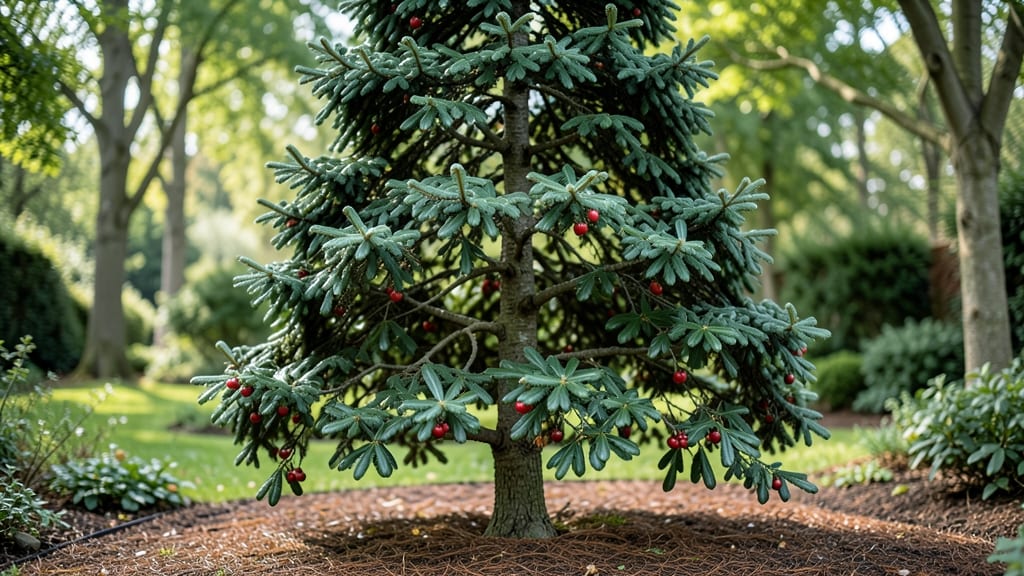
If you've ever wondered just how tall that majestic 🌲 yew tree in your neighborhood could grow, the answer might surprise you. Some varieties stretch skyward like ancient sentinels, while others stay compact enough for even small gardens.
The height of a yew tree depends on its species - with some reaching 40 feet or more, while others remain under 3 feet when properly managed.
For gardeners in USDA Zone 6a, where these trees thrive, understanding these growth differences is key to planning your landscape. Whether you're dreaming of a towering privacy screen or a low-maintenance shrub, knowing the growth potential helps you choose the perfect variety for your space.
The best part? You don't need to wait centuries to see results - some yew trees show significant growth within just 10 years.
But here's the interesting part: growth rates vary dramatically between species. While some yew trees grow at a leisurely pace, others can add several feet per decade when given ideal conditions.
The secret lies in understanding which varieties grow fastest and which stay compact - information that can save you years of waiting or unexpected pruning battles.
In this guide, I'll break down exactly how tall different yew trees grow, what factors influence their height, and how you can manage their growth to create your perfect landscape. Let's get started with the fastest-growing varieties that might just change how you think about these ancient trees.


Yew tree height by species: fastest-growing vs slowest-growing varieties
Yew trees (Taxus spp.) are famous for their longevity and striking evergreen foliage, but their mature heights can vary dramatically—from compact shrubs to towering giants.
The English Yew (Taxus baccata) often reaches 40 feet or more, while dwarf varieties like 'Emerald Sentinel' stay under 3 feet. Understanding these differences helps you choose the perfect yew for your garden, whether you need a privacy screen, hedge, or container plant.
Growth rates also differ widely. Some yews grow less than 6 inches per year, while others can add a foot annually under ideal conditions. Factors like soil quality, sunlight exposure, and water availability play huge roles.
For example, Japanese Yew (Taxus cuspidata) thrives in cooler climates and grows faster than its Mediterranean cousin, the English Yew. Let’s break down the tallest, fastest-growing, and slowest-growing varieties to help you plan.
🌲
| Variety | Mature Height | Growth Rate (Per Year) | Best For |
|---|---|---|---|
| English Yew (Taxus baccata) | 30–40 ft | 6–12 in | Privacy screens, large gardens |
| Japanese Yew (Taxus cuspidata) | 20–30 ft | 8–15 in | Cool climates, hedges |
| Eastern Yew (Taxus canadensis) | 3–6 ft | 4–8 in | Ground cover, woodland gardens |
| 'Emerald Sentinel' (Dwarf) | 1–3 ft | 2–4 in | Containers, borders |
| 'Hicksii' (Columnar) | 12–15 ft | 6–10 in | Narrow spaces, vertical gardens |
| 'Standishii' (Slow-Growing) | 10–15 ft | 3–6 in | Low-maintenance hedges |
| 'Repandens' (Spreading) | 2–4 ft | 2–5 in | Rock gardens, slopes |
If you’re planning a long-term landscape design, the English Yew and Japanese Yew are top choices for height and density. However, their slow growth means patience is key—it can take decades to reach full maturity.
For quicker results, consider columnar varieties like 'Hicksii', which grow upright and reach 12–15 feet in about 15 years. These are ideal for narrow spaces or as focal points in smaller gardens.
On the other hand, dwarf yews like 'Emerald Sentinel' or 'Repandens' are perfect for containers, rock gardens, or edging. They rarely exceed 3 feet and grow at a leisurely pace, making them low-maintenance options.
These varieties are also great for urban gardens where space is limited but greenery is desired.
🌿
One common misconception is that all yews grow tall. In reality, many yews are shrub-like and never exceed 6 feet. The Eastern Yew (Taxus canadensis), for example, is a ground-hugging species that thrives in woodland gardens and spreads slowly.
If you’re looking for a fast-growing yew, the Japanese Yew is your best bet—it can add up to 15 inches per year in optimal conditions.
For gardeners in USDA Zones 6–8, soil drainage is critical. Yews hate soggy roots, so well-draining soil with a slightly acidic pH (6.0–7.0) is ideal. Amending clay soil with compost or sand can prevent root rot, which stunts growth.
Additionally, partial shade (3–6 hours of sunlight daily) helps slower-growing varieties like the English Yew thrive, while faster growers like the Japanese Yew tolerate more sun.
✂️
Pro tip: If you’re unsure about long-term height, start with a smaller variety and transplant it later if needed. Yews are highly adaptable and can be moved until they’re about 3–5 years old.
This flexibility lets you experiment with placement before committing to a permanent privacy screen or specimen tree. Just be sure to water deeply after transplanting to reduce shock.
Whether you’re dreaming of a century-old yew or a compact shrub, choosing the right species is the first step. Next, we’ll explore how to control yew tree height through pruning, dwarf varieties, and other growth hacks to keep your yew at your desired size.
Yew tree height by species: fastest-growing vs slowest-growing varieties
Yew trees offer a stunning range of heights, from towering giants to compact shrubs. The English Yew (Taxus baccata) often reaches 40–60 feet in forests, while dwarf varieties like 'Repandens' stay under 3 feet.
Your choice depends on your garden’s scale and vision—whether you dream of cathedral-like canopies or neatly trimmed hedges.
Growth rates vary dramatically: some species add 1–2 feet per year in ideal conditions, while others creep along at just 6 inches annually. Understanding these differences helps you plan for decades of growth—or how to keep them in check.
Let’s break down the fastest and slowest growers to help you pick the perfect yew for your space.
🌲 Yew Tree Height Comparison
| Variety | Mature Height | Growth Rate | Best For |
|---|---|---|---|
| English Yew (Taxus baccata) | 40–60 ft | 1–2 ft/year | Privacy screens, forests |
| Japanese Yew (Taxus cuspidata) | 20–30 ft | 12–18 in/year | Hedges, borders |
| 'Emerald Sentinel' (Hybrid) | 10–12 ft | 6–12 in/year | Urban gardens, containers |
| 'Hicksii' (Dwarf) | 1–3 ft | 3–6 in/year | Rock gardens, borders |
| 'Repandens' (Prostrate) | 1–2 ft (spreading) | 4–8 in/year | Ground cover, slopes |
*Growth rates vary by climate, soil, and care. Pruning can slow or shape growth.
If you’re planning a privacy hedge, the Japanese Yew or English Yew are classic choices, but they’ll need space. For small gardens or containers, 'Emerald Sentinel' or 'Hicksii' are game-changers—they mature in a fraction of the time and space.
Soil quality and sunlight play huge roles: well-draining, slightly acidic soil with partial shade encourages faster growth, while poor soil or full sun can stunt even the hardiest varieties.
For example, a Taxus × media 'Stricta' might only reach 15 feet in rocky soil but 25 feet with rich compost and regular watering.
Pro tip: Slow-growing yews like 'Repandens' are perfect for rock gardens or slopes, while faster growers like 'Fastigiata' (narrow columnar) add vertical drama without overwhelming your yard. Measure your space twice—these trees are patient, but your garden isn’t!
🌿