
How To
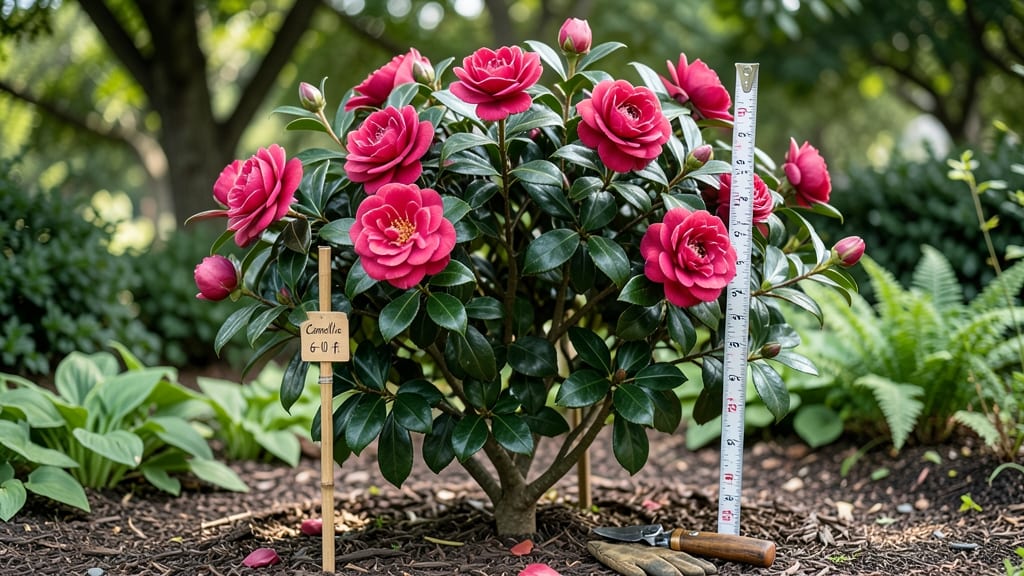
If you're dreaming of adding a camellia 🌸 to your garden but wondering how tall a camellia can grow, the answer isn’t one-size-fits-all. These elegant shrubs can range from compact 3-foot dwarf varieties to towering 20-foot giants—depending on the species and care you provide.
Picture this: a Camellia japonica might grace your patio as a manageable shrub, while a Camellia sasanqua could stretch toward your roofline if left unchecked. The good news?
With the right pruning and growing conditions, you can steer their height to fit your vision—whether that’s a tidy hedge or a statement centerpiece.
In this guide, I’ll break down the height ranges by variety, share expert tips to control growth, and help you pick the perfect camellia for your space—no guesswork required.
Ready to find your ideal match? Let’s dive into what makes these plants grow (or stay) just the right size for your garden.


Camellia height ranges by variety: dwarf to giant sizes explained
Camellias are one of the most versatile ornamental plants, offering everything from compact shrubs to small trees with mature heights ranging from 3 feet to 20 feet. The Camellia japonica varieties often reach the upper end of this spectrum, while Camellia sasanqua and dwarf hybrids stay much smaller.
Understanding these differences helps you choose the perfect camellia for your garden space—whether it's a small urban courtyard or a sprawling landscape.
Most camellias grow at a moderate pace, adding about 12–24 inches per year in ideal conditions. However, their final height depends heavily on the specific variety and pruning practices.
For example, the Camellia 'Yuletide' stays under 6 feet tall, while the Camellia 'Desire' can soar to 15 feet or more without intervention. Let’s break down the most popular types and their mature sizes.
Camellia Height Summary
| Variety | Mature Height | Growth Habit | Best For |
|---|---|---|---|
| Camellia japonica 'Desire' | 15–20 ft | Upright, tree-like | Large landscapes, specimen planting |
| Camellia sasanqua 'Yuletide' | 3–6 ft | Compact, rounded | Patios, small gardens, containers |
| Camellia 'Spring’s Promise' | 6–10 ft | Bushy, spreading | Hedges, mixed borders |
| Camellia 'Donation' | 8–12 ft | Weeping branches | Focal points, shade gardens |
| Camellia 'Elegans' | 4–7 ft | Dwarf, dense | Containers, bonsai-style gardens |
| Camellia 'Winter’s Star' | 10–15 ft | Upright, vigorous | Privacy screens, large gardens |
| Camellia 'Yuletide' (Dwarf) | 3–5 ft | Compact, mounding | Urban gardens, balconies |
The Camellia japonica group tends to be the tallest, often requiring regular pruning to control its size. Varieties like 'Desire' and 'Winter’s Star' can easily reach 15–20 feet if left unchecked, making them ideal for specimen planting in spacious gardens.
On the other hand, Camellia sasanqua varieties like 'Yuletide' are perfect for small spaces or container gardening, rarely exceeding 6 feet in height.
If you're working with limited space, consider dwarf hybrids like 'Elegans' or 'Spring’s Promise', which stay between 4–10 feet tall. These varieties are also great for hedges or foundation plantings where a neat, controlled shape is desired.
For a weeping effect, look for varieties like 'Donation', which can add dramatic visual interest to shaded areas of your garden.
One common misconception is that all camellias grow into large shrubs or trees. In reality, proper pruning and container culture can drastically reduce their size. For example, a Camellia japonica grown in a 15-gallon pot will stay significantly smaller than one planted in the ground.
This makes camellias incredibly versatile for urban gardens or small yards
Camellia growth factors: sunlight, soil, and climate impact on height
Camellias thrive in USDA Zones 7–10, but their mature height depends heavily on climate conditions. In warmer zones (9–10), like coastal California or Florida, camellias grow faster and reach their maximum heights (10–20 ft) more quickly due to extended growing seasons.
Meanwhile, in cooler zones (7–8), such as the Pacific Northwest, growth slows, and mature sizes often stay on the shorter end (6–12 ft) unless given extra care.
Direct sunlight exposure also plays a critical role. While camellias prefer partial shade (4–6 hours of morning sun), too much intense afternoon sun can stress the plant, stunting growth or causing leaf scorch.
In full-sun locations, expect 10–20% slower height growth compared to shaded spots, where they can grow 2–3 feet taller over a decade.
Soil quality is another game-changer. Camellias demand acidic, well-draining soil (pH 5.0–6.0). In poorly draining or alkaline soils, root health suffers, leading to stunted growth and reduced height potential.
Amending soil with peat moss or sulfur can boost growth by up to 30% in the first 3 years.
Container-grown camellias stay 30–50% shorter than in-ground plants because of root restriction. A 5-gallon pot may limit a Camellia japonica to 6–8 ft instead of its 10–15 ft potential. Upgrading to 15+ gallon containers can add 2–4 extra feet of growth over 5 years.
Finally, pruning habits interact with climate to shape height. In humid climates, aggressive pruning can encourage bushier, shorter growth, while in dry regions, minimal pruning lets camellias grow taller to access deeper moisture. Always prune after blooming to avoid removing next year’s flower buds.
For small-space gardens, choose dwarf varieties like 'Yuletide' (3–5 ft) or 'Donation' (4–6 ft), and pair with regular pruning to keep them compact.
In larger landscapes, standard varieties like 'Desire' (10–15 ft) or 'Spring's Promise' (12–20 ft) will thrive with minimal height control.