
How To
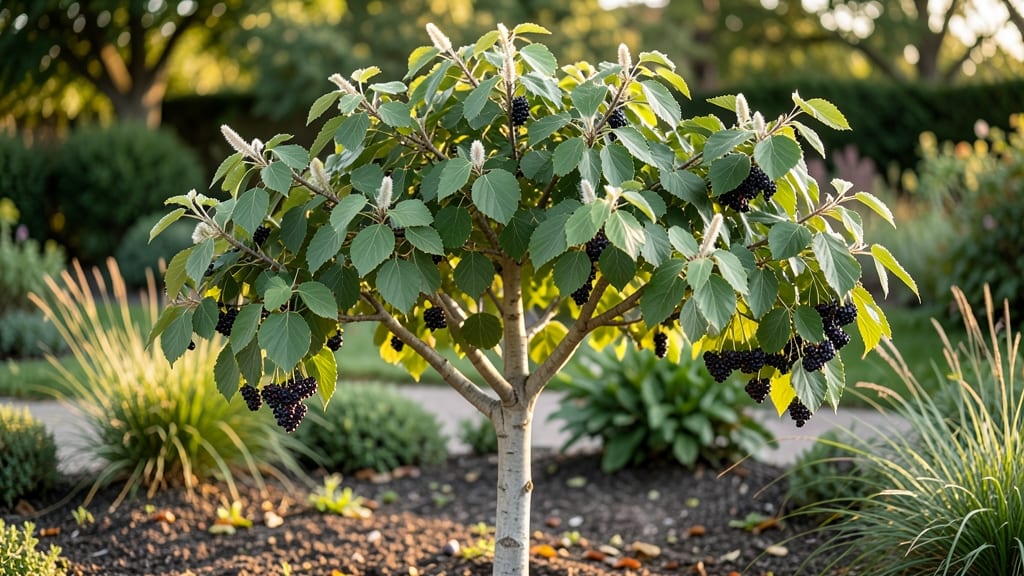
Curious about how tall does a dwarf mulberry tree grow before it outgrows your backyard? These compact trees are perfect for small spaces, but their mature height can still surprise you—especially if you're used to thinking "dwarf" means tiny.
While some varieties like 'Illinois Everbearing' stay between 10-12 feet, others like 'Purple Leaf' top out at just 6-8 feet. The key difference? Growth habits and pruning practices that keep them manageable in containers or tight garden plots.
Let me break down exactly what to expect and how to control their size.
You might assume all dwarf mulberries behave the same way, but sunlight exposure, soil quality, and even container size play huge roles in their final height. I’ll share the most common misconceptions and how to avoid them—so you can enjoy fresh mulberries without sacrificing your yard space.
Whether you're planting in Zone 6a or a city balcony, this guide will help you pick the right variety and care for it properly. Ready to grow a productive, space-friendly mulberry tree? Let’s get started.


Dwarf mulberry tree height guide: exact varieties and their mature sizes
When choosing a dwarf mulberry tree, height expectations vary dramatically between varieties. While all are labeled "dwarf," some top out at 6 feet while others reach 12 feet—a difference that matters for urban gardens or containers.
The key is selecting the right variety for your space while understanding their growth habits.
Most dwarf mulberry varieties mature between 6 and 12 feet, but their first few years are critical. In their first year, expect 2-3 feet of growth, with 5-7 feet by year two. By year three, they’ll approach their mature height, making early planning essential for pruning and placement.
Container-growing is possible with dwarf varieties, but only those under 8 feet at maturity. Larger varieties like 'Illinois Everbearing' (10-12 ft) need ground planting, while 'Purple Leaf' (6-8 ft) thrives in 15-gallon containers with proper root pruning.
| Variety | Mature Height | Growth Rate | Best For |
|---|---|---|---|
| 'Illinois Everbearing' | 10-12 ft | Fast (3 ft/year) | Ground planting, large yards |
| 'Purple Leaf' | 6-8 ft | Moderate (2 ft/year) | Containers, small gardens |
| 'Micro Leaf' | 4-6 ft | Slow (1-2 ft/year) | Balconies, patio pots |
| 'Golden Leaf' | 8-10 ft | Fast (2.5 ft/year) | Privacy screens, hedges |
For container gardening, prioritize varieties like 'Micro Leaf' or 'Purple Leaf,' which stay under 6 feet. Use 15-20 gallon pots with drainage holes and repot every 2-3 years to prevent root-binding, which can stunt growth or cause unexpected height spikes.
Soil quality dramatically impacts height. Well-draining, slightly acidic soil (pH 6.0-6.5) promotes compact growth, while poor soil leads to leggy, taller trees. Amend clay soil with compost or sand to improve drainage and encourage a bushier habit.
Sunlight needs are non-negotiable: 6-8 hours of full sun daily ensures your dwarf mulberry stays true to its size. In partial shade, expect 20-30% taller growth and fewer berries. South-facing locations are ideal for maximizing fruit production while controlling height.
Pruning in late winter or early spring (before bud break) is key to managing height. Remove 1/3 of the tallest branches annually to encourage lateral growth. Avoid heavy pruning in summer, as this can trigger sprout growth that adds unwanted height.
If you’re unsure which variety to choose, start with 'Purple Leaf' for versatility—it handles containers, ground planting, and even urban courtyards with ease. For maximum fruit yield in minimal space, pair it with regular pruning and a balanced fertilizer (10-10-10) applied every 6 weeks during growing season.
How to maximize space: pruning and training dwarf mulberry trees for small gardens
Dwarf mulberry trees thrive in small gardens when given the right care, especially pruning and training. Unlike their full-sized counterparts, these varieties respond well to height control, making them perfect for urban yards, patios, or even large containers.
The key is to prune at the right time and use proper techniques to keep them under 6 feet while maximizing fruit production.
Start by understanding your tree’s natural growth habit. Most dwarf mulberries grow 12-18 inches per year, but aggressive pruning can slow this down. For example, the 'Purple Leaf' variety typically stays under 8 feet, while 'Illinois Everbearing' can reach 10-12 feet without intervention.
Your goal is to shape the tree while encouraging a compact, bushy form.
🌳 Visual Guide: Pruning & Training Steps 🌳
- Remove dead or crossing branches first.
- Cut back last year’s growth by 1/3 to encourage bushiness.
- Trim overly long branches to maintain shape.
- Avoid heavy pruning—focus on airflow and sunlight.
- Shape the tree by heading back main branches.
- Remove suckers at the base to redirect energy upward.
- Use a large pot (20+ gallons) for dwarf varieties.
- Prune roots annually to prevent root-bound stress.
- Stake young trees in windy areas to avoid toppling.
For container-grown dwarf mulberries, root pruning is just as critical as branch pruning. Every 2-3 years, gently tease out the roots and trim any that circle the pot.
This encourages a stronger root system while keeping the tree’s height in check. Pair this with a well-draining potting mix and regular fertilization to support compact growth.
If your dwarf mulberry starts to outgrow its space, don’t panic—corrective pruning works wonders. In late winter, cut back overly tall branches by up to 50% to reset growth. This method is especially effective for 'Illinois Everbearing', which can rebound quickly with proper care.
Just remember: never prune more than 1/3 of the canopy in a single session to avoid stressing the tree.
Training your dwarf mulberry also involves staking and support. Young trees benefit from bamboo stakes or tree ties, especially in wind-prone areas. This keeps the trunk upright and prevents uncontrolled leaning, which can make the tree appear taller than it should.
For a truly miniature look, consider espalier training—guiding branches along a trellis or wall to create a flat, decorative shape.
With the right pruning schedule and training, your dwarf mulberry can stay under 6 feet tall while still producing abundant fruit. The secret is consistency: prune annually in early spring, monitor growth throughout the season, and adjust as needed.
Soon, you’ll have a manageable, productive tree that fits perfectly in your small garden—no space constraints required! 🌿