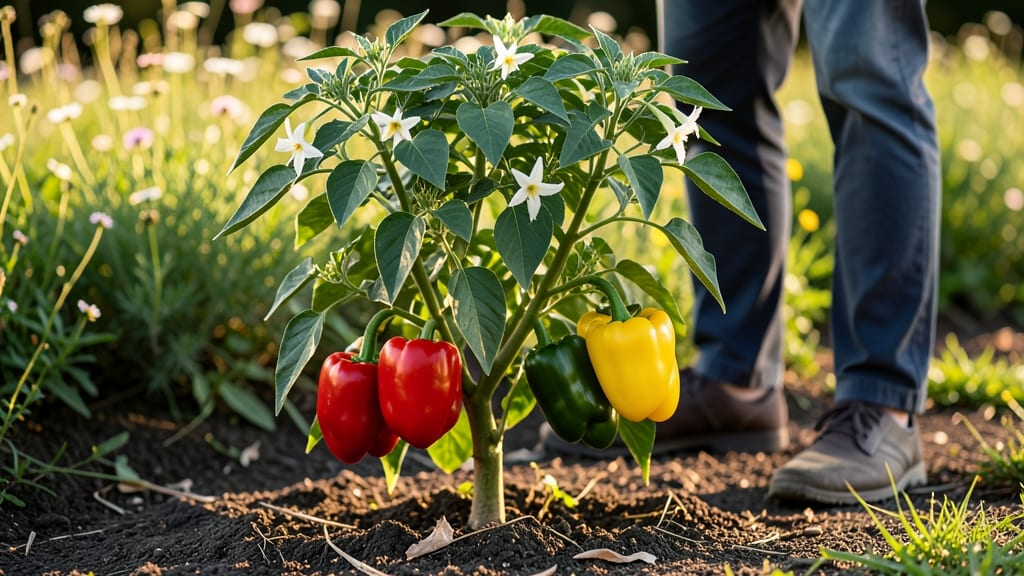
When and how to provide support for tall pepper plants
Tall pepper plants often need support to prevent stem breakage and improve air circulation, especially if you’re growing varieties like bell peppers or jalapeños. Without proper support, heavy fruit loads can cause plants to flop over, reducing yield and increasing disease risk.
Knowing when and how to provide support is key to keeping your plants healthy and productive.
Most pepper varieties benefit from support once they reach 12–18 inches tall or when they start producing fruit. Bush varieties (like 'California Wonder') may need cages or stakes, while vining types (like 'Carolina Wonder') thrive with trellises.
Early intervention prevents stress on the plant and ensures a stronger structure as it grows.
Here’s when to act: if your plant’s stem sways excessively in the wind, or if peppers begin to drag the branches down, it’s time to install support. Ignoring these signs can lead to root stress or even snapped stems, especially in heavy-fruiting varieties.
⚠️ Warning: Overcrowding Risk
If your pepper plants are too close together, they’ll compete for support. Thin seedlings to 12–18 inches apart and provide individual stakes or cages. Overcrowded plants are more prone to fungal diseases like powdery mildew due to poor airflow.
For bush varieties, opt for cages or stakes inserted at planting. Drive stakes 6–12 inches deep and tie stems gently with soft ties (like old T-shirts or horticultural tape) to avoid stem damage.
For vining types, use trellises or tomato cages—these allow peppers to grow vertically, saving space and improving airflow.
DIY support solutions work perfectly: bamboo stakes, wooden dowels, or even repurposed wire mesh can serve as trellises. Secure the base with U-shaped stakes or concrete anchors to prevent toppling. If using cages, choose ones with 4–5 feet of height to accommodate taller varieties like habaneros.
Pruning also plays a role in managing height. Remove suckers (side shoots) that form in the leaf axils to direct energy toward fruit production and structural support. Limit pruning to 10–20% of the plant to avoid shocking it. Always prune in the morning to allow wounds to heal in daylight.
With the right support, your pepper plants will grow stronger and healthier, producing more peppers with less risk of damage. Start early, monitor growth, and adjust support as needed—your harvest will thank you! 🌿
★★★★★4.7(7 reviews)
|