
How To
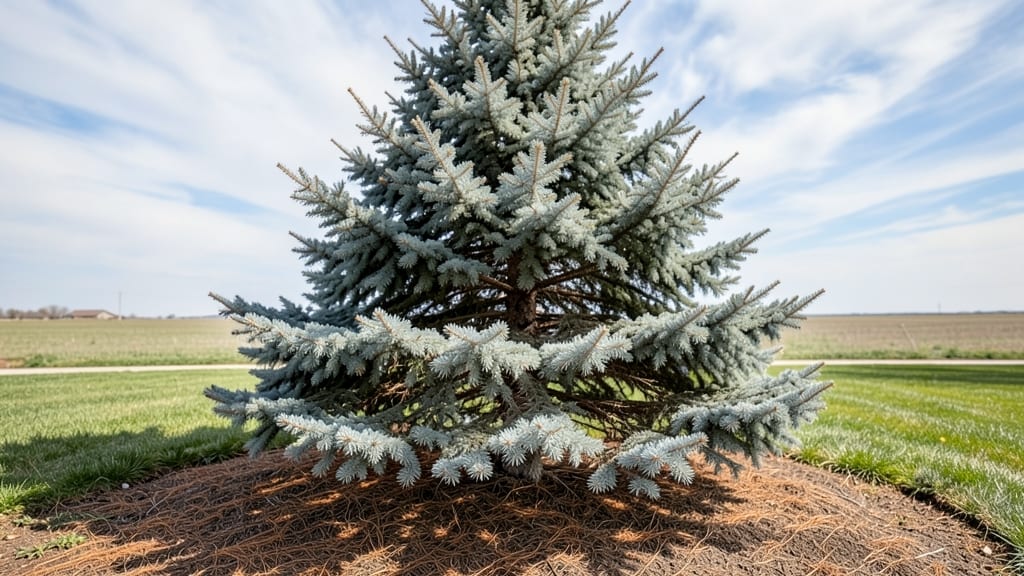
Wondering how tall does blue spruce grow before you commit to planting one? That 🌲 towering beauty can reach heights that’ll make your neighbors do a double-take—some varieties soar over 60 feet, while others stay cozy under 15 feet.
The difference between a sky-scraping giant and a compact yard staple often comes down to the specific cultivar you choose.
If you’re dreaming of a dramatic focal point, the standard Colorado Blue Spruce could become your landscape’s crown jewel. But if space is limited, dwarf varieties like ‘Glauca Globosa’ offer all the stunning blue foliage without the skyscraper commitment.
The key to getting the right fit? Knowing which variety matches your yard’s size and your patience level for growth.
Growth rates vary wildly—some varieties add 12 inches per year in their prime, while others creep along at just 6 inches. Proper spacing now saves pruning headaches later, and sunlight needs play a bigger role than most gardeners realize.
Let’s break down the exact heights you can expect from the most popular blue spruce varieties, plus the care secrets to keep them thriving.
Whether you’re planning a grand statement tree or a charming compact specimen, getting the height details right is the first step to a low-stress, high-impact planting. Ready to pick the perfect 🌲 for your space? Let’s dive into the numbers.


Blue spruce mature heights by popular variety (exact measurements)
Blue spruce (Picea pungens 'Glauca') is a stunning evergreen with blue-green foliage that adds year-round color to any landscape. But here’s the catch: its mature height varies dramatically depending on the variety. Some tower over 60 feet, while others stay under 15 feet.
Choosing the right cultivar ensures your blue spruce fits perfectly in your space—whether it’s a small backyard or a large property.
Before planting, check your variety’s expected height range to avoid overcrowding or underwhelming results. For example, the Colorado Blue Spruce can reach 60-100 feet in ideal conditions, while the Glauca Globosa stays a manageable 10-15 feet. Let’s break down the most popular varieties and their exact mature heights.
| Variety | Mature Height | Spread | Growth Rate | Best For |
|---|---|---|---|---|
| Colorado Blue Spruce | 60–100 ft | 15–25 ft | Slow to moderate | Large landscapes, privacy screens |
| Glauca Globosa | 10–15 ft | 8–12 ft | Slow | Small yards, containers, hedges |
| Glauca Moerheimii | 30–50 ft | 10–15 ft | Moderate | Medium yards, focal points |
| Concolor Blue Spruce | 40–60 ft | 12–20 ft | Moderate | Large yards, windbreaks |
| Fat Albert | 20–30 ft | 15–20 ft | Slow | Small to medium yards, specimen planting |
| Hoopsii | 15–25 ft | 8–12 ft | Slow | Borders, small gardens |
| Montgomery | 10–15 ft | 6–10 ft | Very slow | Containers, rock gardens |
| Skylands | 25–35 ft | 10–15 ft | Moderate | Medium yards, privacy hedges |
| Glauca Pendula | 10–15 ft | 6–10 ft | Slow | Specimen planting, containers |
The Colorado Blue Spruce is the classic variety, often used as a privacy screen or windbreak in rural areas. Its tall, conical shape makes it ideal for large properties, but it requires ample space to avoid overcrowding nearby plants. If you’re working with a
How fast do blue spruce trees grow? Growth rates by age
Blue spruce trees grow at different speeds depending on the variety and growing conditions. In their first year, most varieties reach 1-2 feet, while some dwarf types may only grow 3-6 inches. Understanding these growth rates helps you plan for spacing and long-term landscape design.
By year two, standard blue spruce varieties like Colorado Blue Spruce can grow 3-5 feet annually, while slower-growing types may add only 1-2 feet. Proper care—like full sun exposure and well-draining soil—can accelerate growth by up to 30%.
Here’s how blue spruce height progresses over the first decade, with key milestones for spacing and pruning:
Fast-growing varieties like Glauca Moerheimii can reach 30 feet in 10 years, while dwarf types like Glauca Globosa may only grow 1 foot per decade. Always check the specific variety’s growth rate before planting to avoid overcrowding.
Proper spacing is critical—plant standard varieties 30-40 feet from buildings or other trees to prevent root competition. For dwarf varieties, 10-15 feet of clearance is usually sufficient. Mulching around the base helps retain moisture and encourages steady growth.
Pruning young blue spruce trees in early spring promotes stronger branching. Avoid heavy pruning on mature trees, as they heal slowly. Focus on removing dead branches and shaping the tree’s natural form for a full, symmetrical look.
With the right care, your blue spruce can become a stunning focal point in your landscape. Whether it’s a towering 60-foot giant or a compact 10-foot dwarf, knowing its growth rate ensures it thrives for decades.