
How To
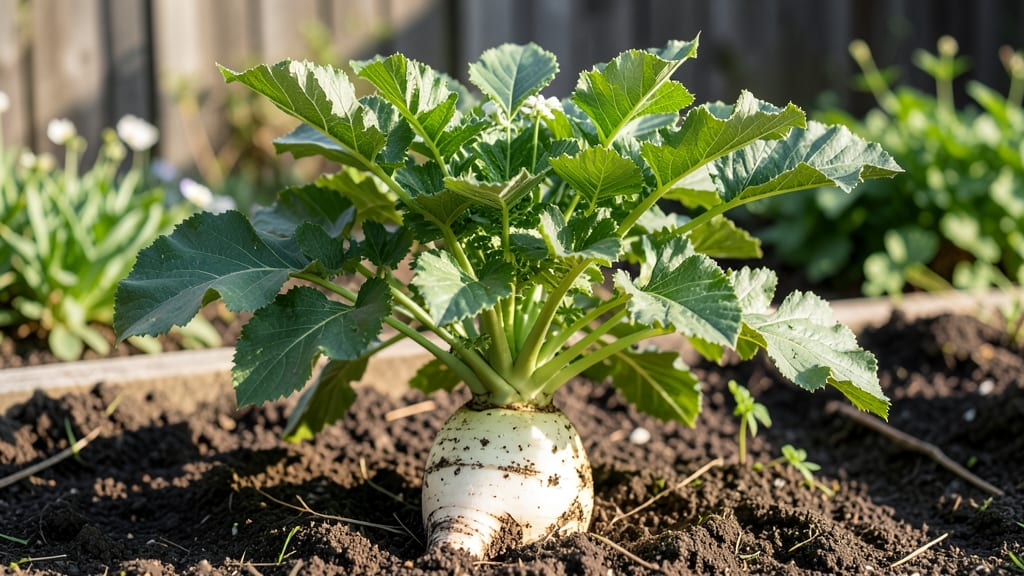
If you’ve ever planted horseradish and wondered how tall does horseradish grow, you’re not alone—this hardy plant can reach heights of 2 to 3 feet under the right conditions, but its real secret weapon is its aggressive root system.
The above-ground foliage might look modest at first, but by its second year, horseradish 🌱 can form dense clumps that tower over nearby plants. What’s more surprising? Its roots can stretch 5 feet deep and spread horizontally, making it a perennial powerhouse in USDA Zone 6a and beyond.
Whether you’re growing it for bold flavors or trying to contain its spread, understanding its growth habit is key. I’ll break down how tall it gets, why it spreads so fast, and the best ways to manage it—so you can enjoy the harvest without the headache.
From pruning tips to soil secrets, you’ll learn how to keep horseradish in check while still getting those prized roots. Let’s dive into the details so you can grow it smarter, not harder.


Mature height of horseradish: how tall it grows and why it spreads
Horseradish (Armoracia rusticana) is a perennial herb that can reach 2–4 feet tall under ideal conditions, but its real challenge lies below ground. While the foliage stays compact, its roots spread aggressively, often reaching 5 feet deep and 10+ feet wide over time.
This makes it one of the most invasive plants for gardeners who underestimate its growth potential.
The foliage height typically peaks at 2–3 feet in its second year, but the root system is what truly defines its space needs. Unlike annuals, horseradish regrows yearly, sending up new shoots from its extensive underground network.
This perennial nature means once planted, it’s nearly impossible to eradicate without persistent effort.
Here’s why horseradish grows so aggressively: it thrives in cool climates (USDA Zones 3–9), well-drained soil, and full sun (6+ hours daily). In these conditions, it develops a massive root system that outcompetes nearby plants.
The roots also regenerate from tiny fragments, making containment a constant battle.
If you’re growing horseradish for harvesting roots, the foliage height isn’t the main concern—it’s the horizontal spread. Roots can double in size each year if unchecked, turning a small patch into a garden takeover within seasons.
Even the smallest root piece left in the soil can sprout into a new plant.
🌱 Horseradish Growth Summary
| Growth Factor | Details |
|---|---|
| Foliage Height | 1–3 feet (year 2+) |
| Root Depth | Up to 5 feet deep |
| Spread Width | 10+ feet wide over time |
| Growth Rate | Doubles yearly if unchecked |
| Plant Type | Perennial (regrows annually) |
| Best Conditions | Full sun, cool climate, well-drained soil |
Note: Horseradish is not a dwarf plant—its aggressive roots are its defining trait.
The first year of growth focuses entirely on root development, with minimal foliage. By year two, you’ll see the familiar fern-like leaves reaching 1–2 feet tall, signaling the root is ready for harvest.
If left undisturbed, the plant will continue expanding, with foliage hitting 3 feet by year three.
One common misconception is that horseradish grows like a small shrub. In reality, its above-ground growth is modest compared to its underground dominance. The roots can weigh 5+ pounds each when mature, making them a prized (but space-hogging) harvest.
This is why many gardeners opt for container growing or barrier methods to control its spread.
For landscape planning, horseradish’s height is less of an issue than its invasiveness. If planted near paths or borders, it can crack pavement or invade lawns within a few years.
Always plant it in a contained area or designate it a "sacrificial" corner of your garden where its spread won’t cause problems.
To maximize root yield without sacrificing your garden, focus on soil health and sun exposure. Horseradish prefers sandy loam with a pH of 6.0–7.0. Amend clay-heavy soil with compost to prevent root rot, which can stunt growth.
Over time, you’ll notice that well-fed plants produce larger, more pungent roots—but only if you’re prepared for the space commitment.
If you’re new to growing horseradish, start with a small test patch to observe its growth habits firsthand. Even experienced gardeners underestimate its persistence, so plan for annual maintenance to keep it in check.
With the right approach, you can enjoy bold harvests without letting it take over your entire yard.
Mature height of horseradish: how tall it grows and why it spreads
Horseradish (Armoracia rusticana) typically reaches a mature height of 1–3 feet above ground, but its real power lies underground. While the foliage stays compact, its aggressive root system can spread 5 feet deep and 10+ feet wide if left unchecked.
This explains why it’s often called a "weed" in gardens—it’s designed to dominate!
The plant’s perennial nature means it returns year after year, with the most significant growth occurring in its second and third years. In ideal conditions—full sun and well-draining soil—you’ll see lush, fern-like leaves that grow 1–2 feet tall by mid-summer. The roots, however, are the real story.
🌱 Horseradish Growth Summary
| Growth Stage | Height Above Ground | Root Spread | Key Notes |
|---|---|---|---|
| Year 1 | Minimal (foliage only) | 1–2 ft deep | Root establishment phase |
| Year 2 | 1–2 ft | 3–5 ft wide | Best harvest year; roots mature |
| Year 3+ | 2–3 ft | 10+ ft wide (if unchecked) | Woody roots; flavor intensifies |
💡 Pro Tip: Harvest roots in early fall of the second year for peak flavor and tenderness.
What makes horseradish’s growth so unpredictable is its horizontal root system. Unlike taproots (like carrots), horseradish roots spread sideways, sending up new shoots 10+ feet away from the original plant. This is why gardeners often find it popping up in unexpected places—it’s not just tall, it’s stealthy!
To encourage optimal height and root development, plant horseradish in loose, fertile soil with 6+ hours of sunlight daily. Avoid heavy clay, as it restricts root growth. If you’re growing it in containers, choose deep pots (at least 18 inches deep) to accommodate the roots.
The plant’s aggressive spread isn’t just a nuisance—it’s a survival tactic. In the wild, horseradish thrives in disturbed soils, like riverbanks or forest edges, where it can colonize quickly. This trait makes it both a gardener’s challenge and a self-sustaining crop once established.
If you’re planning your garden layout, account for horseradish’s space needs. While the foliage stays under 3 feet tall, the roots demand at least 3 feet of space in all directions. For small gardens, consider container growing or root barriers to contain its spread.
Remember, the taller the foliage, the more energy the plant puts into root growth—so prune regularly to redirect energy toward larger, more flavorful roots. With the right balance of sun, soil, and space, you’ll get a bold harvest without the chaos! 🌿