
How To
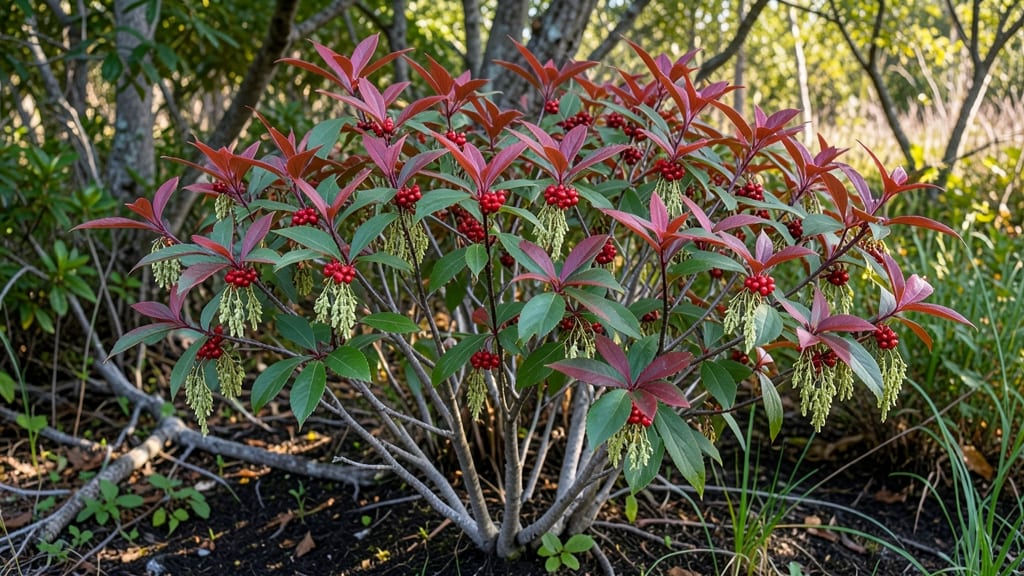
If you’ve ever spotted a towering 🌳 shrub near a swamp or wetland and wondered, "how tall does poison sumac grow?"—you’re not alone. This aggressive plant can shoot up to 30 feet, easily overshadowing trees and turning a peaceful hike into a risky encounter.
The real danger isn’t just its height—it’s how quickly it spreads and how painful contact can be. One brush against its leaves or stems can trigger a rash that lasts for weeks. Knowing its size and appearance is your first line of defense against accidental exposure.
In this guide, I’ll break down exactly how tall poison sumac grows, what makes it stand out from harmless lookalikes, and why wet, low-lying areas are its favorite hangout. Stay ahead of the danger with these key identification tips.
Whether you’re a hiker, homeowner, or just curious about nature’s warning signs, recognizing poison sumac early could save you from a painful surprise. Let’s dive into what you need to watch for.


Poison sumac height: how tall it grows and why it’s dangerous
Poison sumac (Toxicodendron vernix) is one of the most dangerous plants in North America, and its height alone makes it a serious threat. This aggressive shrub typically reaches 15 to 30 feet tall at maturity, with some specimens towering even higher in ideal conditions.
That’s taller than most two-story homes or basketball hoops, giving it a commanding presence in wetlands and disturbed areas.
Understanding its growth rate and mature size is critical because poison sumac doesn’t just grow tall—it spreads quickly. In its first year, saplings grow 2 to 4 feet, while mature plants can add 3 to 6 feet annually under optimal conditions.
Without intervention, a small patch can become a dense thicket in just a few years, making removal increasingly difficult.
Here’s the hard truth: poison sumac’s height isn’t just about aesthetics—it’s about toxicity. The taller the plant, the more urushiol oil it produces, the compound responsible for severe allergic reactions.
Even a brief brush against its leaves, stems, or berries can trigger blistering rashes, swelling, and in extreme cases, systemic reactions. The higher the plant grows, the harder it is to avoid.
The worst-case scenario involves poison sumac growing near hiking trails, backyards, or water sources, where human contact is likely. In southern states, where humidity and wet soil conditions thrive, poison sumac can reach its maximum height of 30 feet within 5 to 10 years.
In cooler climates, growth slows, but the plant remains just as toxic.
| Growth Stage | Height Range | Time to Reach | Toxicity Risk |
|---|---|---|---|
| Seedling | 0.5–2 ft | First year | Low (small surface area) |
| Juvenile | 6–12 ft | 2–3 years | Moderate (larger leaves) |
| Mature | 15–30 ft | 5–10 years | High (dense foliage) |
| Overgrown | 30+ ft | 10+ years | Extreme (hard to avoid) |
🌳 Note: Height varies by climate and soil moisture.
One of the biggest misconceptions about poison sumac is that its height alone determines danger. While taller plants are harder to manage, even young saplings contain urushiol oil.
The key difference? Mature plants have larger leaves, more berries, and a thicker canopy, increasing the risk of accidental contact. For example, a 15-foot plant can easily block a trail or overhang a backyard, while a 30-foot specimen might dominate an entire wetland.
If you’re comparing poison sumac to other sumac varieties, like staghorn sumac or fragrant sumac, the differences are stark. Harmless sumacs grow 10 to 25 feet tall but have 7 to 13 leaflets (vs. poison sumac’s 7 to 9 leaflets in pairs).
The berry clusters also differ: poison sumac’s berries are pale green to white, while edible sumacs produce red or pink berries. These distinctions become crucial when identifying plants before they reach their full height.
Poison sumac thrives in wet, swampy areas, but it’s also adaptable to disturbed soils near roads or construction sites. In these environments, it can grow faster and taller due to reduced competition.
For instance, in Florida’s Everglades, poison sumac often reaches 25 to 30 feet within 7 to 8 years, while in northern states, growth may stall at 15 feet due to colder winters.
This regional variation means height isn’t a reliable indicator of toxicity—even a 6-foot sapling can cause a severe reaction.
To put it bluntly: poison sumac’s height is a red flag. The taller it grows, the more it dominates its environment, making it harder to control. If you suspect you’ve encountered this plant, don’t wait—act immediately to prevent it from reaching maturity.
In the next section, I’ll show you how to identify poison sumac early, before it becomes an unmanageable threat in your landscape.
🌿
Poison sumac height: how tall it grows and why it’s dangerous
Poison sumac (Toxicodendron vernix) is no small shrub—it can reach heights of 15 to 30 feet, towering over most backyard plants and even some trees. In ideal wet conditions, it may even exceed 30 feet, making it one of the tallest toxic shrubs in North America.
Its rapid growth rate of 2 to 4 feet per year means it can quickly dominate your landscape if left unchecked.
This aggressive shrub thrives in swamps, wetlands, and poorly drained soils, where its height becomes a major concern. Unlike smaller sumac varieties, poison sumac’s size correlates directly with its toxic sap production, increasing the risk of severe allergic reactions if touched.
Even a small branch can cause a painful, blistering rash in sensitive individuals.
| Growth Stage | Height Range | Toxicity Risk |
|---|---|---|
| Year 1 | 2–4 ft | Low (small sap volume) |
| Year 3 | 12–18 ft | Moderate (larger branches) |
| Mature (5+ years) | 15–30+ ft | High (extensive sap network) |
In the Southeastern U.S., poison sumac often grows taller due to warmer climates and abundant moisture, while in northern regions, it may stay shorter (6–15 feet) due to colder winters.
Its height isn’t just about size—it’s about survival. Poison sumac spreads via root suckers and bird-dispersed seeds, allowing it to form dense thickets that can outcompete native plants.
If you’re comparing it to similar-looking shrubs, poison sumac stands out with its pale green, glossy leaves arranged in groups of 7–13 (vs. 7–31 for non-toxic sumac). Its height alone shouldn’t be your only clue—always check for the white berries in hanging clusters, another dead giveaway.
These berries are a favorite of birds, which unknowingly spread the plant further.
For homeowners, the 15–30-foot height range means poison sumac can easily block sunlight from other plants, alter drainage, and even damage foundations if growing too close to structures.
Its rapid growth and toxicity make it a high-priority removal target if found on your property. Ignoring it could lead to a painful—and costly—situation.
Understanding its height isn’t just about aesthetics; it’s about safety and ecosystem health. Poison sumac’s dominance disrupts local flora and poses risks to pets, children, and wildlife. If you suspect it’s in your area, act quickly before it reaches its full, dangerous potential. 🌳