
How To
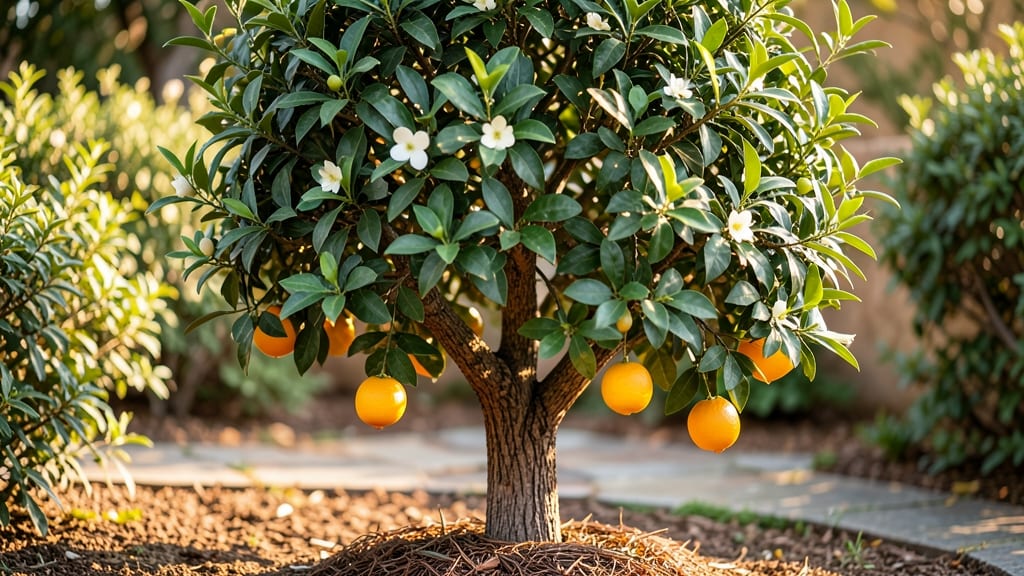
If you're dreaming of fresh oranges straight from your backyard but worried about how tall an orange tree can grow, the good news is you have options—some varieties stay small enough for containers while others reach towering heights.
The height of your 🍊 tree depends on its variety, growing conditions, and how aggressively you prune it, with mature trees ranging from 3 feet to over 40 feet tall.
For home gardeners in USDA Zone 6a, choosing the right variety is the first step to controlling size. Dwarf types like the Calamondin or Meyer Lemon-Orange hybrids top out around 6 feet, making them perfect for patios or small yards.
Meanwhile, standard varieties like the Valencia or Navel oranges can grow into majestic trees, needing ample space to thrive.
But here's the game-changer: pruning can dramatically alter your tree's height. With the right techniques, you can keep even a standard orange tree at a manageable size while still enjoying a bountiful harvest.
Whether you're planting in spring or working with a container-grown tree, we'll cover everything you need to know to grow the perfect-sized orange tree for your space.
Ready to learn how to manage your orange tree's height? Let's dive into the varieties, pruning methods, and container tips that will help you grow the ideal tree—no matter how much (or little) space you have.


Orange tree height by variety: from dwarf to giant sizes
If you're dreaming of homegrown oranges but worried about space, don't panic—orange trees come in every size imaginable. The Valencia variety, for example, can reach 20–30 feet tall in ideal conditions, while Calamondin stays a modest 3–6 feet.
Your choice of variety directly impacts how much room you'll need in your yard or patio.
Most standard orange trees grow between 15–40 feet tall at maturity, making them perfect for large backyards or rural properties. These giants need space to spread their canopy width (often 15–25 feet), so they're not ideal for urban gardens.
But if you love the idea of fresh oranges without the space commitment, dwarf varieties are your best bet.
Here’s the key difference: Dwarf varieties (like Improved Meyer) max out at 8–12 feet, while semi-dwarf types (such as Cara Cara) hit 12–18 feet.
Even these smaller trees can produce hundreds of oranges annually, proving that size doesn’t limit productivity. The trade-off? Some dwarf trees may have slightly smaller fruit.
Climate plays a surprising role in height too. In USDA Zones 9–11, where winters are mild, orange trees grow faster and taller due to year-round growth.
In cooler zones (like Zone 8), growth slows, and trees may stay 20–30% shorter unless you provide winter protection like mulch or windbreaks.
Now, let’s talk growth rates. A standard orange tree can add 1–2 feet per year in its first decade, while dwarf varieties grow just 6–12 inches annually.
This means a 3-foot-tall Calamondin could take 5–7 years to reach maturity, while a Valencia might need 10+ years to hit its full height.
🌱
| Variety | Mature Height | Growth Rate (Annual) | Best For |
|---|---|---|---|
| Calamondin | 3–6 ft | 6–12 in | Containers, small spaces |
| Improved Meyer | 8–12 ft | 12–18 in | Patios, urban gardens |
| Cara Cara | 12–18 ft | 18–24 in | Medium yards, large pots |
| Valencia | 20–30 ft | 24–36 in | Large properties, orchards |
| Navel | 25–40 ft | 30–48 in | Rural homes, commercial farms |
| Blood Orange | 15–25 ft | 20–30 in | Gourmet gardens, foodies |
For container growers, the Improved Meyer is a top pick—its compact size makes it perfect for 15–25 gallon pots. Even in containers, these trees can reach 6–8 feet tall with proper care, though their height is naturally limited by root restriction.
Just remember: the smaller the pot, the slower the growth.
If you're planting multiple trees, consider spacing requirements. Standard varieties need 20–25 feet between trees to avoid competition for sunlight and nutrients. Dwarf trees can be spaced 8–10 feet apart, making them ideal for hedge rows or mixed orchards.
One common mistake? Assuming all orange trees grow the same. A Navel orange tree, for instance, can outgrow your roof height in just a decade, while a Calamondin might never exceed your deck railing.
Always check the mature height before buying, and don’t forget to factor in canopy spread—some trees get twice as wide as they are tall!
🌳
How pruning affects orange tree height: techniques for controlling growth
Pruning is the single most effective way to control an orange tree’s height, especially if you’re working with a standard variety that could otherwise reach 20–40 feet. When done correctly, pruning can reduce a tree’s mature height by 30–50%, making it manageable even in small yards or containers.
The key is timing, technique, and knowing which cuts to make for structural health.
I’ve found that structural pruning in late winter (just before new growth begins) sets the foundation for height control. This involves removing suckers (shoots growing from the base) and water sprouts (vertical shoots from branches), which compete for energy and encourage upward growth.
For maintenance pruning, I focus on trimming back overgrown branches by 25–30% in early spring to maintain shape and airflow.
🌱 Step-by-Step Pruning Guide for Height Control
- Step 1: Sterilize tools – Use 70% isopropyl alcohol or bleach solution to clean pruners and saws to prevent disease spread.
- Step 2: Remove dead/diseased wood – Cut back dead branches to the nearest healthy bud or branch collar.
- Step 3: Thin the canopy – Prune crossing branches or those growing inward to improve sunlight penetration and air circulation.
- Step 4: Limit vertical growth – Trim top branches by 1/3 to reduce height; avoid cutting the central leader (main trunk) unless necessary.
- Step 5: Shape for balance – Use hand pruning to encourage a rounded canopy, which naturally reduces overall height.
✂️ Pro Tip: Prune in early spring (March–April) to avoid removing next year’s fruit buds, which form in late summer.
If your goal is to keep an orange tree under 10 feet, I recommend a combination of annual pruning and root restriction (for container-grown trees).
For example, a Valencia orange tree left unpruned will easily exceed 20 feet, but with consistent pruning, you can cap it at 12–15 feet. Just be cautious—over-pruning can stress the tree and reduce fruit production, so never remove more than 25% of the canopy in a single session.
For dwarf varieties like the Calamondin or Meyer lemon-orange hybrid, pruning is more about shaping than height control. These trees naturally stay under 6 feet, but I still prune to encourage bushier growth and better fruit access.
Use sharp bypass pruners for clean cuts at a 45-degree angle, just above a leaf node or bud.
One mistake I see often is pruning at the wrong time. Never prune in late summer or fall—this encourages new growth that won’t harden off before winter, making the tree vulnerable to frost damage.
Instead, plan your pruning for late winter (February) or early spring (March), just as buds begin to swell. This timing ensures the tree has time to recover and set fruit for the next season.
For container-grown orange trees, pruning becomes even more critical because root-bound trees grow more slowly but still need height management. I’ve successfully kept Meyer orange trees in 15-gallon pots at under 8 feet by pruning aggressively in spring and using top-dressing fertilizer to encourage bushier, rather than taller, growth.
Just remember: containers dry out faster, so water deeply after pruning to reduce stress.