
How To
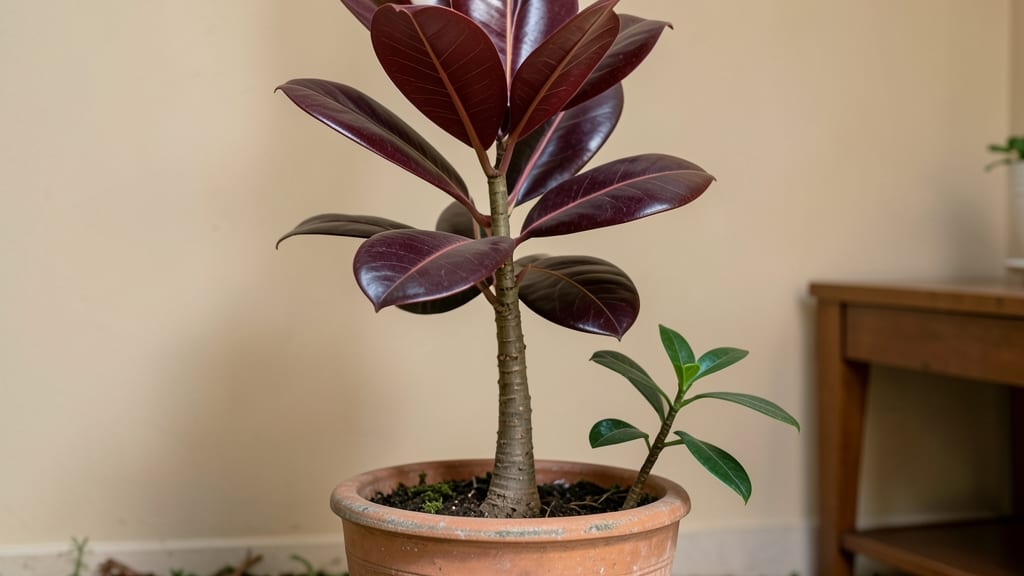
Have you ever glanced at your Rubber Plant 🌿 and wondered how tall it will grow? The truth is, these glossy-leaved giants can grow anywhere from 3 feet to over 10 feet tall, depending on care and variety.
Some varieties stretch skyward like jungle trees, while others stay compact with the right pruning.
If you’re curious about how to influence your plant’s height—or whether it’s destined for greatness—I’ve got the answers. We’ll break down the factors that turn a 1-foot sapling into a 6-foot statement piece, plus how to keep it at your preferred size.
Let’s dive into the secrets of managing your Rubber Plant’s growth journey.
Light, pruning, and pot size play starring roles in determining whether your plant becomes a towering indoor tree or stays a manageable houseplant. With the right approach, you can shape its growth to fit your space—whether that means encouraging height or keeping it compact. Ready to learn how?
From dwarf varieties that stay under 3 feet to standard types that shoot up to 10 feet, we’ll cover everything you need to know. Whether you’re a first-time plant parent or a seasoned gardener, these insights will help you grow the perfect Rubber Plant 🌿 for your home.


Rubber plant height ranges by variety: from dwarf to towering giants
Your rubber plant’s final height depends entirely on its variety and care. Some varieties stay under 3 feet, perfect for desks, while others reach 10 feet or more, dominating any room.
The key is understanding your plant’s genetic potential and how to nurture it—whether you want a bushy tabletop plant or a lush vertical statement piece.
Rubber plants (Ficus elastica) come in three main size categories: dwarf, semi-dwarf, and standard. Each grows at different rates and reaches distinct mature heights. For example, the ‘Black Prince’ variety typically stays compact, while ‘Tineke’ (variegated) can stretch tall if not pruned.
Let’s break down the exact height ranges you can expect for each type.
| Variety | Mature Height (Indoor) | Mature Height (Outdoor) | Growth Rate (Per Year) | Notes |
|---|---|---|---|---|
| Dwarf Varieties | 3–5 ft | 4–6 ft | 6–12 in | Ideal for small spaces; prune to maintain shape. |
| ‘Black Prince’ | 3–4 ft | 5–6 ft | 8–10 in | Dark leaves; slow grower; great for low-light areas. |
| Semi-Dwarf Varieties | 5–8 ft | 8–12 ft | 12–24 in | Balanced for medium spaces; prune to control height. |
| ‘Tineke’ (Variegated) | 6–9 ft | 10–12 ft | 18–24 in | Needs bright light; variegation fades in low light. |
| Standard Varieties | 8–12 ft | 12–15 ft | 24–36 in | Best for large rooms or outdoor gardens. |
| ‘Willow Leaf’ | 10–12 ft | 15+ ft | 30+ in | Fast-growing; needs support for tall stems. |
Outdoor rubber plants grow 2–3 times taller than indoor counterparts due to more sunlight, space, and nutrients. For example, a ‘Willow Leaf’ indoors might reach 10 feet, but outdoors, it can easily surpass 15 feet if left unpruned.
If you’re growing rubber plants outside in USDA Zone 6a or warmer, expect rapid vertical growth during spring and summer.
Indoor rubber plants grow slower due to limited light and smaller pots. A ‘Black Prince’ might stay under 4 feet indoors but could reach 6 feet outdoors. To encourage compact growth indoors, use bright indirect light and rotate the pot every few weeks for even growth.
Without proper light, your rubber plant will stretch toward windows, a condition called etiolation, which weakens stems and makes them prone to falling over.
Variegated varieties like ‘Tineke’ often grow taller indoors because their pale leaves require more light to photosynthesize efficiently. If you notice your variegated rubber plant stretching excessively, move it closer to a south- or west-facing window or supplement with a grow light.
Without enough light, the variegation will fade, and growth will slow dramatically.
Pruning plays a huge role in controlling height. Regular pruning—cutting back 1/3 of the stem in early spring—encourages bushier growth and prevents your rubber plant from becoming a <
How to control rubber plant height: pruning, light, and pot size secrets
If your rubber plant is stretching toward the ceiling like a jungle vine, don’t panic—you can control its height with a few simple strategies. The key lies in light exposure, pruning techniques, and pot size adjustments.
Whether you want a compact tabletop plant or a lush vertical statement piece, these methods give you full control over your rubber plant’s growth trajectory.
First, let’s tackle light exposure, the most critical factor in height control. Rubber plants grow tall when they stretch for sunlight, a condition called etiolation.
To prevent this, place your plant near an east or west-facing window where it gets bright, indirect light for 4-6 hours daily. If your home lacks natural light, supplement with a grow light for 12-14 hours per day to discourage leggy growth.
Next, pruning is your secret weapon for shaping and managing height. Regular pruning not only keeps your plant compact but also encourages bushier growth and larger leaves.
Use clean, sharp pruning shears to trim back 10-15% of the plant’s height in early spring. You can also propagate cuttings to create new plants—it’s a win-win!
Here’s how to prune like a pro:
- Identify leggy stems—these are the ones stretching upward.
- Cut just above a leaf node (the bump where leaves grow).
- Place cuttings in water to root for new plants.
- Fertilize the mother plant after pruning to boost recovery.
🌱 Pro Tip: Topping Your Rubber Plant
For dramatic height control, try topping your rubber plant. Cut the main stem 1-2 feet from the top, and side shoots will sprout below, creating a fuller, bushier plant. This method works best in spring or early summer when the plant is actively growing.
Another game-changer is pot size. Rubber plants grow taller when root-bound, meaning their roots have filled the pot. To slow height growth, repot into a container just 1-2 inches larger than the current one.
If you want a shorter, stockier plant, choose a wider pot—this encourages outward growth rather than upward.
For outdoor rubber plants, height control is even easier. Plant in partial shade to avoid excessive stretching, and prune annually to maintain your desired shape.
If your outdoor plant is getting too tall, stake it with a bamboo support or trellis to guide its growth vertically without letting it become top-heavy.
Finally, fertilize wisely to support controlled growth. Use a balanced 10-10-10 fertilizer every 6-8 weeks during the growing season (spring and summer). Avoid over-fertilizing, as this can lead to soft, leggy growth—exactly what you’re trying to prevent.