
Watering
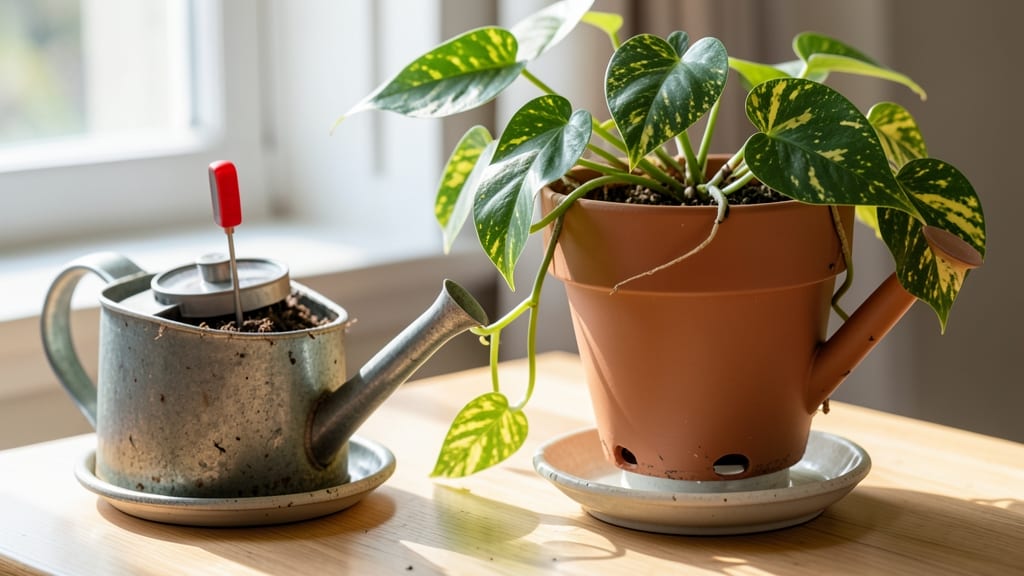
Figuring out how much water your pothos plant 🌿 needs can feel like solving a mystery—one wrong move, and your leafy friend starts looking sad. The truth? Pothos are forgiving, but they do have a sweet spot for hydration that keeps those glossy leaves thriving without inviting root rot.
Most beginners make the mistake of sticking to a rigid schedule, but pothos watering is more about reading your plant than following a calendar.
Whether you're in a dry office or a humid bathroom, small tweaks to your routine can mean the difference between a lush vine and a struggling survivor. Let me show you exactly what to watch for—and how to adjust on the fly.
We’ve all been there: You water your pothos, and suddenly the leaves start drooping or turning yellow. The good news? These clues are your plant’s way of talking to you.
By the end of this guide, you’ll know the 5 key signs your pothos is thirsty (or drowning) and how to fix it before it’s too late.
Ready to master the art of pothos watering? Let’s dive into the simple, science-backed methods that’ll keep your plant happy year-round—no guesswork required.

How often to water pothos plants based on soil dryness (not a fixed schedule)
If you've ever killed a pothos plant by overwatering—or worse, let it dry out completely—you're not alone. The key to keeping your pothos thriving lies in understanding its soil moisture needs, not sticking to a rigid weekly schedule.
Unlike high-maintenance plants, pothos are drought-tolerant and prefer to dry out between waterings. The real secret? Testing soil dryness before adding water.
Most pothos care guides suggest watering every 1-2 weeks, but this is a rough estimate. Your plant's actual needs depend on pot size, humidity levels, and even the season.
A 6-inch pot in a dry office will need water more often than a 12-inch pot in a humid bathroom. The goal is to let the top 1-2 inches of soil dry completely before watering again.
Here's how I check soil moisture before watering: Stick your finger about 1 inch deep into the soil. If it feels dry and crumbly, it's time to water. If it's still slightly damp, wait another 2-3 days.
This simple test eliminates guesswork and prevents both root rot and leaf drop. Remember, pothos can survive weeks without water if needed, but they won't thrive.
One common myth is that pothos need weekly watering during summer. While growth speeds up in warmer months, this doesn't mean you should water on a fixed schedule. Instead, monitor your plant's leaf condition and soil texture.
Drooping leaves often signal thirst, but yellowing leaves usually mean you're overwatering. The key is balance—consistent dryness between waterings, not soggy soil.
Environmental factors play a huge role in your pothos's water needs. For example, a plant in a bright, sunny spot will dry out faster than one in a dim corner. Similarly, low humidity (common in offices with heating) increases evaporation, while high humidity (like bathrooms) slows it down.
Adjust your watering frequency based on these conditions rather than following a one-size-fits-all rule.
Let's talk about pot size—this is often overlooked but critical. Smaller pots dry out much faster than larger ones because the soil has less moisture to hold.
If your pothos is in a small container, you might need to water every 5-7 days, while a larger pot could go 3-4 weeks between waterings. Always use pots with drainage holes to prevent waterlogging, which is a silent killer of pothos roots.
Seasonal changes also affect watering frequency. During spring and summer, your pothos will grow faster and need more water—typically every 7-10 days. In fall and winter, growth slows down, and you can stretch waterings to every 2-3 weeks.
This adjustment mimics the plant's natural dormancy period and prevents overwatering when it's least active.
Another pro tip: Use room-temperature water to avoid shocking the roots. Cold water can cause stress, leading to leaf drop or yellowing. Always water until you see excess liquid drain from the bottom of the pot, then empty the saucer to prevent the roots from sitting in water.
This simple step can double your pothos's lifespan by preventing root rot.
If you're still unsure, consider using a moisture meter for the first few weeks. These inexpensive tools take the guesswork out of watering and help you understand your specific environment's impact on your plant.
Over time, you'll develop a feel for when your pothos needs water just by observing its leaf texture and soil appearance.
Pothos Watering Summary
| Factor | Watering Frequency | Signs to Watch For |
|---|---|---|
| Soil Dryness Test | Every 1-2 inches dry | Dry topsoil, slightly pulled leaves |
| Pot Size (Small) | Every 5-7 days | Faster drying, wilting leaves |
| Pot Size (Large) | Every 3-4 weeks | Slow drying, minimal wilting |
| Season (Summer) | Every 7-10 days | Faster growth, drooping leaves |
| Season (Winter) | Every 2-3 weeks | Slow growth, crispy leaf edges |
| Humidity (Low) | Every 5-7 days | Dry air, brown leaf tips |
Humidity
5 Signs your pothos needs water (and 5 signs you're overdoing it)Your pothos plant communicates thirst and distress through subtle visual cues—most gardeners miss these early warnings. Unlike succulents, pothos doesn't store much water, so it relies on you to read its signals. The key is checking soil moisture and leaf condition before watering. Start by examining the top 2 inches of soil. If it feels dry to the touch, your plant likely needs water. But don't rely solely on this—leaf texture and color tell a bigger story. For example, curling leaves often mean thirst, while yellowing leaves could signal overwatering or poor drainage. Here’s where many gardeners go wrong: they assume a rigid watering schedule works for all pothos. In reality, your plant’s needs change with seasonal shifts, humidity levels, and even the size of its pot. A 6-inch pot dries out faster than a 10-inch container, so adjust accordingly. 🌱 Pothos Watering Quick Guide
Signs Your Pothos Needs Water:
Signs You're Overwatering:
Pro Tip: Stick your finger 2 inches deep—if it feels dry, water thoroughly. If wet, wait 3-5 more days. Let’s tackle the yellowing leaves mystery first—this is where most pothos owners panic. If the yellow starts at the bottom leaves and moves upward, you’re likely overwatering. But if only the tips turn brown, it’s usually from low humidity or fluoride in tap water (a common issue in many homes). Try using filtered water or misting leaves occasionally. Another red flag is leaf drop. While pothos naturally drops older leaves, sudden shedding often means stress—either from underwatering or temperature fluctuations (like drafty windows). Keep your plant in 65-85°F ranges and avoid cold drafts. If leaves feel crispy to the touch, it’s a clear sign of thirst, while slimy stems mean root rot from too much water. For a quick fix, trim any severely damaged leaves with clean scissors. This encourages new growth and prevents pests from moving into stressed areas. Always water at the soil level, not over the leaves, to avoid fungal issues. And remember: pothos are drought-tolerant—it’s far easier to underwater than overwater this resilient plant. |