
Watering
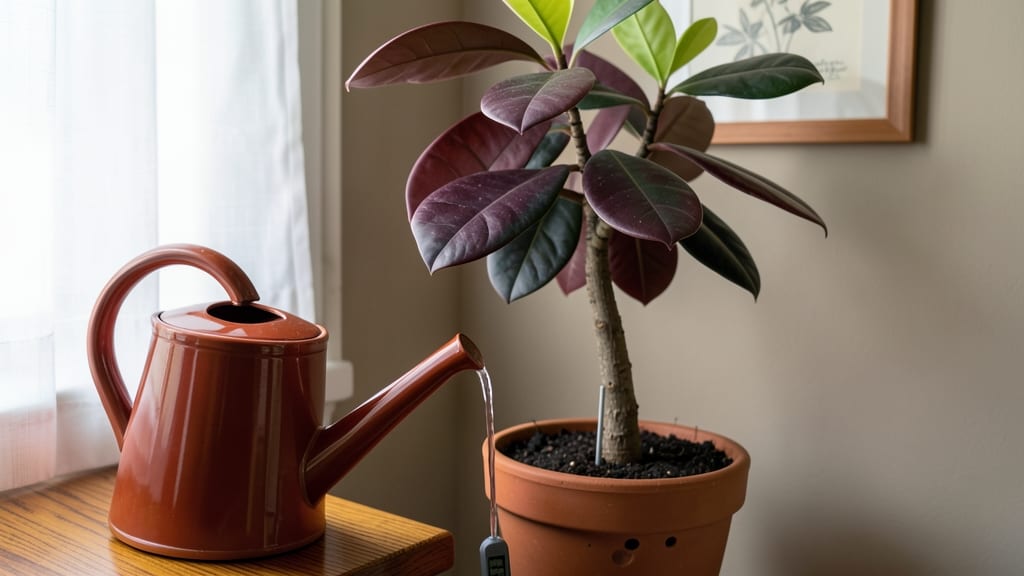
Struggling to figure out how much water your rubber plant 🌿 really needs? Too much or too little can turn those gorgeous glossy leaves into a sad, brown mess—and nobody wants that!
The truth is, rubber plants are surprisingly forgiving, but they do have a sweet spot for hydration that keeps them thriving year-round.
Most people water their rubber plants on a schedule, but that’s actually the fastest way to kill them. Instead, you should focus on soil dryness—stick your finger an inch deep, and if it feels dry, it’s time to water.
This simple check beats guessing games every time, whether you’re in USDA Zone 6 or a warmer climate.
Here’s the game-changer: your rubber plant’s water needs shift with the seasons. In spring and summer, it might drink up to every 5-7 days, while in fall and winter, you can stretch that to every 3-4 weeks.
I’ll break down the exact schedule based on your pot size and even share signs your plant is thirsty (or drowning).
Ready to master the art of rubber plant watering? Let’s dive into the exact schedule and techniques that’ll keep your plant happy, healthy, and looking its best—without the guesswork.

How much water does a rubber plant need (by season & pot size)
Your rubber plant thrives on a consistent watering routine, but the exact schedule depends on two key factors: season and pot size. During spring and summer, your plant grows actively and needs more frequent watering, while fall and winter demand a dramatic reduction.
Even a 6-inch pot dries out faster than a 12-inch container, so adjust accordingly to avoid soggy roots or thirsty leaves.
Most gardeners make the mistake of sticking to a rigid schedule without checking the soil first. Instead, I always test soil moisture by sticking my finger about 1 inch deep.
If it feels dry, it’s time to water. If it’s still damp, wait another 3–5 days. This simple trick saves rubber plants from both overwatering and underwatering pitfalls.
Here’s the seasonal watering breakdown you need to keep your rubber plant’s leaves glossy and healthy year-round:
| Season | Pot Size | Frequency | Soil Test | Water Amount |
|---|---|---|---|---|
| Spring | 6-inch pot | Every 5–7 days | 1 inch dry | 250–350ml |
| Spring | 12-inch pot | Every 7–10 days | 1–2 inches dry | 500–750ml |
| Summer | 6-inch pot | Every 3–5 days | Top 1 inch dry | 300–400ml |
| Summer | 12-inch pot | Every 5–7 days | 1–2 inches dry | 600–800ml |
| Fall | 6-inch pot | Every 10–14 days | 2 inches dry | 200–300ml |
| Winter | 6-inch pot | Every 3–4 weeks | 3 inches dry | 150–200ml |
💧 Pro Tip: Always water in the morning to reduce evaporation and fungal risks.
For indoor rubber plants, humidity plays a crucial role. If your home has dry air (common in winter with heating), your plant may need water slightly more often—even in fall or winter. Place a humidity tray with pebbles and water beneath the pot to mimic its tropical origins.
Outdoor rubber plants in containers during summer need extra attention. Wind and sun dry out soil faster, so check moisture daily in extreme heat. Move pots to shadier spots during peak afternoon sun to prevent leaf scorch while maintaining healthy watering habits.
One common mistake I see is watering based on calendar dates rather than the plant’s needs. If your rubber plant’s leaves start drooping or developing brown tips, it’s a clear sign to reassess your watering routine. Adjust immediately—rubber plants bounce back quickly when given the right care!
In winter months, reduce watering to once a month or even less if your home stays cool. The plant enters a dormant phase, and overwatering can lead to root rot. Always ensure pots have drainage holes to prevent water from pooling at the bottom.
Finally, remember that well-draining soil is non-negotiable. A mix of potting soil, perlite, and orchid bark keeps roots aerated and prevents waterlogging. If you’re unsure about your soil mix, repot your rubber plant into a fresh blend every 2–3 years for optimal health.
How much water does a rubber plant need (by season & pot size)
Your rubber plant (Ficus elastica) thrives on a consistent but cautious watering routine—too much or too little can stress it. The key is checking the top 1-2 inches of soil before watering.
In spring and summer, your plant drinks more, while fall and winter demand less. Let’s break it down by pot size and season so you never guess again.
For 6-inch pots, water every 7-10 days in warmer months, but extend to every 2-3 weeks in winter. Larger 12-inch pots hold moisture longer, so adjust to every 10-14 days in summer and monthly in winter. Always use room-temperature water to avoid shocking the roots.
Rubber Plant Watering Guide
| Season | 6-Inch Pot | 12-Inch Pot | Soil Check |
|---|---|---|---|
| Spring | Every 7-10 days | Every 10-14 days | Top 1-2 inches dry |
| Summer | Every 5-7 days | Every 10-14 days | Top 2 inches dry |
| Fall | Every 10-14 days | Every 3-4 weeks | Top 2-3 inches dry |
| Winter | Every 3-4 weeks | Monthly | Top 3 inches dry |
💧 Pro Tip: Always water until liquid drains from the pot’s bottom.
If your rubber plant’s leaves start curling or feeling soft to the touch, it’s a cry for help—likely overwatering. Conversely, wrinkled or dry leaves mean it’s thirsty.
Adjust your schedule based on your home’s humidity levels; dry air speeds up evaporation, so water more frequently in winter when indoor heat kicks in.
For outdoor rubber plants, increase watering by 20-30% during heatwaves, but always let the soil dry between waterings. Mulching around the base helps retain moisture and keeps roots cool. Stick to this schedule, and your rubber plant’s glossy leaves will stay vibrant all year.
Remember, less is always better than overwatering. Rubber plants are drought-tolerant and can bounce back from dry spells, but they’ll struggle—and even die—if their roots sit in soggy soil. Trust your finger: if the soil feels dry 1-2 inches down, it’s time to water.