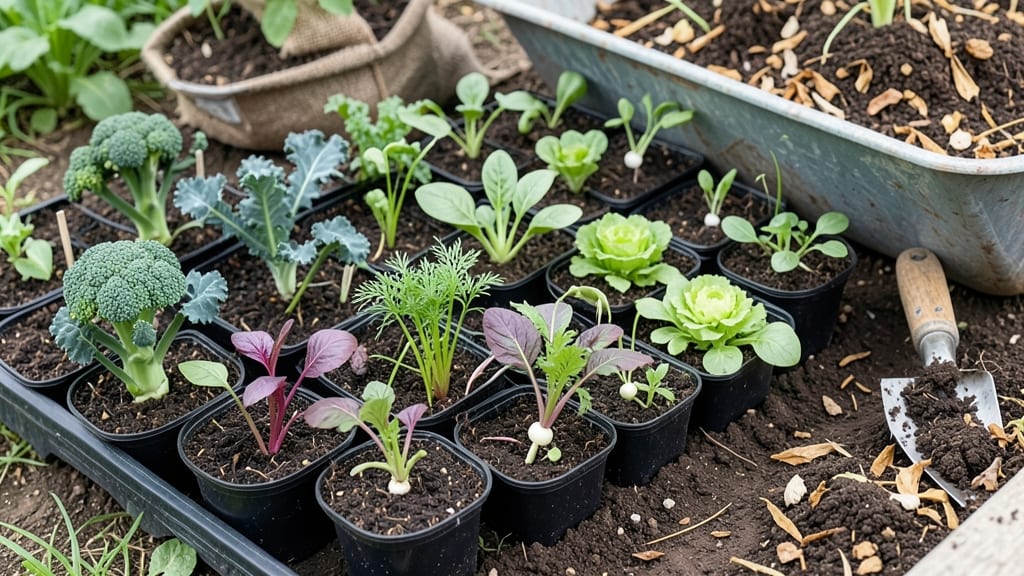
Knowing when to plant fall vegetables in Zone 5 can mean the difference between a bountiful harvest and wasted effort. With just 4-6 weeks before the first frost, timing is critical—plant too early, and your greens bolt; too late, and winter steals your crop.
But here’s the good news: with the right soil temps and frost dates, you can grow hearty kale, sweet carrots, and crisp spinach right through November.
Zone 5’s short growing window demands precision, but it’s not rocket science. I’ll break down the exact soil temperatures your fall crops need to thrive—like 50°F for leafy greens and 60°F for root veggies—and how to adjust for your local frost dates.
Whether you’re a first-time gardener or a seasoned pro, these tips will help you avoid common mistakes and maximize your harvest before the snow flies.
Let’s start with the basics: why mid-August to early September is your sweet spot for planting. We’ll cover which crops to prioritize, how to prep your soil, and even how to stretch your growing season with simple tricks.
By the end, you’ll have a clear, actionable plan to turn your backyard into a fall vegetable powerhouse—no guesswork required.
Ready to dive in? You’ll walk away with a customized planting schedule tailored to Zone 5’s 120–150-day growing window, so you can enjoy fresh, homegrown veggies long after summer’s over. Let’s get those seeds in the ground!
🥬
When to Plant Fall Vegetables Vegetables
Jan
❄️
Feb
❄️
Mar
🌱
Apr
🌱
May
🌸
Jun
☀️
Jul
🌱
Aug
🥬
Sep
🥬
Oct
🌱
Nov
🍂
Dec
❄️
Zone 5 fall planting timeline by vegetable type: soil temperature rules
Fall vegetables in Zone 5 thrive when planted at the right soil temperature—too warm, and they bolt; too cold, and growth stalls. The key is timing 4-6 weeks before your first frost, typically mid-August to early September.
But not all crops play by the same rules. Cool-season veggies like kale and spinach love temperatures between 40°F and 70°F, while warm-season holdovers (like tomatoes) need 60°F+ soil to mature.
To nail your timing, grab a soil thermometer—it’s your secret weapon. Most garden centers sell them for under $20, and they’ll tell you exactly when to plant. For example, broccoli and cauliflower need 50°F+ soil, while peppers (if you’re pushing it) demand 70°F+.
Microclimates matter too: A south-facing bed warms faster than a north-facing one, so adjust accordingly.
Here’s the golden rule: Plant cool-season crops when soil temps drop below 75°F. This usually happens in late August for most of Zone 5. Warm-season crops? Get them in by mid-July at the latest, or they’ll never mature before frost.
And don’t forget succession planting—sow radishes or lettuce every 2 weeks for a steady harvest.
| Vegetable |
Ideal Planting Window |
Soil Temp Requirement |
Days to Harvest |
Notes |
| Kale |
Late July - Mid-Sept |
40°F - 70°F |
50-65 days |
Sweetens after frost |
| Spinach |
Mid-August - Early Sept |
45°F - 65°F |
30-50 days |
Bolt-resistant varieties |
| Carrots |
Early July - Late Aug |
50°F - 75°F |
60-80 days |
Loose soil prevents forking |
| Lettuce |
Late July - Mid-Sept |
40°F - 65°F |
30-55 days |
Succession plant every 2 weeks |
| Tomatoes (Late) |
Mid-July - Early Aug |
60°F+ |
60-85 days |
Use row covers for warmth |
| Broccoli |
Late July - Early Sept |
50°F - 70°F |
50-70 days |
Harvest before heads flower |
| Radishes |
August - Early Oct |
Calculating your exact frost dates: how to avoid early winter loss
Zone 5’s first frost date (typically mid-October) isn’t just a number—it’s your deadline for fall planting. But here’s the catch: your exact date depends on microclimates (e.g., south-facing slopes warm 2–3 weeks longer than low-lying areas).
Start by checking your USDA Zone 5 frost map (Zone 5a vs. 5b matters!) and adjust for local trends.
For precision, use the National Weather Service’s frost calculator or apps like Old Farmer’s Almanac. Input your ZIP code to get a 10-year average for your first frost. Pro tip: Add 5–7 days as a buffer—unpredictable cold snaps can sneak in early.
🌱 Key Tools for Accuracy:
- Soil thermometer ($15 at garden centers)
- Local CoCoRaHS weather stations (hyper-local data)
- 3-year frost history from your county extension office
⏰ Step-by-Step Frost Date Calculation
- Step 1: Find your USDA Zone 5a/5b and note the average first frost (e.g., Oct 15 for 5a, Oct 22 for 5b).
- Step 2: Check your last 3 years’ frost dates—adjust your average by ±3 days if your area trends early/late.
- Step 3: Use a soil thermometer to confirm 40°F soil temps (critical for cold-hardy crops like kale).
- Step 4: Subtract your crop’s maturity days (e.g., 60 days for spinach) from your frost date to get your planting window.
- Step 5: For succession planting, repeat every 2–3 weeks until 6 weeks before frost.
Don’t overlook row covers or cold frames, which can push back frost by 2–4 weeks. For example, a floating row cover lets you plant broccoli 2 weeks later than the bare-ground deadline.
Test your setup with a test crop like radishes—they mature in 25 days and reveal if your extension method works.
Watch for day-length sensitivity in greens like spinach and lettuce. These bolt when days shorten below 12 hours—plant them by late August to avoid bitter leaves. Use shade cloth (30%) if you’re pushing the season late.
Pro move: Mark your planting deadlines on a garden calendar with highlighters for each crop. Example: Carrots (70 days) must be in by September 1 for a Zone 5 harvest before frost. Miss this, and you’ll be nibbling store-bought in November.
★★★★★4.5(5 reviews)
|