
Trees
Colorado’s 5 microclimates and ideal fruit tree planting windows
Colorado’s diverse geography means your fruit tree planting window can vary by hundreds of miles—even within the same county. The Front Range (Denver, Boulder) has later frost dates than the Western Slope (Grand Junction), while the San Luis Valley faces earlier freezes.
Understanding these microclimates ensures your trees thrive without frost damage.
Most Colorado gardeners focus on stone fruit (peaches, cherries) and pome fruit (apples, pears), which need precise timing. Citrus (like Meyer lemons) is only viable in USDA Zone 7+, typically the Southern Colorado foothills. Let’s break down the best planting months for each region.
🌱
| Microclimate | USDA Zone | Last Frost Date | Best Planting Window | Top Fruit Varieties |
|---|---|---|---|---|
| Front Range (Denver/Boulder) | 5a-6b | April 15-May 1 | Late April–early May (spring) or early October (fall) | Honeycrisp apples, Stella cherries, El Dorado peaches |
| Western Slope (Grand Junction) | 6b-7a | March 20-April 5 | Early April–mid-May (spring) or late September (fall) | Red Delicious apples, Bing cherries, Reliance peaches |
| Eastern Plains (Fort Collins) | 5a-5b | April 20-May 5 | Late April–early June (spring) or early September (fall) | Haralson pears, Montmorency cherries, Golden Transparent apricots |
| San Luis Valley | 5a-6a | April 5-April 15 | Early April–mid-May (spring) or late August (fall) | Fuji apples, Rainier cherries, Black Diamond plums |
| High Plains (Pueblo) | 6a-6b | April 10-April 25 | Mid-April–early May (spring) or early October (fall) | Gala apples, Sweetheart cherries, Patio peaches |
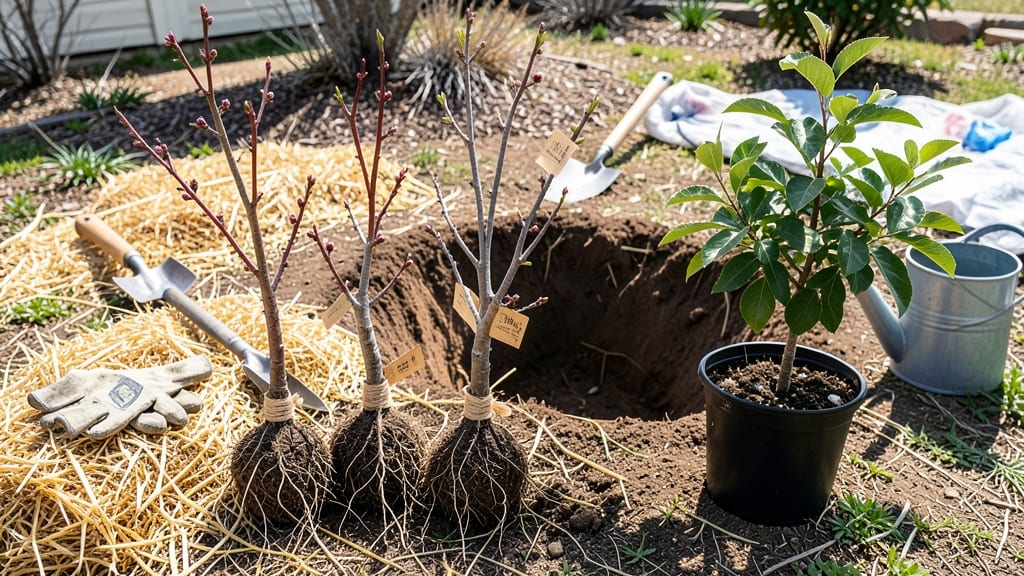
For bare-root trees, plant in early spring (as soon as soil thaws) to let roots establish before summer heat. Container-grown trees can go in slightly later—up to 2 weeks after the last frost—since their roots are already established. Always check soil temperature (ideal: 50°F+) before planting.
Elevation plays a critical role: Add 1°F per 300 feet to adjust USDA zone ratings. For example, a 6,000-foot garden in Denver (Zone 5b) might experience frost 2 weeks later than a 7,000-foot spot. Use microclimate maps from the Colorado State University Extension for hyper-local data.
Pro tip: Stone fruit (peaches, plums) are more frost-sensitive than apples or pears. If you’re in a Zone 5a area, choose late-blooming varieties like Lapins cherries or Harvest Queen apples, which avoid early spring frosts.
🌿
Fall planting is ideal for dormant trees (September–October), giving roots time to establish before winter. However, avoid planting after October 15 in most regions, as roots won’t harden enough before freeze. In Zone 6+ (Western Slope), you can push fall planting to early November.
🪴
Remember: Citrus trees (like Meyer lemons) are a gamble in Colorado unless you live in Zone 7+. Even then, grow them in large containers and move them indoors during winter. For most gardeners, apples, pears, and cherries offer the best reliable harvests with proper timing.
How to calculate your local frost-free date (Step-by-Step)
Colorado’s frost dates vary dramatically by elevation and region—even neighboring towns can have 2-3 week differences. To plant fruit trees successfully, you need to know your exact last frost date, not just the USDA zone average.
Here’s how to calculate it with precision using free tools and local data.
Start by checking the National Oceanic and Atmospheric Administration (NOAA) frost maps for your county. For example, Denver’s last frost typically falls around April 15, while Grand Junction averages March 20. Bookmark this data as your baseline.
Next, verify with local gardening groups like Colorado State University Extension or Facebook groups for your area. Real gardeners often report frost dates that differ from official records—especially in microclimates like urban heat islands or mountain valleys.
🌱
- NOAA Frost Maps: Check your county’s average last frost date (e.g., Denver: April 15, Colorado Springs: April 5).
- Local Records: Search "[Your City] last frost date 2023" for recent observations.
- Soil Thermometer: Monitor soil temps—plant when 50°F (10°C) at 4" depth for 5+ days.
- Urban Areas: Add 3-5 days to frost dates (heat islands delay frost).
- Mountain Valleys: Subtract 5-7 days (cold air sinks).
- South-Facing Slopes: Plant 1 week earlier (warmer microclimate).
- Bare-Root Trees: Plant 2-3 weeks before last frost (roots establish before buds break).
- Container-Grown Trees: Wait until 2 weeks after last frost (less cold-hardy).
- Fall Planting: Aim for 6-8 weeks before first frost (e.g., Denver: Sept 15).
For container-grown fruit trees, delay planting until 2 weeks after your adjusted last frost date. These trees are less cold-hardy than bare-root varieties, so rushing risks frost damage. Use a soil thermometer to confirm temps stay above 50°F (10°C) at night.
Pro tip: If you’re planting in USDA Zone 5 or colder (e.g., Colorado Springs, Fort Collins), choose cold-hardy varieties like Honeycrisp apples or Montmorency cherries. These tolerate late frosts better than tender varieties like peaches.
Finally, mark your calendar for 2-3 weeks after your calculated last frost date—this is your planting window. For Denver, that’s typically April 29-May 12, while Grand Junction can plant as early as March 25-April 5. Adjust based on your microclimate!
🌿