
Trees
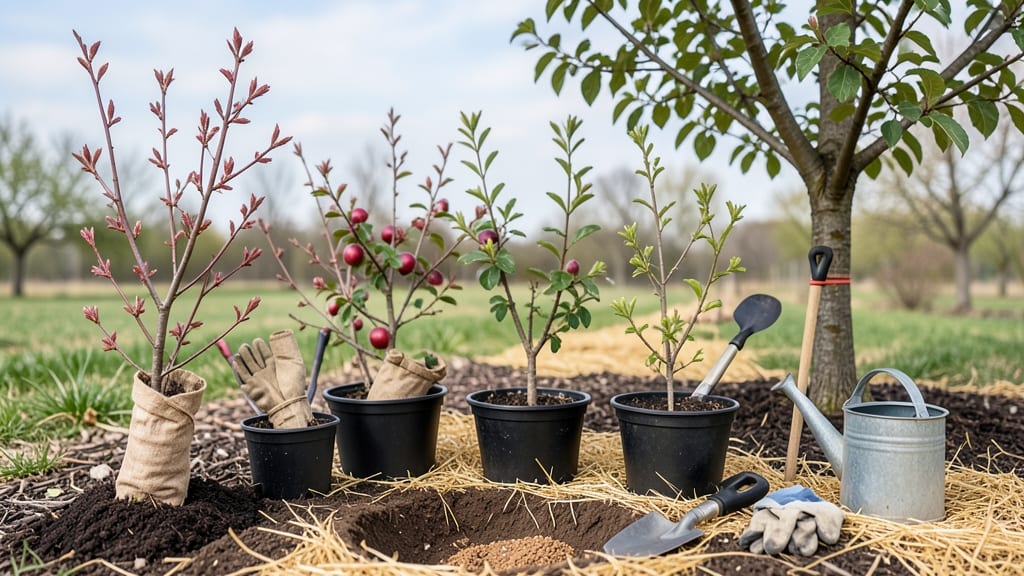
Timing your fruit tree planting in Wisconsin can mean the difference between a thriving orchard and a sad, withering sapling—especially when you're dealing with five distinct microclimates that defy simple calendar rules.
Whether you're in the chilly Lake Superior zone or the milder Driftless Region, getting those roots in the ground at the perfect moment is the key to healthy growth and future harvests.
I've seen firsthand how a single week too early or late can stress young trees, making them vulnerable to Wisconsin's infamous late frosts. The secret isn't just waiting for spring—it's understanding your specific zone's soil warmth patterns and frost risks.
Let me show you exactly when to plant for maximum success, no matter where you garden in the Badger State.
We'll break down the ideal planting windows for everything from apples to berries, plus critical preparation steps that Wisconsin gardeners often overlook. Think of this as your roadmap to avoiding common mistakes that leave trees struggling to establish roots before summer heat arrives.
By the end, you'll know precisely when to dig, how to prepare your soil, and what varieties thrive best in your corner of Wisconsin. Let's get those fruit trees off to the strongest possible start—because healthy trees today mean bountiful harvests tomorrow.
Best months to plant fruit trees by Wisconsin’s 5 key microclimates
Wisconsin’s five distinct microclimates create wildly different planting windows for fruit trees. Whether you’re in the frost-prone Lake Superior region or the warmer Driftless Area, timing is everything.
I’ve broken down the ideal months for planting bare-root and container-grown trees based on real Wisconsin data, including frost risks and soil thaw dates.
For Southern Wisconsin (Zones 5b-6a), like Madison or Milwaukee, your planting window stretches from late March to early May.
This zone’s milder winters mean soil thaws earlier, giving you a 6-week window to plant before summer heat sets in. Apples and peaches thrive here when planted in April, while cherries and plums prefer the cooler March-April transition.
In Central Wisconsin (Zones 4b-5a), covering areas like Wausau and Stevens Point, aim for mid-April to early May.
The last spring frost typically occurs around May 10th, so hold off until then—especially for stone fruits like cherries, which are frost-sensitive. Container-grown trees can go in slightly earlier (late March) if the soil isn’t frozen.
Northern Wisconsin (Zones 3b-4a), including Green Bay and the Chippewa Valley, demands patience.
Your best bet is late April to mid-May, but monitor soil temperatures—they should reach 45°F (7°C) at 4 inches deep. Hardy varieties like Honeycrisp apples or Montmorency cherries are your best friends here, as they tolerate colder climates.
The Lake Superior region (Zone 4a), with its extended cold seasons, has the latest planting window: mid-May to early June.
The lake’s influence keeps frost risks high until late May, so delay planting until after Mother’s Day weekend. Dwarf varieties like Patriot pear or Haralson plum establish faster in this zone’s shorter growing season.
The Driftless Region (Zones 5a-5b), including La Crosse and Eau Claire, offers a 4-week window from early April to early May.
This area’s unique topography creates microclimates where spring arrives 1-2 weeks earlier than surrounding zones. Stone fruits like nectarines love this region’s warmer springs, but avoid planting before April 15th to dodge late frosts.
| Microclimate | USDA Zone | Best Planting Window | Soil Temp Goal | Top Varieties |
|---|---|---|---|---|
| Southern WI | 5b-6a | Late March–Early May | 40°F (4°C) | Gala Apple, Redhaven Peach |
| Central WI | 4b-5a | Mid-April–Early May | 45°F (7°C) | Honeycrisp Apple, Montmorency Cherry |
| Northern WI | 3b-4a | Late April–Mid-May | 50°F (10°C) | Patriot Pear, Haralson Plum |
| Lake Superior | 4a | Mid-May–Early June | 55°F (13°C) | Dwarf Apple, Tart Cherry |
| Driftless Region | 5a-5b | Early April–Early May | 42°F (6°C) | Nectarine, Pluot Hybrid |
Bare-root trees are hardier in colder zones and can handle earlier planting (as soon as soil is workable), while container-grown trees offer flexibility for Southern or Driftless gardeners
Critical factors that determine Your Planting Window (Beyond the Calendar)
Wisconsin’s spring frost dates shift dramatically across just 200 miles—so relying on a generic "plant in spring" rule can backfire. For example, tart cherries need chill hours (300–600) to fruit, while peaches thrive with 500–800 chill hours.
Planting too early risks frost damage, but waiting too long stunts root growth before summer heat arrives.
Your soil temperature is the real clock: bare-root trees should go in when soil hits 40°F, while container-grown trees wait for 50°F+. Use a soil thermometer—Wisconsin’s Southern Zone (Zone 5a) may hit 50°F by late March, but Lake Superior’s Zone 4a might still be frozen in May.
A common mistake? Trusting USDA Hardiness Zones alone. A Zone 5b apple tree in Madison might survive winter, but if planted in early April, late frosts in May can kill blossoms.
Check your last frost date (typically May 15 in Southern WI, June 1 near Green Bay) and plant 4–6 weeks before.
Container-grown trees planted after June 1 struggle to establish roots before winter. Bare-root trees must be planted by early April to avoid drought stress in summer. Wisconsin’s unpredictable springs mean late frosts can hit even in May—always have frost cloth ready!
For stone fruits (peaches, plums), prioritize chill-hour requirements. A low-chill variety like Redhaven peach (300–400 hours) works in Southern WI, but high-chill varieties (600+ hours) fail in Milwaukee. Use your local Extension office’s chill-hour map to pick the right tree.
Even berry bushes (raspberries, blueberries) need timing precision. June-bearing strawberries planted in early spring yield better than fall plantings, while everbearing varieties can handle late summer planting—but only if soil stays above 50°F for 6 weeks post-planting.
Pro tip: Test your soil’s pH before planting. Blueberries need 4.5–5.5 pH, while apples and pears thrive at 6.0–7.0. Amend soil 4–6 weeks before planting—lime raises pH, sulfur lowers it. Wisconsin’s glacial till soils are often alkaline, so test first!