
Plants
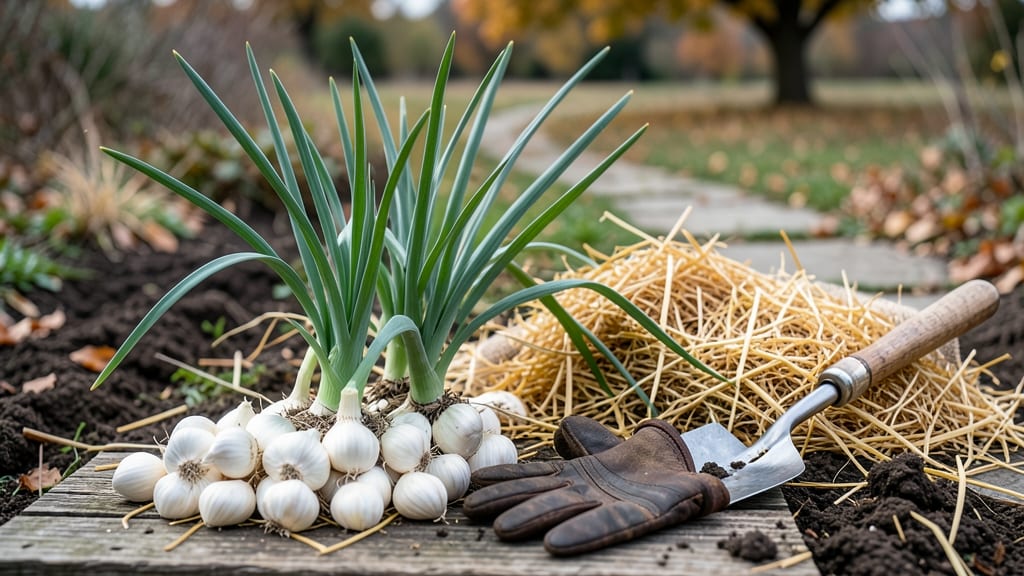
North Dakota garlic planting calendar: best months by variety type
If you’ve ever wondered why your garlic cloves shrank to pebbles in North Dakota’s soil, the answer lies in timing. Unlike warmer climates where spring planting works, Zone 3’s short growing season demands fall planting—specifically between late September and early October.
This window ensures garlic bulbs establish roots before winter dormancy, then burst into growth when spring arrives.
North Dakota’s climate isn’t uniform—Fargo’s Red River Valley (Zone 4a) enjoys slightly milder winters than Bismarck’s Missouri Plateau (Zone 3b). For western regions like Dickinson, push planting to mid-October to avoid early frosts.
The key is planting when soil temps hit 40-50°F—cold enough to prevent sprouting but warm enough for root growth.
Hardneck varieties (like ‘Music’ or ‘German White’) thrive in ND’s climate, producing scape shoots that harden in winter. Softneck types (‘Artichoke’ or ‘Silverskin’) struggle with extreme cold but can work if planted by October 1st.
The difference? Hardnecks need 60+ days below freezing to form bulbs, while softnecks prefer milder winters.
🌱
Your planting window isn’t set in stone—soil workability trumps calendar dates. Test soil moisture: it should be damp but not soggy. In 2023’s unusually warm October, many ND gardeners planted into mid-November with success, but this is risky.
Use a soil thermometer ($10 at garden centers) to confirm temps stay above 35°F for root growth.
Mulching is non-negotiable in ND. Apply 4-6 inches of straw or leaves after planting to insulate bulbs through winter. Without this, frost heaving (bulbs pushing out of soil) will ruin your harvest. In windy western regions, add a lightweight row cover for extra protection.
Harvest timing mirrors planting precision. Hardneck garlic in ND typically matures by mid-July, while softnecks may need until late August. Look for 50% brown lower leaves—this signals bulbs are ready.
Dig on a dry, sunny day to prevent disease, then cure bulbs in a shady, well-ventilated area for 2 weeks.
🌿
For gardeners in Zone 4a/b overlaps (like Grand Forks), consider spring planting as a backup. Break dormancy by soaking cloves in water for 24 hours before planting in early April.
Yields will be smaller, but it’s a lifesaver for missed fall windows. Just don’t expect scapes from spring-planted hardnecks—they focus energy on bulb growth.
💧
5 Critical factors that determine your garlic planting window in north Dakota
North Dakota’s diverse microclimates—from the Red River Valley to the Missouri Plateau—can shift your garlic planting window by 2-3 weeks. Understanding these 5 critical factors ensures you plant at the perfect time for your location.
First, soil temperature is non-negotiable. Garlic cloves need 40-50°F soil to sprout consistently. In western ND, where temperatures drop faster, aim for early September planting, while eastern ND can wait until mid-October.
The last frost date varies wildly across the state. Use the ND State Climate Office data: Fargo typically sees its last frost around May 15, but Dickinson can have frosts until June 1—plant accordingly.
Elevation changes also play a role. Higher elevations (like the Badlands) freeze 2-3 weeks earlier than lower areas. Adjust your timeline by 10-14 days if you’re above 2,000 feet.
Don’t overlook soil type. Clay soils stay warmer longer in fall, while sandy soils freeze faster. Amend sandy soil with compost to retain heat and moisture for longer sprouting windows.
Microclimates matter. A south-facing slope can add 1-2 weeks to your planting window compared to a north-facing valley. Observe your garden’s warmth patterns for 3 years to fine-tune your schedule.
Pro tip: Use garlic’s cold stratification to your advantage. Planting 4-6 weeks before hard freeze ensures roots establish before winter dormancy—critical for Zone 3 survival.
🌱 North Dakota Garlic Planting Factors
- Soil Temp: 40-50°F (earlier in west)
- Last Frost: May 15 (east) to June 1 (west)
- Elevation: Subtract 10-14 days per 2,000ft
- Soil Type: Clay holds heat; sandy freezes faster
- Microclimate: South slopes extend window by 1-2 weeks
For hardneck varieties (like Music or German White), prioritize early September planting—they need cold exposure to form bulbs. Softnecks (like Silverskin) are more flexible but still thrive with October planting.
Use these factors to customize your timeline. Check ND’s Almanac frost maps yearly—they’re your best tool for localized precision.