
Plants
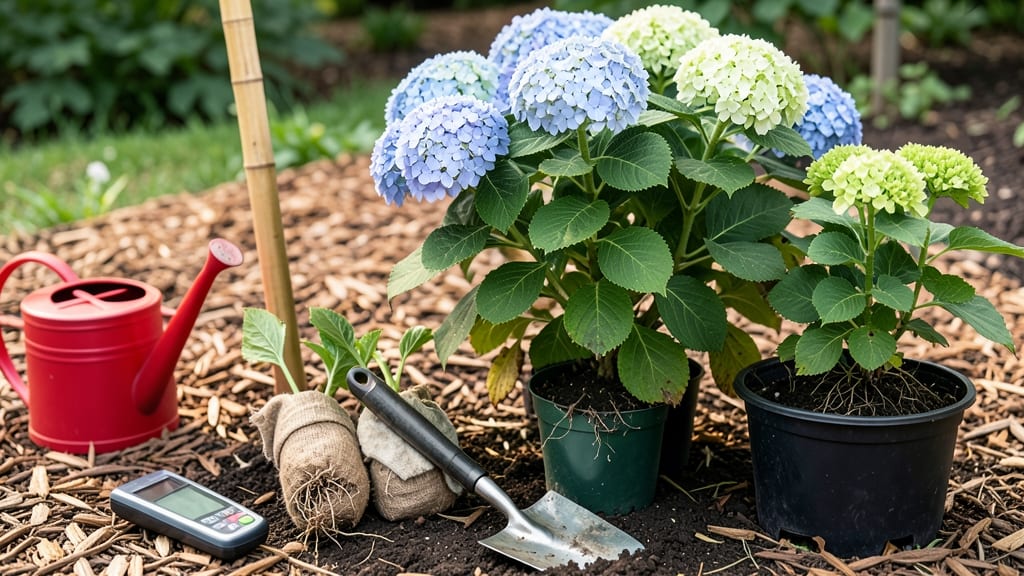
Timing your hydrangea planting in Chicago could mean the difference between stunning 🌸 blooms next summer and struggling shrubs. The city’s USDA Zone 6a climate demands precision—plant too early, and frost will nip your new growth; too late, and your hydrangeas won’t establish roots before winter.
But don’t stress: with the right window, you’ll give your hydrangeas the best shot at thriving.
Most gardeners in Chicago swear by spring planting between April 15 and May 15, when soil temperatures rise and frost risks fade. However, fall planting (September 1–October 15) is equally viable if you prep the soil properly.
The key is understanding how Chicago’s microclimates—from windy lakefront areas to sheltered backyard pockets—affect your planting schedule.
In this guide, I’ll break down the exact timing for bigleaf, panicle, and oakleaf hydrangeas, plus soil prep tips tailored to Chicago’s clay-heavy soil. You’ll learn how to extend your growing season with mulch, when to fertilize for maximum blooms, and how to protect young plants from late frosts.
Let’s get your hydrangeas off to the right start.
Whether you’re a first-time gardener or a seasoned pro, these insights will help you avoid common mistakes and ensure your hydrangeas become the showstopper of your garden. Ready to plant with confidence? Let’s dive in.
Chicago’s frost-free date zones: the exact window to plant hydrangeas
Chicago’s USDA Hardiness Zones 5b-6a create a tricky balance for hydrangea planting. The city’s average last frost date falls between April 15 and May 15, but microclimates—especially urban heat islands—can shift this window by 1-2 weeks.
For example, Lincoln Park often warms faster than south suburbs like Markham, where late frosts linger until May 20. Always verify your specific zone using the Old Farmer’s Almanac or NOAA frost maps to avoid planting too soon and risking frost damage to tender roots.
Hydrangeas thrive when planted after the soil temperature consistently stays above 50°F (10°C). In Chicago, this typically aligns with mid-to-late April for most areas, but container-grown hydrangeas can handle slightly cooler soil and may be planted 1-2 weeks earlier than bare-root varieties.
If you’re unsure, use a soil thermometer—hydrangeas need warmth to establish roots quickly.
Visual Tip: Watch for dandelions blooming in your yard—a sure sign spring is progressing. In Chicago, this usually occurs 2-3 weeks before safe planting, giving you a natural calendar to follow.
🌱 Chicago Hydrangea Planting Zones Comparison
| Zone | Last Frost Date | Safe Planting Window | Microclimate Notes |
|---|---|---|---|
| 5b (South Suburbs) | May 1-15 | May 15-June 1 | Cooler, slower warming; avoid planting before May 15. |
| 6a (North Side/Urban) | April 15-30 | April 30-May 15 | Urban heat islands warm faster; monitor soil temps. |
| All Zones (Fall Planting) | October 15 | September 1-October 15 | Plant 4-6 weeks before first frost; mulch heavily. |
💡 Pro Tip: Use frost-free date calculators like the National Gardening Association’s tool to input your exact ZIP code for precise timing.
Fall planting is another optimal window for hydrangeas in Chicago, running from September 1 to October 15. This gives roots time to establish before winter, but avoid planting after October 15, as new growth won’t harden off before the first frost.
For container hydrangeas, you can push this slightly later—up to November 1—if you protect them with burlap wraps and straw mulch.
Chicago’s wind exposure also plays a role. If your garden is windy (e.g., near Lake Michigan), plant hydrangeas near a windbreak like a fence or shrub row to reduce stress.
Young plants are particularly vulnerable to desiccation in windy conditions, so water deeply every 3-4 days until they’re established (about 6-8 weeks).
Warning: Don’t rely solely on calendar dates—late May frosts still occur in Chicago. Check the National Weather Service’s 10-day forecast 2 weeks before planting to avoid surprises. For extra safety, use frost cloth for the first 2 weeks after planting if nights dip below 40°F (4°C).
For bigleaf hydrangeas (Hydrangea macrophylla), which are acid-loving, aim for soil pH 5.2–6.0.
Test your soil 4-6 weeks before planting—Chicago’s calcareous soil often needs sulfur or peat moss to lower pH. Panicle hydrangeas (Hydrangea paniculata), like ‘Limelight,’ are more adaptable (pH 6.0–7.0) and can handle Chicago’s alkaline soils better, making them a low-maintenance choice for beginners.
If you’re planting in containers, the timing is slightly more flexible. Containers warm up faster, so you can plant 2 weeks earlier than in-ground plants. However, move containers indoors or to a garage if a hard frost is forecasted after planting.
Use self-watering pots to prevent soil from drying out too quickly in Chicago’s hot, windy summers.
Finally, consider your hydrangea’s maturity. Bare-root plants need to be planted as soon as possible after purchase (they dry out quickly), while container-grown hydrangeas can wait until the soil is workable.
If you’re buying in early spring, store bare-root plants in a cool, moist place (like a
Step-by-step planting timeline for bigleaf, panicle, and oakleaf hydrangeas
Planting hydrangeas in Chicago requires a species-specific approach, as each variety—bigleaf, panicle, and oakleaf—has unique timing needs.
Bigleaf hydrangeas (Hydrangea macrophylla) thrive when planted in early spring (April 15–May 1) or early fall (September 1–October 15), while panicle (H. paniculata) and oakleaf (H. quercifolia) varieties can handle a slightly later spring window due to their hardier nature.
For all types, soil preparation is critical. Test your soil’s pH (5.2–6.0) for acid-loving bigleaf varieties, as alkaline soil (common in Chicago) can turn blooms blue to pink. Amend with sulfur or peat moss if needed, and mix in 2–3 inches of compost for nutrients.
Plant in well-draining soil to prevent root rot, especially in clay-heavy Chicago yards.
Here’s your month-by-month